


Listen to the article
Council of Europe Commissioner Calls for Human Rights Approach to Combat Disinformation
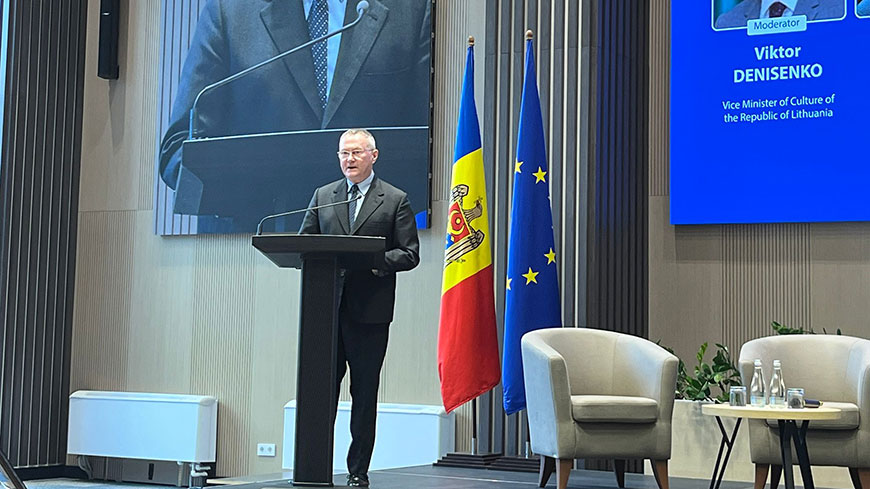
The growing threat of disinformation and foreign interference in European democracies took center stage at a high-level conference on Media Literacy and Information Integrity this week, where officials gathered to discuss building resilience against manipulation campaigns targeting the continent.
In a thoughtful address, the Council of Europe Commissioner highlighted three recent events that underscore the urgency of addressing disinformation: the passing of philosopher Jürgen Habermas, whose work emphasized truth in democratic discourse; documented attempts to disrupt French local elections through disinformation; and the Oscar success of “Mr. Nobody,” a documentary exposing propaganda in Russia’s education system.
“I applaud the high attention that has been given now by the Council of Europe to disinformation, to malign foreign influence, and to how to combat them,” the Commissioner stated, acknowledging the work of expert committees focused on combating foreign information manipulation.
The central question posed was deceptively simple: “What does a human rights approach look like in practice?” The Commissioner emphasized that while freedom of expression remains fundamental, the response to disinformation must consider a broader spectrum of human rights impacts.
Disinformation undermines numerous fundamental rights, including the right to life, political rights through electoral interference, environmental rights, and the rights of vulnerable groups. The Commissioner specifically highlighted how minorities, migrants, Roma communities, LGBTI individuals, children, journalists, civil society members, and women are disproportionately targeted by false information campaigns.
“Never forget the extent to which disinformation targets women,” the Commissioner reminded attendees, underscoring the gendered nature of many disinformation attacks.
Beyond identifying affected rights, the Commissioner outlined four key principles that should guide any human rights-based approach to fighting disinformation. The first is universality – ensuring that efforts protect everyone equally, especially society’s most marginalized members. The second is participation, particularly the involvement of civil society organizations in policy design and implementation.
Subsidiarity represents the third principle, emphasizing that national-level efforts should take precedence and maintain high standards. To this end, the Commissioner strongly encouraged states to involve their national human rights institutions in combating disinformation.
“The final principle that I would mention is that of accountability,” the Commissioner noted. “Our efforts need to be transparent and outcomes should be measurable,” requiring clear indicators and public reporting to ensure citizens can evaluate the effectiveness of anti-disinformation measures.
The address also highlighted the importance of preserving strong existing frameworks, specifically praising the European Union’s AI Act and Digital Services Act as “groundbreaking instruments” that help police online spaces. The Commissioner urged caution regarding ongoing “legislative simplification” efforts that might weaken these protections for the 27 EU member states.
The speech concluded with a call for maintaining the integrity of public discourse – honoring Habermas’s vision for Europe and reflecting the values that inspire brave individuals like documentary subject Pavel Talankin, who risked personal safety to expose propaganda in Russia.
As disinformation campaigns continue to target European democracies, particularly during election periods, this rights-based framework offers a comprehensive approach that balances freedom of expression with protection of vulnerable populations and democratic institutions. The Council of Europe’s focus on this issue signals growing recognition of disinformation as a fundamental threat to European values and democratic stability.
Fact Checker
Verify the accuracy of this article using The Disinformation Commission analysis and real-time sources.

14 Comments
While combating disinformation is crucial, we must be careful not to infringe on legitimate free speech in the process. A nuanced, rights-based approach seems sensible to navigate this complex issue.
Good point. Striking the right balance between protecting democratic discourse and respecting individual liberties will be a key challenge in implementing this framework.
This proposal for a human rights approach to tackling disinformation is thought-provoking. Upholding truth and transparency in the digital age is no easy task, but it’s vital for the health of our democracies.
Agreed. With the proliferation of online manipulation tactics, a comprehensive strategy rooted in human rights norms could be an important step forward.
Interesting to see the Council of Europe taking a lead on this issue. Disinformation is a global challenge that requires coordinated, multilateral responses grounded in human rights norms.
Agreed. International cooperation and shared best practices will be vital in developing effective countermeasures against the spread of malicious falsehoods.
The growing threat of foreign interference in elections through disinformation campaigns is deeply concerning. A human rights-based framework to build societal resilience seems a prudent way forward.
Absolutely. Protecting the integrity of democratic processes from malign influence should be a top priority. This proposal merits serious consideration.
Interesting proposal to tackle disinformation through a human rights lens. Upholding truth and democratic discourse is vital, especially with malign foreign influence attempts. This framework could help build societal resilience against manipulation campaigns.
I agree, a human rights approach seems like a sensible way to combat the scourge of disinformation. Protecting free and open dialogue is key to a healthy democracy.
The success of documentaries like “Mr. Nobody” in exposing propaganda underscores the need for this kind of human rights framework. Disinformation poses a serious threat to democratic institutions.
Absolutely. We must remain vigilant against attempts to manipulate public discourse and undermine faith in democratic processes. A principled, rights-based approach seems prudent.
Tackling disinformation is a complex challenge, but focusing on human rights principles is a thoughtful angle. Empowering citizens to critically evaluate information sources and spot propaganda will be crucial.
Indeed, media literacy and strengthening information integrity should be priorities. A multi-faceted strategy drawing on human rights norms could make a real difference.