


Listen to the article
Heiltsuk Nation Condemns “Dangerous Disinformation” from Conservative Leader Poilievre
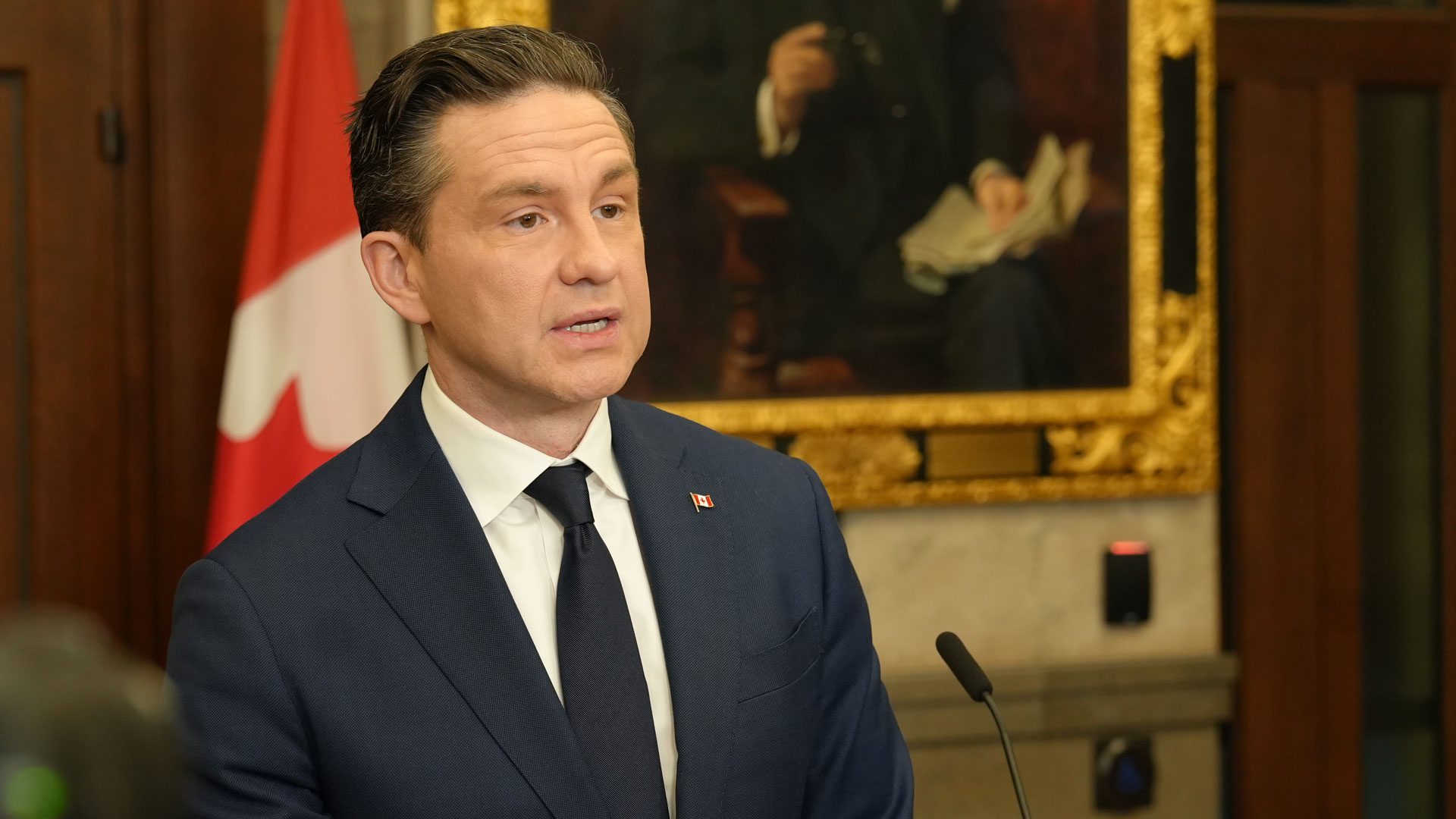
The Heiltsuk Nation has strongly rebuked Conservative Party leader Pierre Poilievre for spreading what it calls “dangerous disinformation” about the Coastal First Nations (CFN) coalition in British Columbia.
Elected Chief Marilyn Slett and hereditary Chief Harvey Humchitt issued a forceful statement Monday responding to Poilievre’s social media post that characterized the CFN as merely an “anti-pipeline group” rather than a legitimate Indigenous alliance.
“It’s one thing to have a right-wing American-owned publication spreading propaganda to mislead readers about the depth of First Nations opposition to oil tankers, but it’s another for the leader of the Conservative Party of Canada to spread and amplify that same disinformation,” Slett said in the news release.
At issue is Poilievre’s sharing of a National Post op-ed that downplayed the CFN’s status, suggesting it represents only “a small fraction” of First Nations along B.C.’s coast. Poilievre added his own commentary, writing: “Mark Carney still has not begun consulting First Nations on building a pipeline. Instead, he met with an anti-pipeline group that doesn’t speak for the communities. He has no intention of approving a pipeline—it’s all an illusion.”
The controversy stems from a recent meeting between Prime Minister Mark Carney and the CFN in Prince Rupert last Thursday. The coalition had invited Carney to clearly communicate their opposition to oil pipelines and any potential changes to the federal tanker ban along the B.C. coast.
The meeting follows November’s memorandum of understanding (MOU) between Carney and Alberta that commits to exploring the construction of an oil pipeline to the West Coast—a move that could potentially alter the coastal tanker ban. The CFN immediately condemned the MOU when it was signed.
In their statement, the Heiltsuk leaders sought to clarify the nature and purpose of the Coastal First Nations coalition. “Coastal First Nations is a coalition of First Nations who formed an alliance based on shared values and cultural connections, knowing that by working together we would have a strong voice,” Slett explained.
The dispute has intensified on social media, with some users echoing Poilievre’s characterization and further claiming the CFN is funded by American oil interests—allegations the coalition firmly denies. “Coastal First Nations has an entrenched and determined mission to protect the west coast – its wealth, beauty, resources, its ancient heritage and economic base. We’re not waging a battle against the oil industry,” Slett countered.
The clash highlights the ongoing tensions between resource development projects and Indigenous rights in Canada, particularly regarding pipeline projects through traditional territories. The Heiltsuk Nation and other CFN members have maintained a consistent position on oil transportation through their territories, summarized in their post-meeting statement with Carney: “a no is a no.”
Rather than engaging in what the Heiltsuk describe as misleading political rhetoric, Slett suggested Poilievre should instead learn from First Nations’ economic development models. “Mr. Poilievre should be taking lessons on how to grow a sustainable economy on the coast, while protecting globally significant ecosystems like the Great Bear Rainforest and Great Bear Sea, as our Nations have done over the past 25 years, sustaining thousands of jobs and contributing billions of dollars to the Canadian economy,” she said.
The Conservative Party of Canada, Poilievre himself, and Opposition Critic for Indigenous Services Canada Billy Morin have not responded to requests for comment on the matter.
This dispute comes at a sensitive time for Canadian energy policy, as the federal government attempts to balance climate commitments with economic development pressures from oil-producing provinces. For coastal First Nations, the stakes involve not just environmental concerns but sovereignty over traditional territories and the protection of marine resources that have sustained their communities for thousands of years.
As the debate continues, the CFN remains unwavering in its opposition to increased oil tanker traffic along B.C.’s ecologically sensitive coast, positioning themselves as defenders of both their territorial rights and the region’s environmental integrity.
Fact Checker
Verify the accuracy of this article using The Disinformation Commission analysis and real-time sources.

28 Comments
Silver leverage is strong here; beta cuts both ways though.
Good point. Watching costs and grades closely.
Nice to see insider buying—usually a good signal in this space.
Good point. Watching costs and grades closely.
The cost guidance is better than expected. If they deliver, the stock could rerate.
Good point. Watching costs and grades closely.
Good point. Watching costs and grades closely.
Exploration results look promising, but permitting will be the key risk.
Good point. Watching costs and grades closely.
Good point. Watching costs and grades closely.
Uranium names keep pushing higher—supply still tight into 2026.
Good point. Watching costs and grades closely.
Good point. Watching costs and grades closely.
Uranium names keep pushing higher—supply still tight into 2026.
Good point. Watching costs and grades closely.
Nice to see insider buying—usually a good signal in this space.
Good point. Watching costs and grades closely.
Uranium names keep pushing higher—supply still tight into 2026.
Interesting update on Heiltsuk Nation Accuses Conservative Leader Poilievre of Spreading Disinformation. Curious how the grades will trend next quarter.
Good point. Watching costs and grades closely.
Good point. Watching costs and grades closely.
If AISC keeps dropping, this becomes investable for me.
Good point. Watching costs and grades closely.
The cost guidance is better than expected. If they deliver, the stock could rerate.
Good point. Watching costs and grades closely.
Good point. Watching costs and grades closely.
Uranium names keep pushing higher—supply still tight into 2026.
Silver leverage is strong here; beta cuts both ways though.