


Listen to the article
Climate Change Committee Retreats from Free Speech Restrictions Amid Criticism
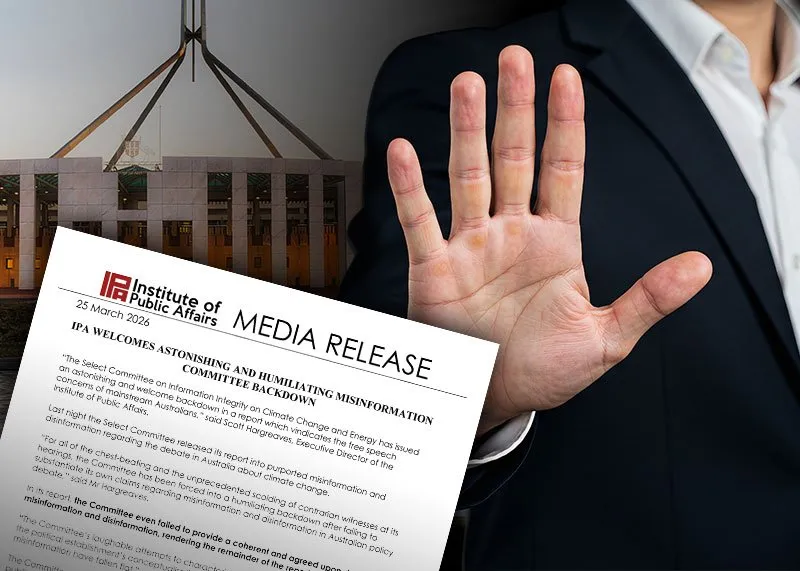
A parliamentary inquiry established to investigate climate change misinformation has issued what critics call a significant retreat from initial goals to restrict debate on climate policy. The Select Committee on Information Integrity on Climate Change and Energy released its report yesterday, drawing immediate reaction from free speech advocates.
The Committee’s final report notably failed to establish a consistent definition of what constitutes “misinformation” and “disinformation” in climate change discussions, undermining the fundamental premise of the inquiry. This omission has been seized upon by organizations that have opposed the Committee’s work from the beginning.
“The Select Committee has issued an astonishing and welcome backdown in a report which vindicates the free speech concerns of mainstream Australians,” said Scott Hargreaves, Executive Director of the Institute of Public Affairs (IPA), a prominent conservative think tank.
The IPA featured prominently throughout the Committee’s deliberations, receiving more mentions in the final report than any comparable organization. The Committee specifically highlighted the IPA’s claims of having “broken the back of net zero,” and acknowledged the organization’s influence in recent policy shifts within the Coalition regarding climate targets.
“That the Senators who forced the establishment of the Inquiry have had to moderate their ambitions is a sign that both climate catastrophism and the wave of digital censorship are, for the moment, in retreat,” Hargreaves noted.
The Committee’s formation came amid growing global concerns about the spread of misinformation on digital platforms, particularly regarding scientific consensus on climate change. Similar initiatives have emerged in other democratic nations grappling with the intersection of free speech, social media, and scientific communication.
Despite what critics view as a retreat from the Committee’s original intent, the report does contain several recommendations that have alarmed free speech advocates. Of particular concern is Recommendation 11, which suggests the Australian Government consider reforms that would identify “psychosocial harms” and place responsibility for addressing these harms on digital platforms.
“The term ‘psychosocial harms’ is deliberately vague and would provide the basis for the political class to control debate, censor Australians, and terminate political discourse,” Hargreaves warned, describing it as “perhaps the single most anti-democratic recommendation ever put forward by a Select Committee.”
The National Party and One Nation issued dissenting reports, emphasizing the importance of debate and healthy skepticism in both scientific advancement and public policy development. These minority reports align with arguments that scientific conclusions should remain open to challenge and revision.
The Committee’s work takes place against the backdrop of increasing polarization in Australia’s climate policy landscape. Recent years have seen significant shifts in the Coalition’s stance on emissions targets, with the abandonment of bipartisan support for net zero goals marking a notable change in the political dynamic.
Critics of climate action have gained momentum in Australia despite increasing international pressure and evidence of climate impacts domestically through bushfires, floods, and other extreme weather events. Organizations like the IPA have played a significant role in shaping this discourse, as the Committee itself acknowledged.
The report also comes at a time of growing concern about climate anxiety among young people. Ironically, Hargreaves pointed out, those supposedly concerned with psychological harm may be contributing to negative impacts on children through apocalyptic messaging about climate change. He cited an IPA-published report by child psychologist Clare Rowe on climate anxiety in pre-adolescent children.
As Australia continues to grapple with its climate policies and the nature of public discourse, the Committee’s report represents a flashpoint in ongoing tensions between scientific consensus, political action, and the principles of free speech in democratic society.
Fact Checker
Verify the accuracy of this article using The Disinformation Commission analysis and real-time sources.

24 Comments
The government’s decision to back down on this misinformation committee raises some interesting questions. On one hand, the risk of censorship is real. But on the other, how do we effectively combat the spread of false climate claims? It’s a tricky balance.
You make a fair point. Tackling misinformation is important, but the methods used have to be carefully considered to avoid unintended consequences. Promoting media literacy and critical thinking may be a better approach than strict content moderation.
It will be interesting to see how this impacts the broader public discourse on climate change. Hopefully, it leads to more nuanced, evidence-based discussions rather than further entrenching existing ideological divides.
That’s a good point. If this helps shift the debate in a more constructive direction, it could be a positive outcome, even if the initial committee proposal was problematic.
This feels like a victory for free speech and the open exchange of ideas, even on contentious topics like climate change. While defining ‘misinformation’ is tricky, the government’s willingness to step back is commendable.
I agree. Maintaining space for diverse perspectives, even unpopular ones, is vital. The committee’s decision suggests they recognize the risks of overreach when it comes to regulating speech.
The decision to not establish a clear definition of ‘misinformation’ is concerning. Without clear guidelines, there’s a risk of the debate becoming even more polarized. Hopefully the committee can revisit this and find a balanced way forward.
That’s a fair point. Ambiguity around key definitions could undermine the committee’s work and further inflame tensions. They’ll need to tread carefully to maintain credibility.
This is an important issue that gets to the heart of the challenges in addressing misinformation while preserving free speech. I’m curious to see how this plays out and what alternative solutions the government might pursue.
Agreed, it will be interesting to monitor how this evolves. Maintaining a healthy public discourse on complex topics like climate change is crucial, even if it means avoiding heavy-handed tactics.
The government’s decision to back down on this committee is a welcome development in my view. While misinformation is a concern, we have to be very careful about government overreach and the potential for censorship, especially on issues as politically charged as climate change.
Absolutely, the risk of censorship is a real worry here. I’m glad the government recognized the need for a more nuanced approach that doesn’t undermine fundamental freedoms.
This appears to be a positive development for free speech and open dialogue around climate change. While misinformation is a concern, it’s crucial that the government doesn’t overstep and stifle legitimate scientific and policy debates.
Absolutely, maintaining the integrity of the public discourse is critical. I’m glad the committee recognized the need for a more measured and thoughtful approach here.
This is a complex issue without easy answers. On one hand, we need to address the spread of misinformation, but on the other, we have to be vigilant about protecting free speech. I’m curious to see what alternative solutions the government comes up with.
You raise a good point. Balancing those competing priorities is the real challenge here. Hopefully the government can find a way forward that upholds democratic principles while also tackling the very real problem of climate misinformation.
This is an interesting development. It seems the government has recognized the need for balanced and nuanced discussions on climate change, rather than heavy-handed restrictions on free speech. Curious to see how this plays out moving forward.
Agree, it’s good to see the government backing down on this. Defining ‘misinformation’ is a tricky task, and heavy-handed censorship is rarely the right approach on complex policy issues.
I’m curious to learn more about the IPA’s role in this process. As a prominent conservative think tank, their influence seems significant. It would be interesting to understand their specific objections and how they were able to shape the committee’s final report.
That’s a good point. The prominent role of the IPA raises questions about potential political motivations behind the committee’s work. Transparency around stakeholder input will be crucial going forward.
This is an encouraging sign that the government is willing to walk back controversial policies in the face of public criticism. Free and open debate on climate change is essential, even if it gets messy at times.
Agreed. A healthy democracy requires the ability to challenge conventional wisdom, even on issues as politically charged as climate change. Kudos to the government for course-correcting.
Interesting to see the government backing down on this controversial committee. Seems like there were valid concerns about overreach and restriction of free speech on climate issues. It’s important to have open and honest debate on complex topics like this.
I agree, a balanced and nuanced approach is needed when it comes to addressing misinformation. Outright censorship is a slippery slope – better to focus on improving public education and critical thinking skills.