


Listen to the article
Italy and Germany Unite to Strengthen Europe’s Cybersecurity and Intelligence Capabilities
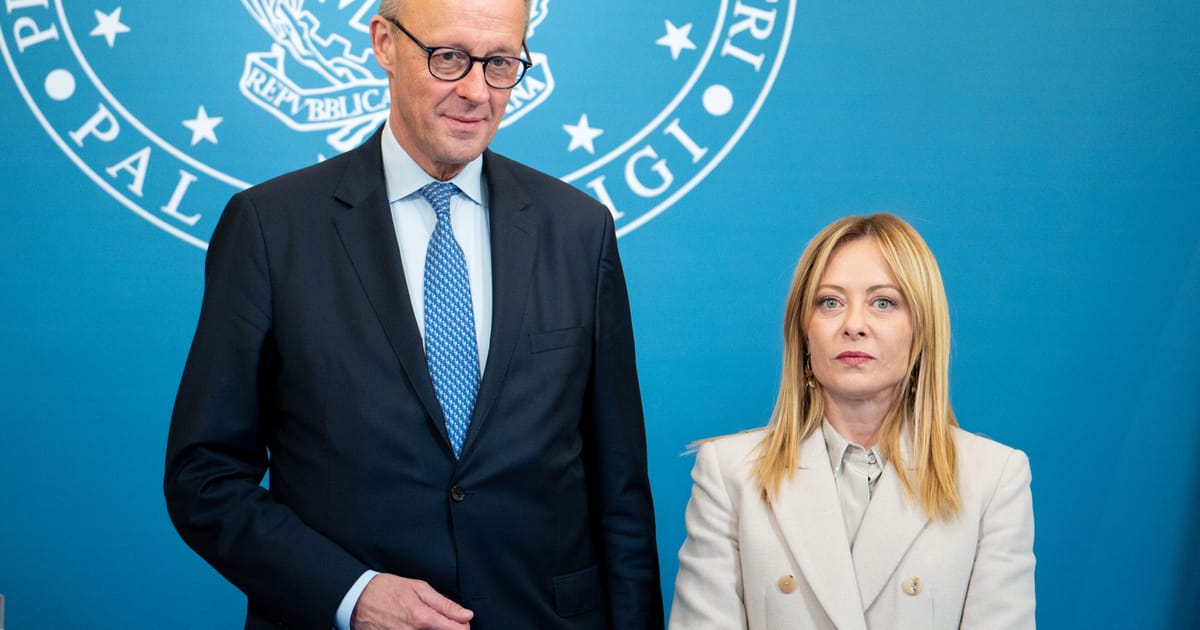
Italian Prime Minister Giorgia Meloni and German Chancellor Friedrich Merz have announced a joint initiative to bolster Europe’s cybersecurity infrastructure and intelligence-sharing mechanisms, filling a crucial gap left by recent U.S. policy shifts.
The partnership comes in the wake of U.S. President Donald Trump’s January decision to withdraw from dozens of international organizations, including a key cybersecurity center. Trump characterized these institutions as “wasteful, ineffective, and harmful” when announcing the pullback, creating potential vulnerabilities in the transatlantic security architecture.
In response, the two European leaders have outlined a comprehensive strategy focused on countering hybrid threats, strengthening information resilience, and enhancing strategic communications capabilities. Their agreement specifically emphasizes the protection of critical infrastructure—a growing concern as state-sponsored cyberattacks against energy grids, transportation networks, and financial systems have increased across Europe in recent years.
“This partnership represents a strategic response to an evolving threat landscape,” said a senior European Commission official familiar with the agreement. “With malicious cyber activities becoming more sophisticated, Europe must develop its own robust defensive capabilities.”
The Meloni-Merz plan places particular emphasis on cyber capacity building projects, which experts suggest will help standardize cybersecurity protocols across EU member states, addressing a long-standing vulnerability in Europe’s collective digital defense. Currently, cybersecurity standards and capabilities vary significantly between EU countries, creating potential weak points that malicious actors can exploit.
The agreement also prioritizes tackling cybercrime, which has seen an alarming rise across the continent. According to recent Europol data, ransomware attacks alone have increased by 150% in the past year, costing European businesses billions of euros.
A significant aspect of the initiative involves boosting the EU’s intelligence-sharing capacities, particularly strengthening the “hybrid fusion cell” within the EU Intelligence and Situation Centre (EU INTCEN). This unit, established in 2016, serves as the EU’s primary intelligence analysis body, but has often struggled with limited resources and inconsistent information sharing from member states.
“The enhancement of INTCEN’s hybrid fusion cell represents a critical step forward,” explained Dr. Maria Fernandez, a cybersecurity expert at the European Policy Institute. “Effective intelligence sharing has been the Achilles’ heel of European security cooperation. This agreement could change that dynamic significantly.”
The focus on “disruptive and dual-use technologies” signals Europe’s intent to develop more advanced technological capabilities for cyber defense. These include artificial intelligence applications for threat detection, quantum computing for encryption, and advanced data analytics for identifying patterns of malicious activity.
Industry analysts note that the timing of this announcement coincides with increased cyber threats from Russia, China, and non-state actors targeting European institutions and businesses. Recent attacks against European energy infrastructure and manufacturing facilities have highlighted vulnerabilities that require urgent attention.
The agreement also reflects a broader trend of European strategic autonomy in security matters, as the continent adjusts to a changing geopolitical landscape where U.S. policy has become less predictable.
“Europe is clearly signaling that it intends to take more responsibility for its own cybersecurity,” noted François Heisbourg, special adviser at the Foundation for Strategic Research in Paris. “This German-Italian initiative may represent the beginning of a more cohesive European approach to digital defense.”
The collaboration between Italy and Germany—representing two of Europe’s largest economies—is expected to catalyze wider European participation and investment in cybersecurity infrastructure. Officials indicate that implementation details, including funding mechanisms and specific technology investments, will be finalized in the coming weeks.
As cyber threats continue to evolve in complexity and scale, this partnership signals Europe’s recognition that digital security has become fundamental to national and regional stability in the 21st century.
Fact Checker
Verify the accuracy of this article using The Disinformation Commission analysis and real-time sources.

8 Comments
I’m curious to see the specific initiatives and capabilities that will be developed through this new Germany-Italy agreement. Protecting critical infrastructure from cyber threats is a complex challenge.
It’s encouraging to see two major European powers like Germany and Italy working together to counter disinformation and strengthen cybersecurity. This sets an important precedent for the EU.
Agreed. Robust cooperation on these issues is vital for Europe’s security and resilience in the face of hybrid threats.
This partnership could have significant implications for the mining, energy, and commodity sectors, which are frequent targets of state-sponsored cyberattacks. I’m interested to see how it will address those vulnerabilities.
This is an important step in bolstering Europe’s cybersecurity and intelligence capabilities. The threat of disinformation and cyberattacks against critical infrastructure is a real and growing concern.
Agreed. Strengthening information resilience and strategic communications is crucial in an age of hybrid threats.
Trump’s decision to withdraw from international cybersecurity organizations is troubling. It’s good to see Germany and Italy taking the lead in filling that gap and enhancing transatlantic security.
Absolutely. This partnership demonstrates European leadership on an issue that requires a coordinated, multinational response.