


Listen to the article
Georgia’s Modern Stonehenge Falls to Extremism After Decades of Controversy
Peach State’s enigmatic monument stood as a lightning rod for conspiracies before being destroyed in explosive act of vandalism.
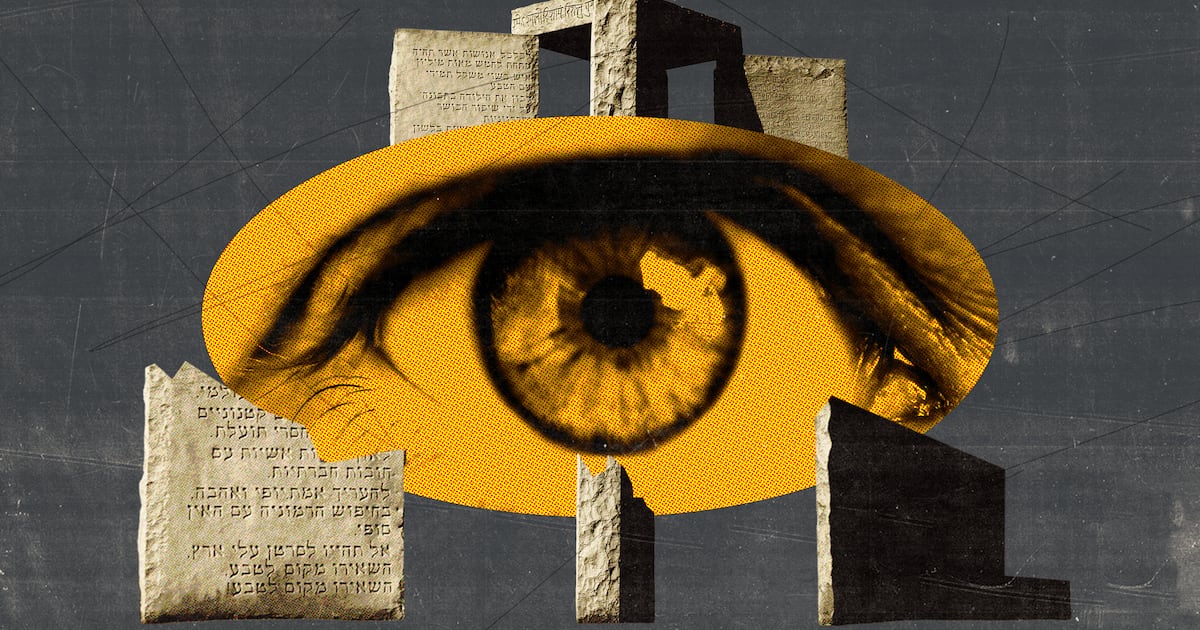
For more than four decades, the Georgia Guidestones towered mysteriously over Elbert County’s landscape, drawing both fascination and fierce criticism. Often referred to as “America’s Stonehenge,” the granite monument became a blank slate upon which each generation projected its fears, anxieties, and conspiracy theories—until someone decided to take matters into their own hands.
On July 6, 2022, the controversial landmark was partially destroyed in an explosion. What motivated this act of destruction is the subject of “Who Blew Up the Guidestones?”, a six-part narrative audio series produced by Goat Rodeo and The Atlanta Journal-Constitution, hosted by journalist Tyler McBrien.
“As I began our investigation into why someone would destroy the Guidestones, I started with a simple question—why didn’t someone blow them up sooner?” says McBrien.
The monument’s history had been inextricably linked to conspiracy thinking since its 1980 unveiling. Inscribed with ten guidelines in eight languages, the Guidestones quickly became a Rorschach test for fringe beliefs and political anxieties. Some viewed it as a sinister prescription for population control, others as a satanic altar, and still others believed it had extraterrestrial origins.
“The Georgia Guidestones were the source of so much intrigue that their 42-year history is basically just a history of popular conspiracy theories over that period,” McBrien explains.
American History Through a Conspiratorial Lens
The story of the Guidestones reflects a much broader American tradition of conspiracy thinking. Historian Richard Hofstadter described this phenomenon in his landmark 1964 essay “The Paranoid Style in American Politics,” noting that suspicious worldviews have “frequently been linked to movements of suspicious discontent” throughout U.S. history.
Chris Joyner, AJC editor who managed the podcast project, observes that conspiracy theories tend to persist in American life. “Conspiracy theories have been used to explain politics throughout history,” Joyner says. “That’s not to say all conspiracy theories are the same. Some can be fun—Bigfoot, Loch Ness Monster. But others can prompt action.”
The darker consequences of conspiracy thinking have repeatedly manifested throughout global history. The notorious anti-Semitic forgery “The Protocols of the Elders of Zion” sparked pogroms that ruined countless innocent lives. In the 1950s, Senator Joseph McCarthy’s Red Scare hearings and subsequent blacklists destroyed careers based on little more than conspiracy and innuendo.
“What’s particularly concerning about contemporary extremism,” Joyner notes, “is not simply pointing to a broken political system, but fundamentally making someone the reason for that brokenness.”
For 42 years, the Guidestones stood upright despite being the object of continuous hatred—until someone decided to cross an item off their to-do list and take matters into their own hands.
The Psychology Behind Conspiracy Thinking
Research from the Journal of Experimental Social Psychology suggests that the rise in conspiracy thinking coincides with higher economic inequality. People naturally search for meaning during uncertain times, and conspiracy theories offer explanations—even if false ones—that seem to make intuitive sense of a confusing world.
“Higher inequality can lead to a perception of social breakdown, which makes people more likely to believe conspiracy theories,” McBrien explains.
What makes conspiracy theories particularly dangerous is their ability to spread in an information ecosystem marked by polarization and declining media literacy. Research suggests that people increasingly struggle to discern reliable information sources, making them more susceptible to conspiracy narratives that align with their existing worldviews.
This resistance to contradictory evidence particularly troubled McBrien during his investigation. “As I began looking into the mystery behind the Georgia Guidestones, what worried me most was seeing how people simply adapted their conspiracy theories when confronted with new discoveries that contradicted their existing beliefs,” he says.
The very origin of the Guidestones illustrates this phenomenon. R.C. Christian, the pseudonymous creator of the monument, went to great pains to explicitly spell out the meaning of the granite slabs, even carving their significance directly into the stone and publishing an accompanying manifesto that explained his intentions.
Yet various groups continued to espouse their own theories about the monument’s true meaning and origin, even after the documentary crew found compelling evidence of Christian’s identity. The willingness to disregard etched-in-stone reality in favor of more dramatic narratives demonstrates the true danger of conspiracy thinking.
“Who Blew Up the Guidestones?”, which launched March 17, is hosted by Tyler McBrien and managed by AJC editor Chris Joyner of Goat Rodeo’s LawFare.
Fact Checker
Verify the accuracy of this article using The Disinformation Commission analysis and real-time sources.

29 Comments
Exploration results look promising, but permitting will be the key risk.
Good point. Watching costs and grades closely.
Good point. Watching costs and grades closely.
If AISC keeps dropping, this becomes investable for me.
Good point. Watching costs and grades closely.
I like the balance sheet here—less leverage than peers.
Good point. Watching costs and grades closely.
The cost guidance is better than expected. If they deliver, the stock could rerate.
Good point. Watching costs and grades closely.
The cost guidance is better than expected. If they deliver, the stock could rerate.
Good point. Watching costs and grades closely.
Nice to see insider buying—usually a good signal in this space.
The cost guidance is better than expected. If they deliver, the stock could rerate.
I like the balance sheet here—less leverage than peers.
Good point. Watching costs and grades closely.
I like the balance sheet here—less leverage than peers.
Good point. Watching costs and grades closely.
Nice to see insider buying—usually a good signal in this space.
Good point. Watching costs and grades closely.
Good point. Watching costs and grades closely.
The cost guidance is better than expected. If they deliver, the stock could rerate.
Good point. Watching costs and grades closely.
Good point. Watching costs and grades closely.
The cost guidance is better than expected. If they deliver, the stock could rerate.
Good point. Watching costs and grades closely.
Good point. Watching costs and grades closely.
The cost guidance is better than expected. If they deliver, the stock could rerate.
Good point. Watching costs and grades closely.
Silver leverage is strong here; beta cuts both ways though.