


Listen to the article
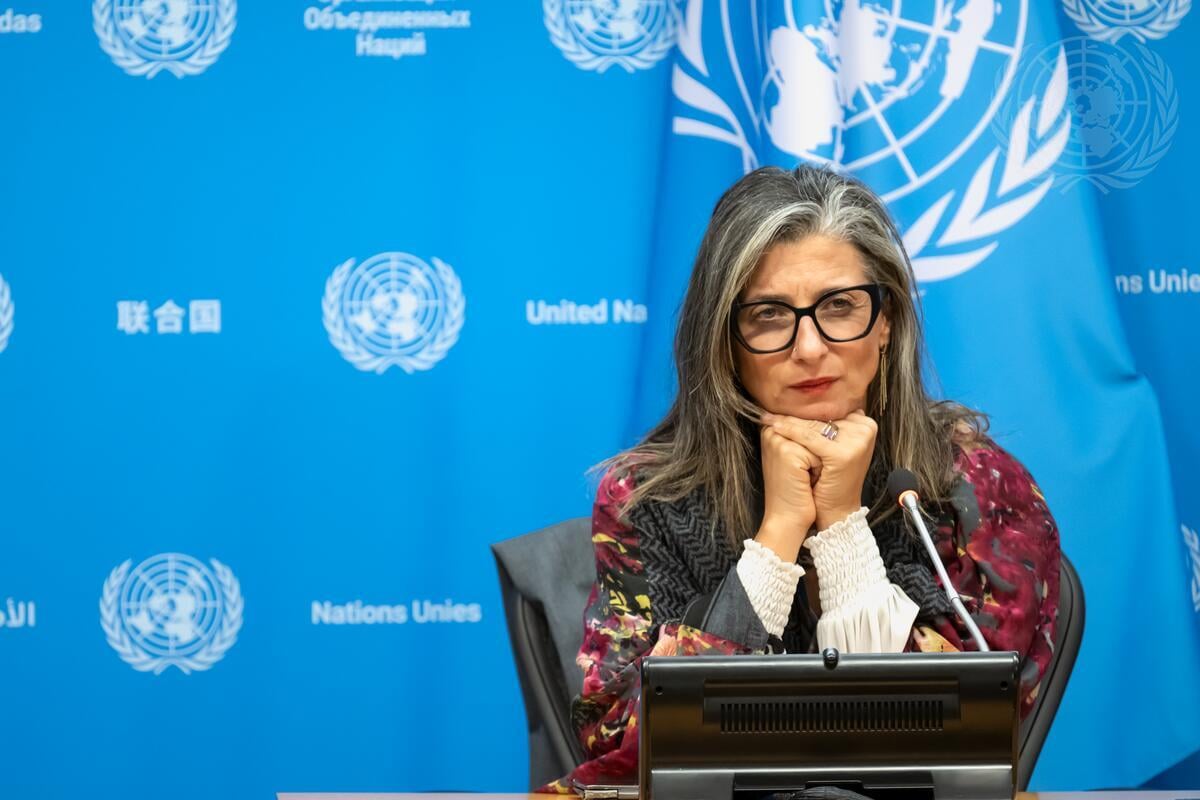
French diplomats from around the world have publicly rebuked France’s foreign minister Jean-Noël Barrot for allegedly spreading manipulated information about the United Nations rapporteur for Palestine, Francesca Albanese.
In an open letter published Wednesday, a coalition of 151 former ministers, ambassadors, and diplomats accused Barrot of citing a misleading version of Albanese’s remarks made at the Al Jazeera Media Forum on February 7. The controversy centers on claims that Albanese described Israel as the “common enemy of humanity” during her address.
Albanese quickly defended herself by publishing her complete speech on social media two days after the forum, demonstrating that she had not made such a statement about Israel. In her clarification, she wrote: “The common enemy of humanity is THE SYSTEM that has enabled the genocide in Palestine.” By then, however, an edited version of her remarks had already begun circulating widely online.
Despite this clarification, Barrot used the alleged comments as grounds to call for Albanese’s resignation when addressing French lawmakers on February 11. Several other European Union ministers joined in these demands, intensifying pressure on the UN official based on what appears to be manipulated content.
The French foreign minister doubled down on Thursday, posting on social media: “Stop fake news. I did not truncate or distort Ms. Albanese’s comments. I simply condemned them because they are reprehensible.”
The Coalition of Former Diplomats and Civil Servants for Accountability, which authored the letter, expressed serious concern about a high-ranking diplomat spreading what they describe as disinformation. “The dissemination of disinformation by senior officials undermines international law, weakens human rights protections, and threatens the credibility of the multilateral system itself,” the coalition stated in their press release.
Their position gained significant validation when a United Nations committee of six independent experts, tasked with reviewing complaints against Albanese, dismissed the accusations on Tuesday as “vicious attacks, rooted in disinformation.”
The former diplomats have called on the French foreign ministry to formally retract and correct Barrot’s statement, reaffirm France’s commitment to supporting independent UN officials, and uphold its obligation to strengthen, not undermine, international institutions.
Claudio Francavilla, associate director of EU advocacy at Human Rights Watch, expressed dismay at the situation in a statement to EUobserver: “It’s appalling that Barrot and other EU foreign ministers reacted more strongly to a visibly doctored video of Albanese than to the real Israeli crimes she and so many others have documented.”
Francavilla added, “They either didn’t notice the video was manipulated, or they did and yet decided to attack on the basis of it, underestimating the backlash that would follow. I don’t know which option exposes higher degrees of incompetence.”
This diplomatic spat occurs against the backdrop of ongoing European involvement in Middle East peace initiatives. The European Commission is currently sending Mediterranean commissioner Dubravka Šuica to participate in US President Donald Trump’s Board of Peace, a body established to advance the next phase of the Gaza peace plan. Šuica is scheduled to meet with Nikolay Mladenov, high representative for Gaza, and Egyptian Minister of Foreign Affairs Badr Abdelatty.
The controversy highlights growing tensions between diplomatic channels and public accountability in the context of the Israel-Palestine conflict. It also underscores the challenges of information integrity in diplomatic communications, particularly when involving sensitive geopolitical issues.
The incident raises questions about verification processes within diplomatic circles when responding to potentially manipulated content, especially when such responses can have significant implications for international relations and the credibility of key United Nations personnel working in conflict zones.
Fact Checker
Verify the accuracy of this article using The Disinformation Commission analysis and real-time sources.

7 Comments
This highlights the importance of verifying information, particularly around sensitive political issues. Responsible leaders should avoid hasty accusations without thoroughly reviewing the primary evidence. I hope the truth can be established through further dialogue and investigation.
It’s concerning to see allegations of disinformation being thrown around at the UN level. Maintaining trust and credibility in international institutions is crucial. I hope the parties involved can work to clarify the facts and address any legitimate concerns through proper channels.
The French Foreign Minister’s accusations against the UN envoy seem questionable, especially given the clarification provided by Albanese herself. I’d like to see the full, unedited remarks before drawing any conclusions about her intended meaning.
Agreed, transparency and fact-checking are crucial here. Rushing to judgment based on partial information could undermine trust in both parties involved.
As someone interested in global affairs and diplomacy, I find this case quite troubling. Spreading potentially misleading claims, even by high-ranking officials, can have serious consequences. I hope both sides will engage constructively to resolve this controversy.
This is a concerning case of potential disinformation. It’s important we rely on primary sources and full context when assessing sensitive political statements, rather than edited clips or second-hand accounts. I hope further investigation can shed light on the accuracy of the claims.
This situation underscores the challenge of navigating complex geopolitical issues in a polarized environment. While I don’t have a strong opinion on the specifics, I believe thoughtful, evidence-based debate is essential for resolving such disputes constructively.