


Listen to the article
France Launches National Strategy to Combat Health Disinformation
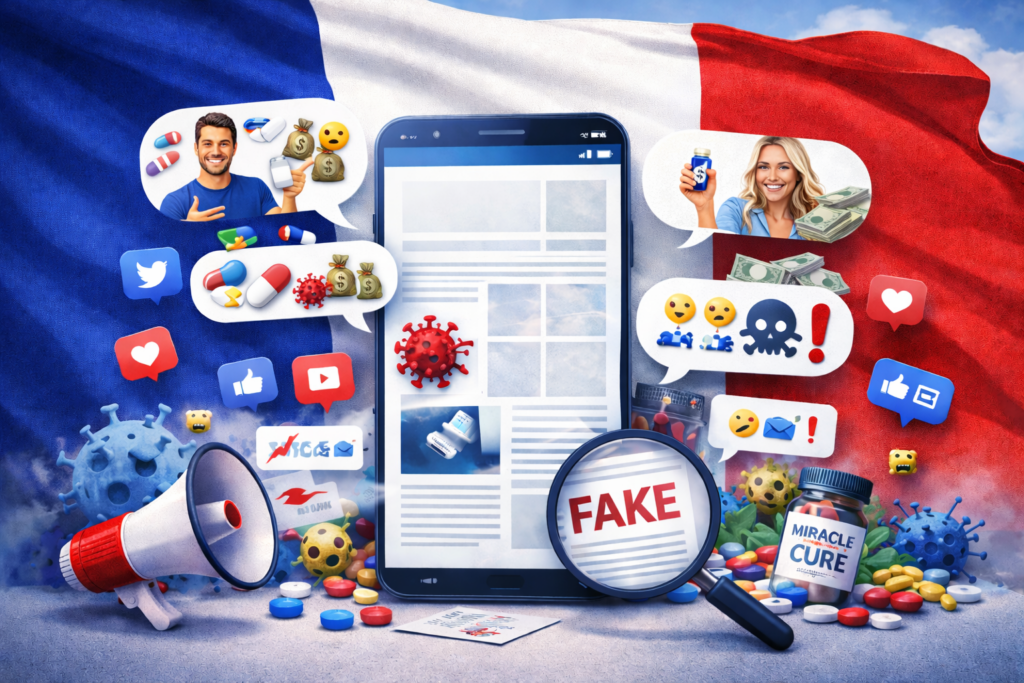
In response to the growing challenge of health misinformation in the digital age, France’s health minister, Stéphanie Rist, has announced a comprehensive national strategy aimed at combating health disinformation. The initiative comes at a critical time when social media platforms have become dominant sources of information, particularly for younger generations.
The strategy is built on findings from a recently released report titled “Health Information: Strengths and Weaknesses Analysis and Recommendations for a National Health Information and Anti-Disinformation Strategy.” This document identifies three key vulnerabilities that make the general population susceptible to health-related misinformation: insufficient scientific education, poor critical thinking skills regarding information sources, and disruptions in information consumption patterns caused by digital technology.
According to the report, social media has emerged as the primary information source for more than half of France’s young adults aged 15 to 30. Platforms such as Instagram, TikTok, and YouTube deliver content without proper filtering, driven by algorithms that prioritize emotional engagement and quick reactions rather than factual accuracy and thoughtful analysis.
The timing of this initiative is particularly relevant as health misinformation has surged globally since the COVID-19 pandemic. False claims about vaccines, treatments, and public health measures have spread rapidly across digital platforms, sometimes leading to harmful health decisions and undermining trust in medical authorities.
Minister Rist’s strategy encompasses four key pillars designed to address these challenges comprehensively. The first area focuses on listening and citizen consultation, aiming to understand how the public consumes health information and what might make them vulnerable to misinformation. This approach acknowledges that effective countermeasures must be based on a thorough understanding of public perception and behavior.
The second component involves establishing a dedicated Health Disinformation Observatory. This institution will likely monitor emerging health misinformation trends, track their spread, and develop effective counter-messaging strategies. Similar observatories have been established in other countries, but France’s approach appears to be particularly comprehensive.
A Health Information Monitoring System forms the third pillar of the strategy. This system will presumably provide real-time tracking of health information across various media channels, enabling quick responses to emerging misinformation before it gains significant traction.
The fourth element centers on building a foundation of trust. This reflects growing awareness among public health officials worldwide that combating misinformation is not simply about countering false claims, but also about establishing trusted sources of accurate health information that citizens will turn to first.
France’s initiative comes amid increasing concern throughout Europe about the impact of misinformation on public health. The European Union has already implemented the Digital Services Act, which requires major online platforms to take more responsibility for harmful content, including health misinformation.
Public health experts have generally welcomed France’s approach, noting that it addresses both the supply and demand sides of health misinformation. By improving scientific literacy and critical thinking skills while simultaneously monitoring and countering false information, the strategy may prove more effective than approaches focused solely on content removal.
The success of France’s strategy will likely be closely monitored by other nations facing similar challenges. If effective, elements of this approach could become a model for coordinated national responses to health misinformation in other countries, particularly those with similar media ecosystems and public health infrastructure.
As implementation begins, French officials face the delicate challenge of countering harmful misinformation while respecting freedom of expression and avoiding the perception of government censorship—a balance that will be essential for maintaining public trust in the initiative.
Fact Checker
Verify the accuracy of this article using The Disinformation Commission analysis and real-time sources.

24 Comments
It’s encouraging to see governments taking proactive steps to address the spread of misinformation. Empowering the public to be more discerning consumers of online content is a smart long-term approach.
Agreed. Equipping citizens with the tools to identify reliable sources and factual information is key to building resilience against misinformation campaigns.
Interesting to see France take a proactive approach to combating health misinformation. Digital platforms have certainly disrupted traditional information channels, making it critical to strengthen media literacy and critical thinking skills.
Agreed, this is a complex challenge that requires a multi-faceted strategy. Targeting both the supply of misinformation and improving public resilience seems like a sensible approach.
Curious to learn more about the specific measures in France’s plan. Improving scientific education and helping people evaluate information sources online could make a big difference in fighting health-related falsehoods.
Yes, the report highlights some key vulnerabilities that need to be addressed. It will be interesting to see how the French government implements this national strategy in practice.
Combating health misinformation is a significant challenge. France’s comprehensive approach targeting scientific literacy and digital media consumption patterns is a step in the right direction.
It will be interesting to see how effective this strategy is in practice. Changing behavior and information consumption habits can be difficult, but the effort is necessary.
France’s strategy seems to recognize the importance of improving digital literacy and critical thinking skills. Those capabilities will be essential as people navigate an increasingly complex information landscape.
While the details of the plan are not yet clear, addressing the root causes of health misinformation, such as lack of scientific understanding and critical thinking, is a sensible approach.
The report’s findings on social media’s role as a primary information source for young adults highlight the urgency of the problem. Effective implementation will be key.
France’s comprehensive national strategy to combat health misinformation is a timely and necessary response to the growing challenges posed by the digital age.
It will be interesting to see how this initiative evolves and if it can serve as a model for other countries grappling with similar issues.
Interesting strategy to tackle the growing issue of health misinformation. Educating the public on critical thinking and information sources is crucial in the digital age.
Agreed, social media has become a major source of information, especially for younger generations. Implementing effective filters and fact-checking measures is important.
Addressing the underlying factors that make the public susceptible to health misinformation, such as lack of scientific literacy and critical thinking skills, is a thoughtful approach.
The strategy’s focus on disruptions in information consumption patterns caused by digital technology is particularly relevant. Developing effective solutions for this challenge will be key.
France’s decision to tackle health misinformation head-on is commendable. Developing a national strategy that targets both individual and systemic issues is a promising approach.
It will be crucial to monitor the strategy’s impact and make necessary adjustments as the digital landscape continues to evolve. Maintaining a proactive and adaptable approach is essential.
As someone interested in mining and energy issues, I wonder if this type of anti-disinformation framework could be applied to topics like climate change or the energy transition. Combating misinformation is crucial across many domains.
That’s a good point. Misinformation can seep into discussions around natural resources, clean energy, and sustainability. A comprehensive, evidence-based approach could benefit multiple sectors.
While the details of France’s plan are still emerging, the overall focus on strengthening scientific education and critical thinking skills is promising. Misinformation can have serious public health consequences, so this initiative is timely and important.
As someone who follows mining, energy, and commodity news, I’m curious to see if similar anti-disinformation efforts could be applied to those industries. Fact-based, evidence-driven policies are crucial for addressing complex challenges.
That’s an insightful point. Misinformation can certainly seep into discussions around natural resources, clean energy transitions, and other technical domains. A comprehensive, multi-faceted approach could benefit many sectors.