


Listen to the article
In an era of evolving information warfare, democracies worldwide face a new threat beyond traditional adversarial misinformation campaigns. Today, the most destabilizing force comes from within the allied ecosystem itself, as uninhibited partners spread disinformation that undermines coalition strength and trust.
Recent incidents involving Trump-aligned accounts have targeted France with disinformation and pressured Greenland to join the United States, allegedly to protect it from Russian or Chinese influence. President Trump himself contributed to this problem by misrepresenting NATO’s unified support in Afghanistan, acknowledging only British contributions while ignoring other allies.
When major powers amplify false narratives attacking Western alliances or member states, they directly undermine trust between partners, weaken cohesion, and complicate decision-making processes, particularly for middle powers. France’s approach to this challenge offers potential lessons for countries like Australia.
For years, Russian-linked media outlets have engaged in hostile information operations against France, including personal attacks on the first lady and promoting narratives that characterize Paris as pursuing neo-colonial policies. More concerning is the recent trend of U.S. accounts echoing Russian talking points that portray French policies as unwise or overly pro-migration, while characterizing European countries as military free-riders dependent on U.S. security guarantees. The cumulative effect goes beyond reputational damage to reinforce broader perceptions that Europe is in terminal decline and strategically irrelevant.
France has developed a multifaceted approach to combat this threat. Five years ago, it established VIGINUM (French Service for Vigilance and Protection against Foreign Digital Interference) under the General Secretariat for Defence and National Security. This agency counters information manipulation through daily monitoring and regular reporting that benefits both domestic and international partners.
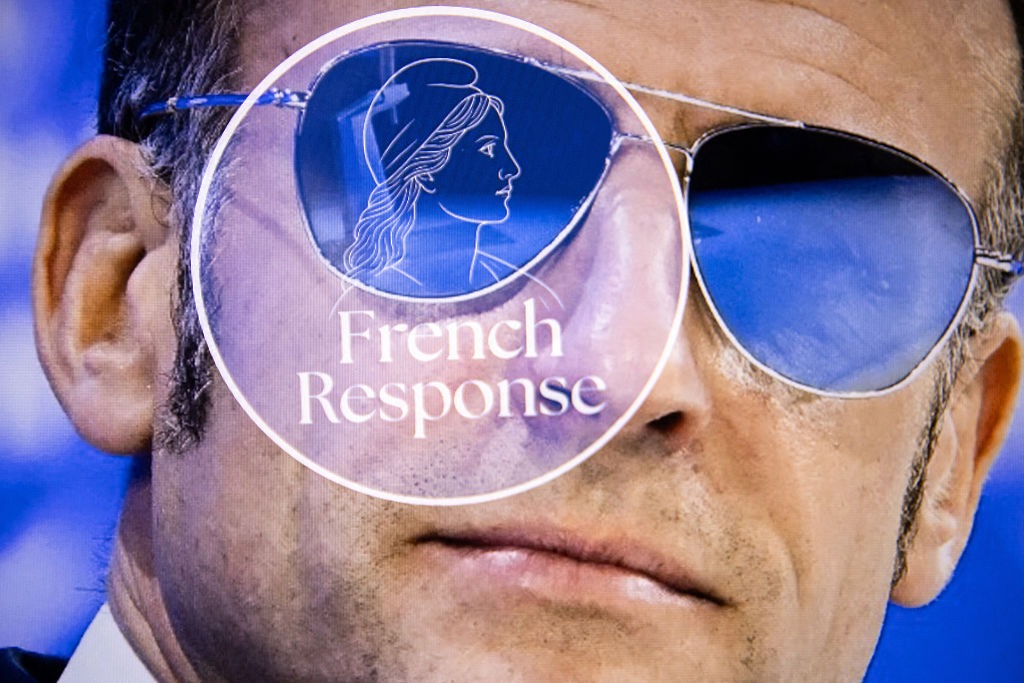
Additionally, the French Ministry for Europe and Foreign Affairs launched an initiative last year to address the “information war” by training diplomats to engage effectively in narrative battles. The ministry created “French Response,” a government-linked account on X that employs humor, irony, and factual corrections rather than formal denunciations. This approach draws from France’s intellectual tradition of using ridicule as a rhetorical weapon and political tool, while successfully reaching beyond traditional diplomatic audiences.
French authorities have also taken legal action, with prosecutors raiding X offices in Paris to investigate alleged political interference. France reinforced the European Union’s €120 million (approximately A$201 million) fine against the platform last year, sending a clear message to tech billionaires who allow their digital services to be exploited by malicious actors.
These narratives emanating from the U.S. have implications far beyond Paris. For middle powers like Australia that have traditionally considered Washington a trusted partner, this presents a strategic dilemma. Australia’s security depends on a networked order where European and Indo-Pacific theaters are increasingly interconnected. Australia’s participation in coalitions supporting Ukraine and its interest in deterring coercion rest on the assumption that Europe remains a credible security actor.
When disinformation erodes alliance trust, it complicates strategic planning well beyond Europe’s borders and signals vulnerability to adversaries regarding the alliance’s stability.
In this landscape of partnership-eroding disinformation, allies must monitor developments, coordinate responses, and focus communications on critical issues. Monitoring should track not only adversarial narratives but also distortion from friendly political ecosystems—an analytically uncomfortable but strategically necessary approach, as hybrid threats often utilize proxy channels.
France’s experience suggests that innovative corrections delivered with tact and humor can effectively counter harmful narratives. While France has taken the initiative, other NATO members and like-minded partners who benefit from these rebuttals should publicly defend alliance cohesion. Germany demonstrated this through a supportive Instagram post from its foreign minister.
Allied strategic communications need to emphasize shared priorities. For NATO, this means refocusing on burden-sharing narratives. The U.S. National Defense Strategy released in January explicitly emphasized shared responsibility and allied capability development. Effective public messaging should highlight burden-sharing efforts that are both accurate and strategically productive, reinforcing that deterrence works best when European, U.S., and Indo-Pacific capabilities mutually reinforce each other.
Middle powers like Australia can contribute by sharing successful approaches to building information resilience. Canberra’s experience countering foreign interference in the Pacific could provide valuable insights for Paris, which has faced similar threats from Azerbaijan in New Caledonia.
Rather than debating their dependence on the United States, middle powers should leverage their collective diplomatic voice to reinforce allied strength—perhaps with a strategic dose of humor along the way.
Fact Checker
Verify the accuracy of this article using The Disinformation Commission analysis and real-time sources.

15 Comments
Interesting to see France taking action against disinformation that threatens the Western alliance. Strengthening unity and trust between partners is crucial, especially with adversaries like Russia trying to sow division.
This highlights the evolving nature of information warfare. Democracies must be proactive in countering both external and internal sources of disinformation that target their alliances and partnerships.
The ability of adversaries to leverage false narratives within allied ecosystems is truly alarming. France’s proactive approach offers valuable insights for other countries facing similar challenges.
I agree, this is an insidious threat that requires a multilateral response. Maintaining trust and cohesion within the Western alliance is vital, and France’s actions set an important example.
It’s worrying to see Trump-aligned accounts and even the president himself contributing to disinformation that undermines NATO. Glad France is taking a stand, as this is a threat to the entire Western alliance.
This is a complex challenge as disinformation can come from both external and internal sources. Kudos to France for taking a proactive approach to protect the integrity of the Western alliance.
Absolutely, the ability of adversaries to amplify false narratives within allied ecosystems is very concerning. Vigilance and coordination are crucial to maintain trust and cohesion.
Curious to see how France’s approach to this challenge could provide lessons for countries like Australia. Maintaining a united front is essential in the face of adversarial efforts to sow division.
Concerning that major powers are amplifying false narratives to undermine Western alliances. Glad to see France taking a stand against this. Maintaining cohesion is key for middle powers like Australia too.
I agree, disinformation targeting alliances is a serious issue that needs to be addressed. Countries like France and Australia must work together to counter these threats.
It’s concerning that disinformation can complicate decision-making processes, especially for middle powers. France’s actions set an important precedent for how to respond to these threats.
Glad to see France taking action against this threat. Disinformation targeting alliances and partnerships is a serious challenge that must be addressed head-on by democracies worldwide.
Absolutely, this is a complex issue that requires a coordinated, proactive approach. France’s response could provide a useful model for other countries facing similar challenges.
Interesting that personal attacks on the French first lady have been part of the Russian-linked disinformation campaigns. Clearly no tactic is off limits when it comes to undermining the Western alliance.
Kudos to France for taking a firm stance against the dangerous spread of disinformation targeting the Western alliance. This is a critical issue that requires vigilance and a coordinated response.