


Listen to the article
Filipino Journalist’s Legal Battle Against Online Red-Tagging Reaches Critical Milestone
When Leonardo Vicente “Cong” Corrales wrote about the plight of the Higaonon indigenous people in 2019, he never expected to become a target himself. After reporting on indigenous evacuees fleeing military clashes in Mindanao, Philippines, Corrales found his name and image on a poster circulating online, labeling him as an alleged member of the Communist Party of the Philippines—a group designated as a terrorist organization by the government.
This practice, known as “red-tagging,” has become a serious threat to journalists, activists, and critics in the Philippines. Despite official denials of its existence, the Supreme Court ruled in 2024 that red-tagging constitutes a genuine threat to life and liberty. According to a study by the National Union of Journalists of the Philippines (NUJP), 60 percent of red-tagging incidents between 2016 and 2024 were perpetrated by state forces, particularly police and military personnel.
For Corrales, the intimidation tactics escalated over time. In 2020, after publicly supporting ABS-CBN—the country’s largest broadcaster which was forced to shut down after being denied a franchise renewal by Congress—he discovered a funeral wreath bearing his name at the station. The following year, anonymous Facebook accounts circulated a photo of him holding what appeared to be a gun, suggesting he was an armed communist rebel. In reality, it was a toy prop used during a safety training seminar for journalists.
The harassment took another turn in 2023 when an anonymous Facebook account published Corrales’ personal information obtained from a city government housing agency. The doxxing operation was designed to suggest that journalists who criticize the government shouldn’t be entitled to public services like socialized housing.
Frustrated by Meta’s limited response to these targeted attacks, Corrales took unprecedented action. He sent a formal request to the social media giant, demanding the removal of red-tagging posts and information about the accounts behind them. While Meta claimed to have removed the offending content, it refused to disclose information about the perpetrators without legal proceedings.
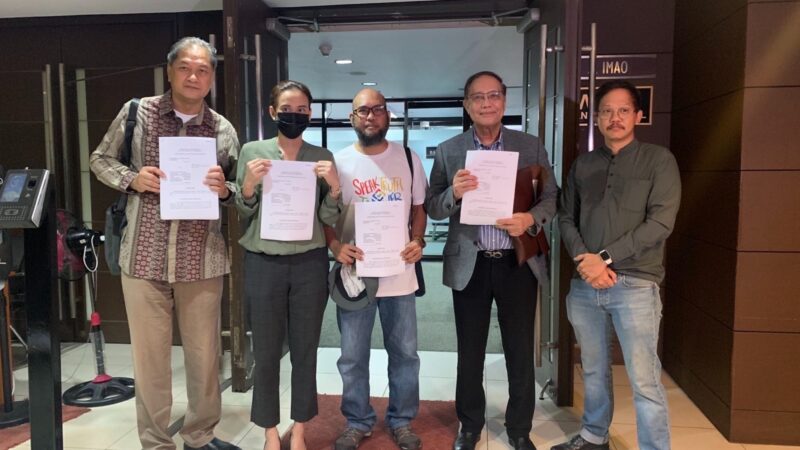
This refusal prompted Corrales to file a complaint with the National Privacy Commission (NPC) in May 2023, supported by the NUJP and volunteer lawyers from the Movement Against Disinformation. The case was described as “watershed litigation” against red-taggers and the platforms that enable them.
In July 2025, after two years of legal battles, the NPC facilitated an arbitration that granted Corrales access to the identities of at least 10 of the approximately 30 social media pages behind the red-tagging campaign. Significantly, at least one of these accounts was traced back to a government establishment—confirming long-held suspicions about state involvement in harassment campaigns against journalists.
“They are no longer just neutral bulletin boards; they are now the primary battlegrounds for public discourse,” Corrales said of social media platforms in an interview. “By failing to act decisively, these platforms become unwitting accomplices to human rights abuses.”
Corrales emphasized that legal action became necessary when platform-based solutions proved inadequate. “Without legal action, these platforms can easily ignore our pleas,” he noted, adding that his case aims to force “systemic change in how these platforms handle human rights issues.”
His recommendations for combating red-tagging include clear condemnation from high-ranking officials, swift investigation of perpetrators, and more transparent content moderation policies from social media companies. He specifically called for Meta to be more responsive to reports of threats and disinformation, particularly when they originate from state-affiliated sources.
Corrales also urged platforms to invest in local teams with deep understanding of Philippine sociopolitical contexts, arguing that context-specific knowledge is essential for effective moderation of politically-charged content.
From being the most red-tagged journalist in his region to becoming a pioneer in holding tech platforms accountable, Corrales’ case represents a significant development in the intersection of digital rights, press freedom, and platform accountability in the Philippines. His legal victory marks an important precedent for journalists and activists seeking recourse against online harassment in a country where press freedom continues to face severe challenges.
Fact Checker
Verify the accuracy of this article using The Disinformation Commission analysis and real-time sources.

14 Comments
This is a troubling example of the challenges journalists face in reporting on sensitive topics like indigenous rights and conflict. The practice of red-tagging is clearly being used as a tool to intimidate and silence critical voices. The Filipino journalist’s legal battle is an important one, and I hope it leads to meaningful reforms to protect press freedom in the country.
You’re right, this case has broader implications beyond just the Philippines. Governments around the world must be held accountable for any efforts to suppress independent journalism, especially when it comes to reporting on marginalized communities and human rights issues.
The details in this story are quite disturbing. Journalists should not have to face intimidation and threats for reporting on important issues like the plight of indigenous communities. The Philippine government needs to take concrete steps to end red-tagging and safeguard press freedom.
Absolutely, the government’s denial of red-tagging despite the Supreme Court ruling is very concerning. They need to be held accountable and ensure a safe environment for journalists to operate without fear of retaliation.
It’s disheartening to see the Philippine government engage in such blatant efforts to silence critical reporting. Journalists must be able to do their jobs without fear of being ‘red-tagged’ or facing other forms of retaliation. This case highlights the importance of press freedom and the need for reforms to protect it.
Agreed. The high rate of red-tagging incidents perpetrated by state forces is particularly alarming. The government needs to take concrete steps to rein in these practices and ensure journalists can operate freely without threats to their safety.
The details in this story are deeply concerning. Journalists should never have to face threats and intimidation for doing their jobs, especially when reporting on important issues like the treatment of indigenous communities. The Philippine government’s red-tagging tactics are a clear violation of press freedom and must be condemned. I hope this journalist’s legal battle leads to meaningful change to protect journalists in the country.
Absolutely. The Supreme Court ruling recognizing red-tagging as a threat is a positive step, but the government’s continued denial and inaction is unacceptable. Stronger legal protections and accountability measures are needed to ensure journalists can report freely without fear of retaliation.
This is a concerning case of the Philippine government targeting journalists who report on issues related to indigenous communities and conflict. The practice of ‘red-tagging’ is a serious threat to press freedom and must be addressed to protect journalists and their critical work.
Agreed, the Supreme Court ruling recognizing red-tagging as a threat is an important step, but more needs to be done to hold state actors accountable and ensure journalists can report freely without fear of retaliation.
Journalists play a vital role in exposing the truth and holding the powerful to account. It’s alarming to see the Philippine government try to silence critical reporting through tactics like red-tagging. This sets a dangerous precedent that must be challenged.
You’re right, this case highlights the broader issue of press freedom being under threat in many parts of the world. Governments need to protect journalists, not target them for doing their jobs.
This case speaks to the broader challenges journalists face in reporting on sensitive topics, especially in countries with authoritarian tendencies. The Filipino journalist’s legal battle against red-tagging sets an important precedent, but more needs to be done to protect press freedoms.
You make a good point. Journalists reporting on issues like mining, resource extraction, and indigenous rights often face backlash from powerful interests. Stronger legal protections and accountability measures are needed to shield them from such threats.