


Listen to the article
Fake Euronews Videos Spread Disinformation About Ukrainian Athletes
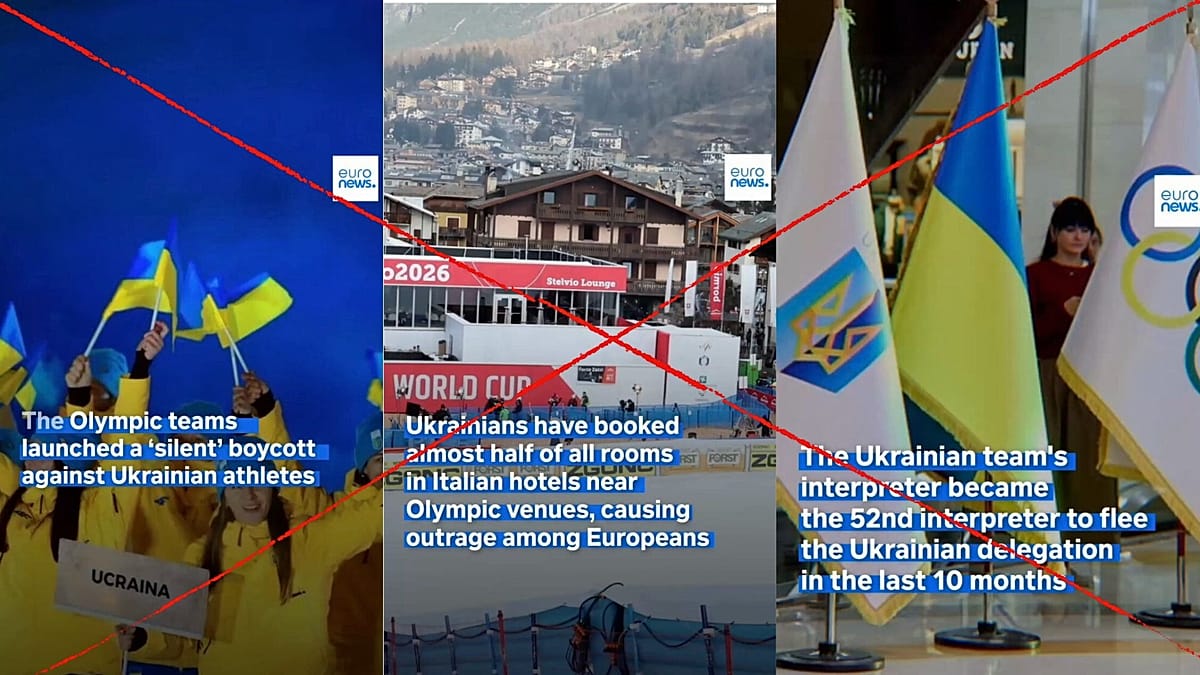
At least five videos falsely presenting themselves as Euronews content have been identified as part of a coordinated disinformation campaign targeting Ukrainian athlete refugees, an investigation has revealed.
The sophisticated operation used counterfeit versions of Euronews’ distinctive graphics, logos, and visual style to lend credibility to fabricated stories about Ukrainian sports figures who fled their country following Russia’s full-scale invasion.
Digital forensics experts who analyzed the videos noted the perpetrators paid careful attention to detail, mimicking the news organization’s branding elements to create a convincing illusion of authentic journalism. However, subtle inconsistencies in typography and animation revealed their fraudulent nature.
“This represents an evolution in disinformation tactics,” said Marta Kovacs, a media security researcher at the European Digital Rights Observatory. “Rather than creating entirely new outlets, bad actors are impersonating established, trusted news sources to exploit their credibility and reach.”
The falsified videos circulated primarily on Telegram channels and fringe websites before spreading to mainstream social media platforms, where they garnered thousands of views and shares before content moderators began removing them.
The narratives presented in the fake reports contained inflammatory and unsubstantiated claims about Ukrainian athletes receiving preferential treatment abroad while allegedly engaging in criminal activities. These fabrications appear designed to stoke resentment toward Ukrainian refugees in European host countries.
This incident highlights a growing trend of what experts call “media parasitism,” where disinformation operators attach their content to legitimate news organizations to bypass audience skepticism and platform safeguards.
“The targeting of athletes is particularly insidious,” explained Stefan Muller, a sports sociologist at Heidelberg University. “Athletes often serve as cultural ambassadors and symbols of national resilience during conflicts. Undermining their reputations can damage broader solidarity with Ukraine.”
Euronews has issued a statement condemning the forgeries and warning viewers to verify content through official channels. The media organization has implemented digital watermarking measures and is working with social media companies to expedite the removal of counterfeit content.
European officials have expressed concern about the sophistication of the operation. A spokesperson for the EU’s East StratCom Task Force, which monitors disinformation campaigns, noted that this represents part of a broader pattern of information manipulation aimed at undermining support for Ukraine.
“These attacks don’t happen in isolation,” said Lukas Andersen from the Atlantic Council’s Digital Forensic Research Lab. “They’re part of a multi-pronged strategy to erode European solidarity with Ukraine by targeting specific demographics and exploiting existing social tensions.”
The disinformation campaign emerges as several European countries debate continued support for Ukrainian refugees, making the timing particularly significant. Poland, Germany, and the Czech Republic—countries hosting large Ukrainian refugee populations—were among the primary targets for the fake videos.
Media literacy advocates emphasize that this incident demonstrates the need for increased public awareness about verification techniques. “Even experienced news consumers can be fooled by sophisticated forgeries,” said Claire Dubois from Media Literacy Now. “We recommend checking the official website or social media accounts of news organizations when content seems suspicious.”
Law enforcement agencies across Europe have launched investigations to identify the source of the forgeries, though attribution in such cases often proves challenging. Early analysis suggests the operation involved significant resources and coordination, raising questions about potential state-backed involvement.
As the conflict in Ukraine approaches its fourth year, experts warn that information warfare tactics are becoming increasingly refined, with trusted Western media brands likely to face more impersonation attempts designed to sow division and undermine support for Ukraine.
Fact Checker
Verify the accuracy of this article using The Disinformation Commission analysis and real-time sources.

7 Comments
Impersonating established news sources to spread falsehoods is a concerning tactic that can have serious consequences, especially when it comes to sensitive topics like the Olympics and the war in Ukraine. I hope the authorities are able to quickly identify the source of these fake Euronews videos and hold the perpetrators accountable.
Sophisticated disinformation campaigns that leverage the credibility of trusted news sources are increasingly common. While the technical execution of these fake Euronews videos is impressive, the intent to mislead the public is deeply troubling. Fact-checking and media literacy are crucial in navigating the modern information landscape.
Agreed. The ability to create such convincing imitations of reputable news outlets highlights the need for robust authentication measures and public awareness around the prevalence of disinformation tactics.
This serves as another reminder of the importance of media literacy and critical thinking when consuming online content, especially around politically charged issues. While the technical execution of these fake videos is impressive, the underlying motivation to spread disinformation is deeply concerning.
The use of counterfeit Euronews branding and visual elements to create these fake videos is quite impressive from a technical standpoint, though of course the intent is malicious. I’m curious to learn more about the specific tactics and tools used by the perpetrators to pull this off.
Yes, the level of detail in mimicking the Euronews style is noteworthy. It highlights the need for robust media authentication and verification processes to identify such sophisticated disinformation campaigns.
This is a concerning development in the spread of disinformation. Impersonating reputable news sources to lend credibility to fake stories is a sophisticated tactic that can mislead many people. It’s crucial that we remain vigilant and fact-check information, especially around sensitive topics like the Olympics and the war in Ukraine.