


Listen to the article
#
Russia Launches AI-Powered Disinformation Campaign on TikTok Targeting Ukraine’s Pokrovsk Defense
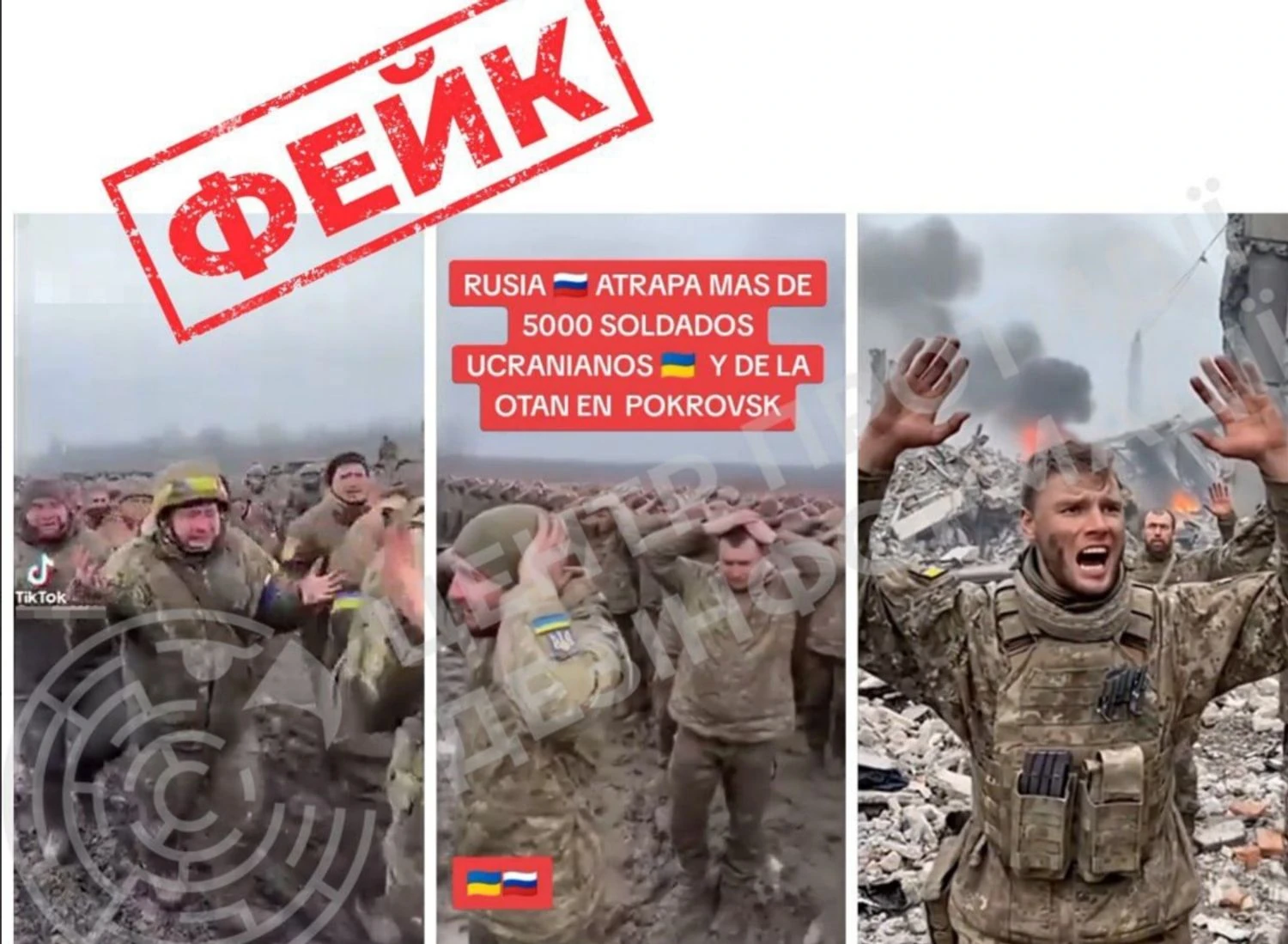
A sophisticated disinformation operation using artificial intelligence to create fake videos of “mass surrender of Ukrainian military near Pokrovsk” has been detected on TikTok, according to the Center for Countering Disinformation (CCD) at Ukraine’s National Security and Defense Council.
The fabricated videos, which have been strategically distributed in multiple languages to reach international audiences, appear to be part of a coordinated Kremlin-backed network designed to undermine support for Ukraine both domestically and abroad.
Intelligence officials have identified tell-tale signs that these accounts are operating as part of a synchronized campaign to promote Russian narratives. Many of the videos feature captions in various foreign languages, suggesting a deliberate effort to influence global public opinion.
“The campaign’s goal is to create an impression among foreign users that Ukraine is losing and that aid to it is pointless,” the CCD explained in its report. “Inside Ukraine, these fakes are intended to demoralize the population and create a sense of catastrophe at the front.”
The timing of this disinformation push coincides with ongoing battles around Pokrovsk, a strategically important city in eastern Ukraine that Russian forces have been attempting to capture. Ukrainian Defense Forces continue to hold defensive positions in the area, repelling numerous Russian advances.
Military analysts suggest the digital campaign represents the informational component of Russia’s military strategy, attempting to create false perceptions of battlefield victories where actual progress has been limited. By fabricating scenes of mass surrender, Russian propagandists aim to weaken Ukrainian morale and convince international partners that continued support for Kyiv is futile.
This latest disinformation effort follows established patterns in Russia’s information warfare playbook. Earlier this year, the CCD documented similar AI-generated content featuring fake “street polls” in which computer-generated “Ukrainians” advocated for “peace at any cost” – a narrative that aligns with Russia’s demand for Ukrainian territorial concessions.
Social media platforms like TikTok have become prime battlegrounds in this digital conflict. The platform’s algorithmic content distribution and predominantly young user base make it particularly valuable for spreading misleading information quickly. Despite efforts to moderate content, synthetic media created with increasingly sophisticated AI tools presents new challenges for detection and removal.
Cybersecurity experts note that this incident highlights the evolving nature of disinformation campaigns in the digital age. “What we’re seeing is the industrialization of fake content,” said Dr. Maria Hellman, a disinformation researcher at Stockholm University, who was not involved in the CCD report. “AI-generated videos allow for mass production of convincing false narratives that can be tailored to specific audience segments across multiple languages.”
The Ukrainian government has urged citizens to rely on official military communications and verified news sources for accurate information about the situation at the front lines. They have also called on international partners to increase pressure on social media companies to improve detection and removal of synthetic media being used in information warfare.
Meanwhile, Russian authorities have consistently denied involvement in disinformation campaigns, despite extensive documentation by international intelligence agencies and independent researchers linking such operations to Russian state actors and proxies.
The battle for Pokrovsk continues to be a focal point of intense fighting on Ukraine’s eastern front, with Ukrainian forces working to prevent Russian advances that would compromise important supply lines and defensive positions in the Donetsk region.
Fact Checker
Verify the accuracy of this article using The Disinformation Commission analysis and real-time sources.

10 Comments
This is a concerning development that underscores the evolving nature of information warfare. We must remain vigilant and support efforts to expose and debunk these fabricated narratives. The integrity of information is paramount in times of conflict.
Well said. Maintaining a clear and accurate understanding of the situation is crucial. I hope the international community continues to stand firm in its support for Ukraine and the truth, while also investing in tools to detect and counter such AI-generated deception.
This is a stark reminder of the ongoing information war alongside the physical conflict in Ukraine. We must remain vigilant and support efforts to expose and debunk these fabricated narratives.
Absolutely. Maintaining a clear and accurate understanding of the situation is crucial. I hope the international community continues to stand firm in its support for Ukraine and the truth.
The Kremlin’s use of AI-generated propaganda is a worrying tactic. It highlights the need for advanced tools and strategies to identify and counter such synthetic media. Fact-checking and media literacy are essential in these times.
I agree. This is a complex challenge that requires a multifaceted approach. Collaboration between tech companies, governments, and civil society will be crucial in addressing the threat of AI-powered disinformation.
This is a concerning development. We must be vigilant in the face of such sophisticated disinformation campaigns. It’s crucial to rely on authoritative and verified sources when it comes to information about the war in Ukraine.
I agree. Fact-checking and media literacy are essential to combat these manipulative tactics. We should encourage everyone to be critical consumers of online content.
The use of AI to create fake videos is a troubling tactic. It highlights the need for robust measures to detect and counter digital deception. I hope the relevant authorities can swiftly address this issue.
You’re right. The dissemination of misinformation on social media platforms like TikTok is a serious concern. Platforms must strengthen their policies and enforcement to curb the spread of such harmful content.