


Listen to the article
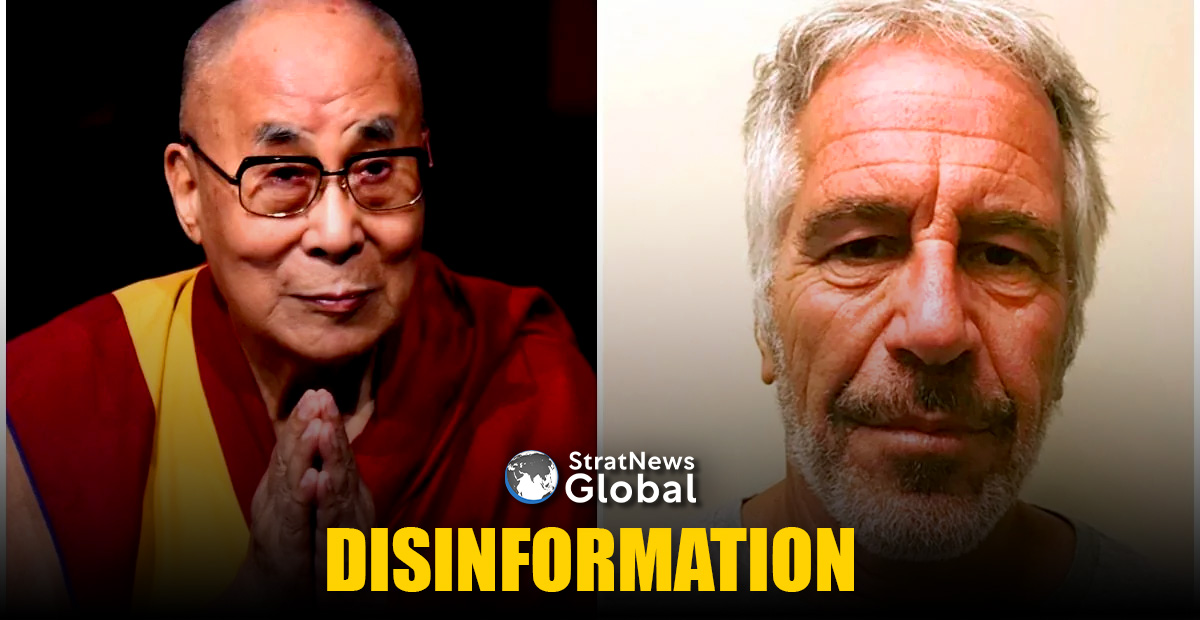
In a significant development following the release of millions of documents under the “Epstein Files Transparency Act,” a targeted disinformation campaign has emerged attempting to falsely link the Dalai Lama to convicted sex offender Jeffrey Epstein. The documents, released by the Department of Justice, contain over three million pages, 2,000 videos, and 180,000 images related to Epstein’s interactions with global elites.
A comprehensive analysis by Tibetan scholars has found that while the Dalai Lama’s name appears more than a hundred times in the files, these references reveal Epstein’s unsuccessful attempts to arrange meetings rather than any actual connection between the two.
Chinese state media outlets, including CGTN and China Radio International, have seized upon these mentions to launch what appears to be a coordinated disinformation campaign. These outlets have flooded social media with misleading headlines suggesting regular meetings between the Dalai Lama and Epstein, despite evidence to the contrary. The campaign’s structure and patterns bear similarities to previous disinformation efforts linked to Beijing.
Some Indian media outlets have uncritically amplified these claims, publishing headlines such as “Dalai Lama met Jeffrey Epstein in 2012” without proper context or verification. This has forced the Tibetan community into a defensive position against what researchers describe as a “manufactured scandal.”
The scholarly audit of all 168 references to “Dalai” in the files found two technical errors, with the remaining mentions falling into distinct categories. Approximately 70% were duplicate or redundant system files. The analysis revealed that Epstein had indeed sought a meeting with the Dalai Lama between May and July 2015, attempting to leverage connections at MIT to broker an introduction.
This pattern aligns with Epstein’s documented strategy of “collecting” relationships with Nobel laureates and prominent scientists to enhance his social credibility. Despite these efforts, the records demonstrate no direct contact or meetings ever occurred between Epstein and the Dalai Lama or his office.
A widely circulated claim about a meeting on October 21, 2012, stems from a misinterpretation of an exchange between Epstein and an unidentified female associate. The woman mentioned attending a public Dalai Lama teaching at New York’s Lincoln Center – an event documented in public records – not a private meeting involving Epstein.
Claims by author Michael Wolff about seeing the Dalai Lama at Epstein’s Manhattan apartment have been contradicted by contemporaneous email records. As late as March 2016, emails from MIT Media Lab’s Joi Ito to Epstein referred to a potential meeting with the Dalai Lama as a “next stop,” confirming such an encounter had not previously occurred.
The Dalai Lama’s office has officially confirmed there were no meetings or authorized dealings with Epstein. Requests for clarification from Wolff and media outlets that published his claims have gone unanswered.
This case highlights the vulnerabilities in our information ecosystem, particularly when documents of significant public interest are released. While the Epstein Files have provided crucial insights into how wealth and power can shield individuals from accountability, they have also been exploited to target the reputation of unrelated parties.
For the Tibetan community, already facing significant political challenges on the global stage, this disinformation campaign represents more than simple misrepresentation. It appears to be a strategic attempt to undermine the moral authority of one of their most important spiritual and political figures.
Media literacy experts emphasize that such incidents underscore the importance of critical evaluation of claims, particularly when they align with existing geopolitical tensions and involve historically marginalized communities.
Fact Checker
Verify the accuracy of this article using The Disinformation Commission analysis and real-time sources.

12 Comments
Interesting development, though it’s concerning to see attempts to spread disinformation around the Dalai Lama’s connections. Fact-checking is crucial to counter these misleading claims.
I agree, the release of these documents highlights the need for careful analysis to separate truth from fiction. Responsible reporting is key.
It’s disappointing to see some Indian media outlets amplifying these dubious claims without proper scrutiny. Responsible journalism should prioritize verifying facts over sensationalism.
I agree, uncritical amplification of potentially false narratives is concerning. All media outlets have a duty to carefully fact-check information before publication.
The Chinese state media’s response is quite concerning. Attempting to misrepresent the information in these documents for political purposes is highly problematic.
I share your concerns. Spreading misleading narratives through coordinated disinformation campaigns is a serious issue that needs to be addressed.
It’s good that the Tibetan scholars have thoroughly reviewed the documents and found no evidence of a real connection between the Dalai Lama and Epstein. Disinformation campaigns can be quite damaging.
Absolutely. Targeted disinformation efforts, especially those potentially linked to state actors, are very concerning. Fact-checking and transparency are essential.
The comprehensive analysis by Tibetan scholars is reassuring. Their findings that the Dalai Lama’s name appears in the documents due to Epstein’s unsuccessful attempts, rather than any actual connection, help clarify the situation.
Yes, the scholars’ thorough review of the documents is important. Their conclusions provide a factual basis to counter the misleading claims circulating in the media.
This case highlights the importance of maintaining vigilance against disinformation, especially when it involves high-profile figures and sensitive political issues. Fact-based reporting is crucial to upholding the truth.
Absolutely. Diligent fact-checking and transparency are essential to prevent the spread of misleading narratives and maintain public trust in the media.