


Listen to the article
Russia Deploys Propaganda Machine to Influence Hungarian Election
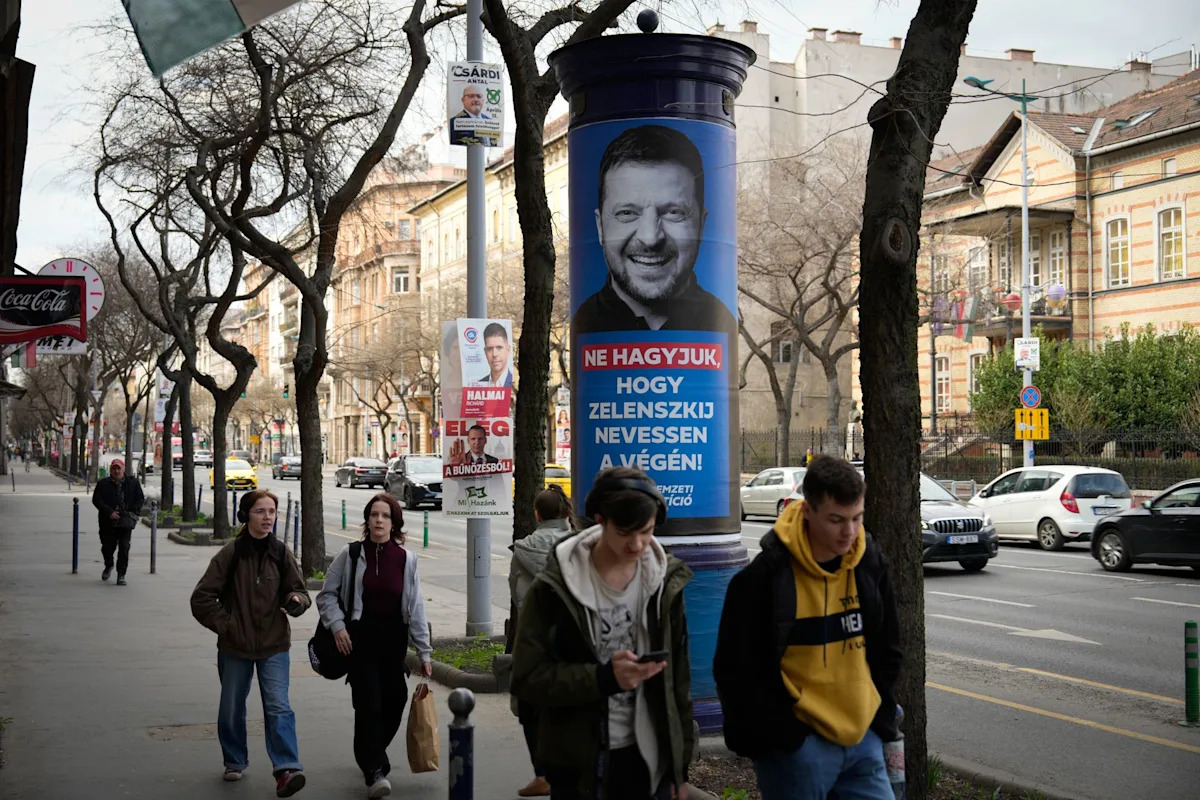
As Hungary approaches a pivotal election on April 12, Russian propaganda networks have launched a coordinated campaign to support Prime Minister Viktor Orban, who faces his most serious electoral challenge in 16 years of rule.
Intelligence analysts and disinformation watchdogs have identified a sophisticated operation spreading false narratives about alleged Ukrainian and European Union interference in Hungary’s democratic process. The campaign appears designed to both bolster Orban’s position and delegitimize potential protests if he secures another term in office.
“Everyone understands that Ukraine is preparing a Maidan in Hungary,” declared pro-Kremlin propagandist Vladimir Kornilov in a widely viewed Telegram post on March 23, referencing Ukraine’s 2014 revolution. His column for Russian state news agency RIA Novosti amplified similar claims, drawing over 120,000 views.
Russian state media outlet RT has furthered this narrative, suggesting Orban’s potential victory could trigger “Maidan on steroids” – distorting a comment from U.S. journalist Michael Weiss who had discussed possible scenarios if Orban attempted to “steal” the election despite the opposition Tisza party’s lead in polls.
These messages align closely with Orban’s own campaign rhetoric, which has made criticism of Ukraine a central theme. The propaganda effort comes as Budapest and Belgrade recently claimed explosives were discovered near a pipeline transporting Russian gas to Hungary via Serbia – an incident Hungary hinted might involve Ukraine, though Kyiv firmly denied any involvement.
LetsData, a tech firm analyzing social media trends, told the Kyiv Independent that narratives suggesting any post-election unrest would be orchestrated by Ukraine and the EU are particularly prevalent in Hungary and neighboring Serbia.
“This narrative aims to discredit any potential protests and delegitimize Orban’s opposition,” LetsData researchers explained.
The disinformation campaign extends beyond traditional media channels. Antibot4Navalny, a group tracking Russian disinformation, identified a Russian-linked network dubbed “Matryoshka” deploying fake videos across multiple platforms in late March. These videos impersonate reputable media outlets, NGOs, and experts while using unrelated stock footage to spread false claims.
One fabricated video bearing the Kyiv Independent logo falsely claimed that Pascal Canfin, a French Member of the European Parliament, said Ukraine was preparing provocations against Hungary, including a possible coup. Another fake post impersonating the Kyiv Independent on Instagram alleged Ukraine’s Culture Ministry had “recognized” graffiti calling for violent overthrow of Hungary’s government.
While researchers note limited organic reach for these individual posts on platforms like X (formerly Twitter), with videos garnering around 100 views each, other anti-Ukrainian content linked to the campaign has accumulated over 290,000 views on Telegram.
“Most of the claims were reused from previous Matryoshka campaigns that either targeted other elections or exploited other ‘news of the day’ to the Kremlin’s benefit,” Antibot4Navalny reported.
According to media investigations, Moscow has deployed operatives to Budapest to help sway the election in Orban’s favor, employing tactics previously used in Moldova. “Narratives typically incite hate toward Ukraine, its elected officials, citizens, and refugees,” the monitoring group told the Kyiv Independent.
Alyona Hurkivska, a political scientist at Ukraine’s National Academy of Sciences, explains that framing protests and civil society activity as foreign interference has long been part of Russia’s geopolitical toolkit. The “color revolutions” narrative “de-legitimizes democratic processes” and “reinforces the myth of Western hostility,” Hurkivska said.
What makes the Hungarian situation unique is that Orban, Moscow’s preferred candidate, also enjoys support from the current U.S. administration. Russian propagandists have noted this shift, with RT celebrating what it called a Trump-led ideological reversal that has “stripped back its regime-change machinery in Hungary.”
As the election approaches, the impact of this disinformation campaign remains uncertain, but the scale and coordination demonstrate Russia’s continued investment in shaping democratic outcomes in European nations through propaganda and manipulation.
Fact Checker
Verify the accuracy of this article using The Disinformation Commission analysis and real-time sources.

10 Comments
I’m curious to learn more about the specific false narratives being spread by Russian state media. What kind of claims are they making to try to undermine confidence in the electoral process?
Yes, it would be helpful to get more details on the propaganda tactics being employed. Understanding their methods can inform efforts to combat disinformation.
I appreciate the disinformation commission’s efforts to fact-check these claims and expose the Kremlin’s propaganda tactics. Providing transparent and accurate information is crucial for maintaining trust in the democratic process.
This sounds like a serious issue. It’s concerning to see the Kremlin trying to interfere in Hungary’s elections through disinformation campaigns. I hope the Hungarian people can see through these propaganda efforts and make their own informed decisions at the ballot box.
Absolutely, foreign meddling in domestic elections is a threat to democracy. The Hungarian people deserve to have a free and fair vote without outside influence.
This is a concerning development, but I’m glad to see that the international community is monitoring the situation and calling out these disinformation efforts. Maintaining the integrity of elections is vital for upholding democratic values.
Yes, vigilance and fact-checking are essential to counter foreign interference in elections. I hope the Hungarian people are able to make their voices heard without undue influence from outside actors.
It’s troubling to see Russia trying to interfere in another country’s democratic process. As a major global power, the Kremlin should respect the sovereignty of Hungary and not try to sway the election outcome through propaganda.
I agree. Hungary deserves to have its own free and independent election without outside meddling. Voters should be able to make their choices without undue foreign influence.
The timing of this disinformation campaign is concerning, coming right before a pivotal election. I hope the Hungarian authorities and international observers are closely monitoring the situation to identify and counter these influence operations.