


Listen to the article
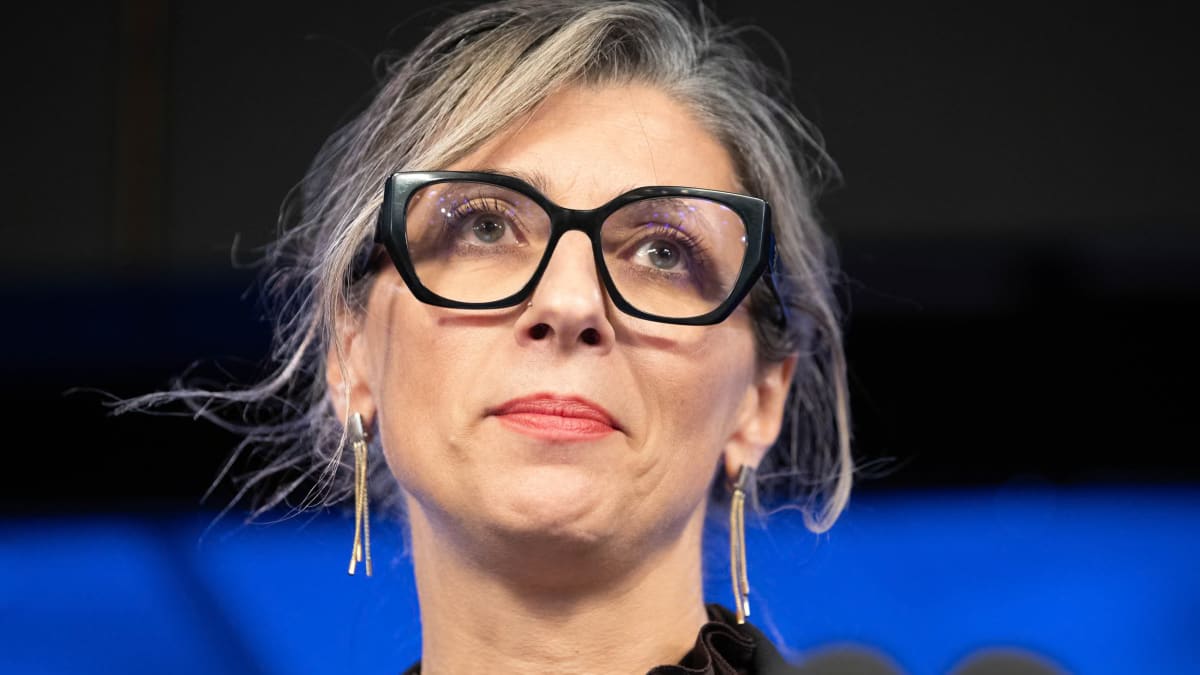
In a significant development for academic freedom and international diplomacy, a literary festival event featuring UN Special Rapporteur Francesca Albanese has been relocated after Adelaide University canceled the original booking due to her scheduled appearance.
Albanese, who serves as the United Nations Special Rapporteur on the occupied Palestinian territories, has become one of the most prominent global voices advocating for Palestinian rights during the ongoing crisis in Gaza. Her outspoken criticism of Israeli policies has made her increasingly controversial in diplomatic circles, particularly among Western nations allied with Israel.
The controversy surrounding Albanese intensified recently after pro-Israeli lobbying group UN Watch circulated what she describes as a manipulated video of her speaking at a conference in Doha. According to UN Watch, Albanese referred to Israel as the “enemy of humanity” in her remarks. French Foreign Minister Jean-Noël Barrot subsequently amplified these allegations, claiming she had condemned Israel “as a people and a nation,” and called for her resignation.
Albanese has strongly refuted these characterizations. In an interview with journalist Mehdi Hasan, she stated: “The cut and paste of that video was so rudimental that it was almost insulting to human intelligence.” According to Albanese, her actual comments referred to a broader system of oppression as humanity’s “common enemy,” not Israel specifically.
The UN Special Rapporteur has faced mounting pressure since taking her position in May 2022. A human rights expert with extensive publications before her appointment, Albanese has never concealed her focus on Palestinian rights or her research on Israel’s occupation of Palestine. By November of her first year, she was already delivering lectures addressing settler colonialism and apartheid in Palestine.
Albanese’s work has particularly angered officials after she published a comprehensive study in July 2025 identifying approximately 60 major global corporations allegedly profiting from Israel’s occupation and military operations in Gaza. The report highlighted weapons manufacturers, financial institutions, consulting firms, and media companies that she claims have facilitated or benefited from the conflict.
These findings led to unprecedented sanctions against her from the United States government, marking a significant escalation in attempts to curtail her work. Despite this pressure, Albanese has maintained her position, continuing to challenge what she describes as distorted narratives about the conflict.
Her effectiveness in advocating for Palestinian rights has earned her substantial public support, with over 700,000 people signing a petition nominating her for the 2026 Nobel Peace Prize. This public backing stands in stark contrast to the institutional resistance she faces.
The broader context of Albanese’s work extends beyond the Israeli-Palestinian conflict to what former UN official and human rights lawyer Craig Mokhiber has termed a “US-Israeli Axis.” Critics like Mokhiber argue this represents a concerning shift toward more aggressive military actions and diminished respect for international institutions and law.
Recent military actions in the Middle East have intensified these concerns. U.S. and Israeli airstrikes in Iran have reportedly resulted in significant civilian casualties, including an incident at a girls’ elementary school in Minab that killed 165 people, primarily children between 7 and 12 years old. A subsequent strike in Lamerd reportedly killed 20 young volleyball players in a gymnasium.
These developments unfold against the backdrop of what some observers describe as an emerging neo-colonial ideology. At a Munich Security Conference in February, U.S. Secretary of State Mario Rubio delivered a speech that critics like journalist Jonathan Cook characterized as advocating “a return to brutal Western colonialism.”
Amidst this turbulent landscape, Albanese continues to articulate an alternative vision centered on human rights and international law. “We, who do not control large amounts of financial capital, algorithms, and weapons, we now see that we, as a humanity, have a common enemy,” she stated. “And freedoms, the respect for fundamental freedoms, is the last peaceful avenue, the last peaceful toolbox that we have to regain our freedom.”
As the Adelaide University controversy demonstrates, the tension between institutional pressure and advocacy for human rights principles remains a defining challenge in addressing one of the world’s most intractable conflicts.
Fact Checker
Verify the accuracy of this article using The Disinformation Commission analysis and real-time sources.

28 Comments
Silver leverage is strong here; beta cuts both ways though.
Good point. Watching costs and grades closely.
Good point. Watching costs and grades closely.
Production mix shifting toward Disinformation might help margins if metals stay firm.
Good point. Watching costs and grades closely.
Silver leverage is strong here; beta cuts both ways though.
Good point. Watching costs and grades closely.
Good point. Watching costs and grades closely.
Interesting update on Examining Genocide Claims, Misinformation, and Global Power Dynamics. Curious how the grades will trend next quarter.
Good point. Watching costs and grades closely.
Good point. Watching costs and grades closely.
Production mix shifting toward Disinformation might help margins if metals stay firm.
Good point. Watching costs and grades closely.
The cost guidance is better than expected. If they deliver, the stock could rerate.
Good point. Watching costs and grades closely.
Good point. Watching costs and grades closely.
Exploration results look promising, but permitting will be the key risk.
Good point. Watching costs and grades closely.
Silver leverage is strong here; beta cuts both ways though.
Good point. Watching costs and grades closely.
Good point. Watching costs and grades closely.
Interesting update on Examining Genocide Claims, Misinformation, and Global Power Dynamics. Curious how the grades will trend next quarter.
Good point. Watching costs and grades closely.
Good point. Watching costs and grades closely.
Uranium names keep pushing higher—supply still tight into 2026.
Production mix shifting toward Disinformation might help margins if metals stay firm.
Good point. Watching costs and grades closely.
Good point. Watching costs and grades closely.