


Listen to the article
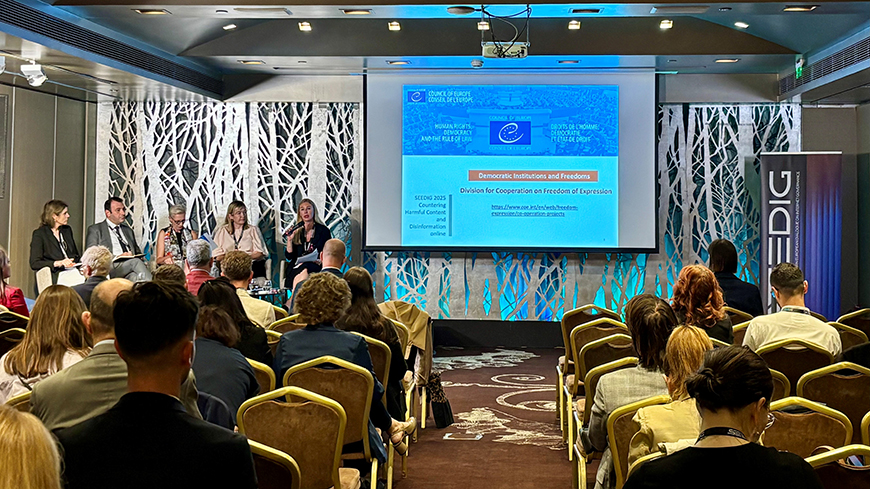
European regulators and experts gathered in Athens last week to address the growing challenge of harmful online content and disinformation that continues to pose threats to democratic institutions across the continent.
The high-level panel discussion, organized by the Council of Europe Division for Cooperation on Freedom of Expression as part of the South Eastern European Dialogue on Internet Governance (SEEDIG), brought together key representatives from Greece, Bosnia and Herzegovina, and Albania on October 10th.
Participants focused on developing coordinated strategies to combat misleading information while preserving freedom of expression, a delicate balance that has become increasingly difficult to maintain in the digital era. The meeting comes at a critical time when both state and non-state actors are deploying sophisticated disinformation campaigns that can rapidly spread across borders.
The Council of Europe presented several of its instruments designed to guide member states in addressing disinformation while upholding human rights principles, democratic values, and the rule of law. Officials also unveiled plans for new initiatives aimed at strengthening information integrity across the region. Among these are forthcoming guidelines to help countries implement effective media and information literacy strategies, considered essential tools in building public resilience against manipulation.
A significant portion of the discussion centered on the European Union’s Digital Services Act (DSA), which introduces substantial new responsibilities for online platforms. The legislation requires tech companies to conduct risk assessments, implement mitigation measures, and develop crisis response protocols. However, speakers acknowledged that while the DSA represents a landmark regulatory framework, its effectiveness remains to be fully assessed as implementation is still in early stages.
“The geopolitical context plays a significant role in how disinformation spreads and impacts societies,” noted one participant, highlighting that regulations alone cannot address the full scope of the problem without considering broader international tensions and conflicts that often fuel misleading narratives.
The panel emphasized that successful implementation of the DSA will require robust cooperation between national authorities and civil society organizations. Rather than relying solely on reactive measures, participants stressed the importance of proactive approaches, particularly through media literacy programs that empower users to identify and resist manipulation.
Greece’s pilot program “Cultivating Critical Readers” was showcased as a promising initiative. Developed jointly by the country’s General Secretariat of Communication and Media and the Ministry of Education, the program aims to build critical thinking skills among students and the broader public.
The connection between online hate speech and discrimination emerged as another key concern. Participants observed that while traditional hate speech cases with clear violations are relatively straightforward to address, the anonymous and borderless nature of the internet creates significant challenges in identifying perpetrators and assigning responsibility.
Experts called for strengthened multi-stakeholder cooperation, including partnerships with journalists, educational institutions, and civil society groups to effectively counter hate speech. This collaborative approach was deemed essential for creating a more responsible online environment while respecting freedom of expression.
Looking toward the future, the discussion inevitably turned to artificial intelligence and its regulatory implications. Participants reached a consensus that “technology evolves faster than regulation,” highlighting the need for adaptive governance frameworks.
The regulation of AI, they agreed, cannot be the responsibility of a single authority but requires coordinated efforts across multiple agencies, clear prioritization, and significantly enhanced institutional capacities to keep pace with technological developments.
As the meeting concluded, participants reaffirmed the vital importance of regional and European cooperation, particularly when addressing platforms that operate beyond EU jurisdiction. They emphasized that all efforts to combat harmful content must be guided by a balanced approach firmly rooted in human rights principles.
A comprehensive report detailing the discussions and proposed actions is expected to be published in the coming weeks.
Fact Checker
Verify the accuracy of this article using The Disinformation Commission analysis and real-time sources.

12 Comments
The shift from regulation to building societal resilience seems like a pragmatic approach. Curious to learn more about the specific instruments and strategies the Council of Europe plans to deploy.
Agreed, the digital era has certainly complicated efforts to combat disinformation while preserving free expression. This will be an interesting space to watch in the coming years.
Interesting to see the EU shifting focus from regulation to building resilience against online disinformation. Preserving freedom of expression while combating harmful content is certainly a delicate balance to strike.
Agreed, it’s a complex challenge that will require nuanced and adaptive strategies. Curious to see what specific initiatives the Council of Europe has planned.
Interesting shift in focus from the EU. Curious to see how the new initiatives aimed at strengthening information integrity will be implemented and their real-world impact.
Yes, the details will be important. Striking the right balance between combating disinformation and upholding democratic values is crucial.
Glad to see the EU taking this issue seriously. Disinformation poses real threats to democratic institutions, so developing coordinated international strategies is crucial.
Absolutely, it’s a global challenge that requires a collaborative, multi-faceted response. Looking forward to seeing the specific initiatives unveiled by the Council of Europe.
This is a complex issue without easy solutions. Balancing the need to combat harmful disinformation with preserving free speech is a delicate dance. Curious to see the EU’s approach.
Agreed, it’s a fine line to walk. Glad to see the EU taking a proactive, principles-based approach focused on building societal resilience.
This is an important issue that goes to the heart of protecting democratic institutions. I’m glad to see the EU taking a proactive, multi-stakeholder approach to addressing disinformation campaigns.
Yes, it’s critical that any response upholds human rights principles and the rule of law. Looking forward to seeing the details of the new initiatives.