


Listen to the article
In a significant escalation of transatlantic tensions over digital governance, the Trump administration has denied U.S. entry to five prominent European figures, accusing them of pressuring American technology companies to censor online speech. The targeted individuals, who include former European Commissioner Thierry Breton and leaders of anti-disinformation organizations, have been barred under a policy implemented in May that targets foreign nationals allegedly involved in suppressing speech protected under American law.
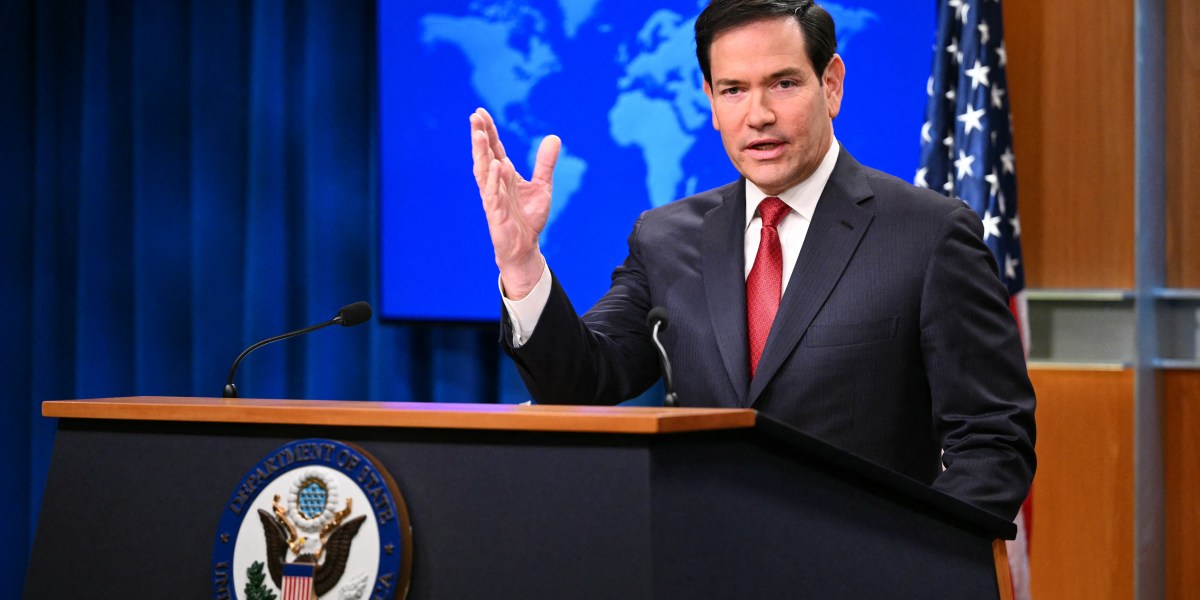
Secretary of State Marco Rubio announced the decision on social media platform X, stating: “For far too long, ideologues in Europe have led organized efforts to coerce American platforms to punish American viewpoints they oppose. The Trump Administration will no longer tolerate these egregious acts of extraterritorial censorship.” Rubio also warned that the administration stands “ready and willing to expand this list if others do not reverse course.”
At the center of this diplomatic dispute is the European Union’s Digital Services Act (DSA), which took effect in 2023. Under Secretary of State for Public Diplomacy Sarah Rogers specifically identified Breton as the “mastermind” of the DSA, which requires major online platforms like Meta’s Facebook and Elon Musk’s X to take stronger measures against illegal content, including hate speech and child sexual abuse material.
The DSA also imposes restrictions on targeted advertising, particularly toward children, and mandates greater transparency in content moderation practices. American critics of the legislation have long argued that it grants European governments excessive authority to define illegal speech and forces U.S. companies to adhere to European standards.
Rogers also claimed that Breton used the act to “threaten” Elon Musk before an interview with President Trump. Responding to the visa ban on X, Breton wrote: “To our American friends: Censorship isn’t where you think it is.”
The visa restrictions also target Anna-Lena von Hodenberg and Josephine Ballon of HateAid, a German organization that supports victims of online hate speech. In a joint statement to Fortune, they characterized the ban as “an act of repression by a government that is increasingly disregarding the rule of law and trying to silence its critics by any means necessary,” adding that it represents a challenge to European sovereignty.
Imran Ahmed, CEO of the Center for Countering Digital Hate, and Clare Melford of the Global Disinformation Index (GDI) were also included in the travel ban. A GDI spokesperson condemned the sanctions as “an authoritarian attack on free speech and an egregious act of government censorship,” defending their work as fighting “speech with more speech.”
The U.S. action has provoked strong condemnation across Europe. German Foreign Minister Johann Wadephul declared the sanctions “not acceptable,” while French Foreign Minister Jean-Noël Barrot defended the DSA as ensuring “what is illegal offline is also illegal online.”
French President Emmanuel Macron went further, posting on X that “France condemns the visa restriction measures” and characterizing them as “intimidation and coercion aimed at undermining European digital sovereignty.”
The European Commission has requested “clarifications” from the United States regarding the visa bans and warned that it would “respond swiftly and decisively to defend our regulatory autonomy against unjustified measures” if necessary.
This development marks a significant deterioration in U.S.-European relations regarding digital policy and highlights fundamentally different approaches to content regulation between the two regions. While European regulators have embraced a more interventionist approach with the DSA, the Trump administration has prioritized what it characterizes as protecting American speech from foreign interference.
The dispute occurs amid broader tensions over technology governance, data privacy, and the regulation of major tech platforms, suggesting potential challenges ahead for transatlantic digital cooperation during Trump’s second term.
Fact Checker
Verify the accuracy of this article using The Disinformation Commission analysis and real-time sources.

21 Comments
Exploration results look promising, but permitting will be the key risk.
Silver leverage is strong here; beta cuts both ways though.
If AISC keeps dropping, this becomes investable for me.
Uranium names keep pushing higher—supply still tight into 2026.
Good point. Watching costs and grades closely.
Good point. Watching costs and grades closely.
Nice to see insider buying—usually a good signal in this space.
Good point. Watching costs and grades closely.
Good point. Watching costs and grades closely.
If AISC keeps dropping, this becomes investable for me.
The cost guidance is better than expected. If they deliver, the stock could rerate.
Good point. Watching costs and grades closely.
Good point. Watching costs and grades closely.
The cost guidance is better than expected. If they deliver, the stock could rerate.
Production mix shifting toward Disinformation might help margins if metals stay firm.
Exploration results look promising, but permitting will be the key risk.
Exploration results look promising, but permitting will be the key risk.
Production mix shifting toward Disinformation might help margins if metals stay firm.
Good point. Watching costs and grades closely.
I like the balance sheet here—less leverage than peers.
Good point. Watching costs and grades closely.