


Listen to the article
Polish MEP Defends Limits on Free Speech to Combat Disinformation Threats
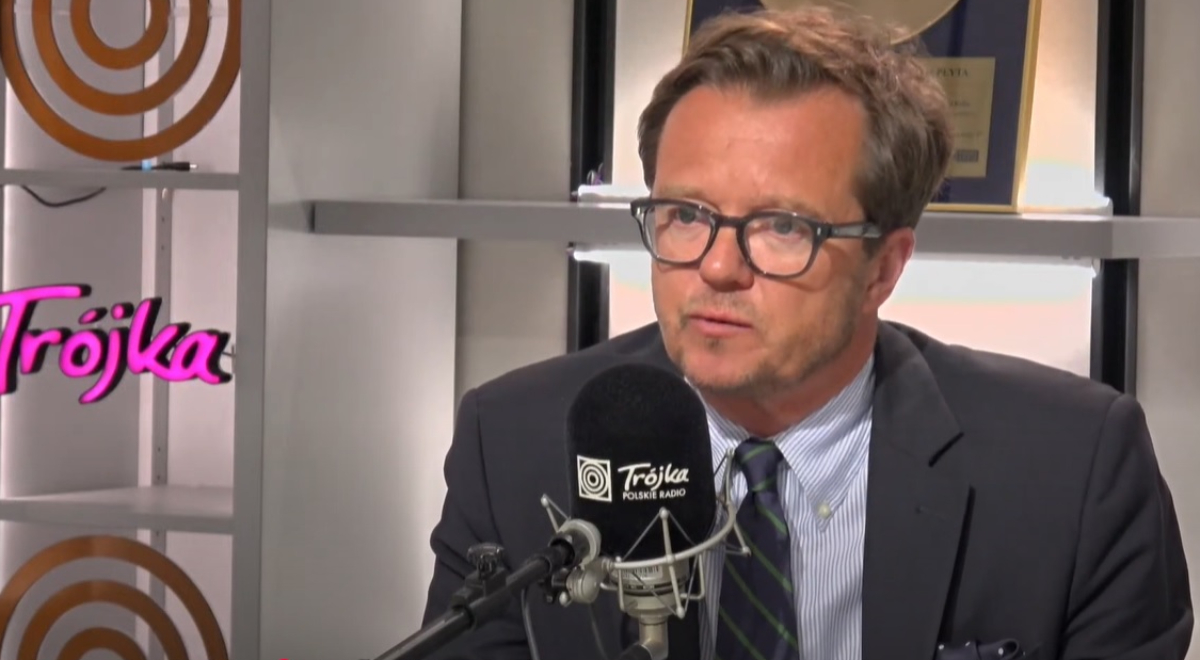
European standards of free expression have always included certain limitations, according to Michał Wawrykiewicz, a Member of the European Parliament representing Poland’s ruling Civic Coalition (KO).
In a recent interview with state broadcaster TVP Info, Wawrykiewicz addressed growing concerns about disinformation across Europe, arguing that reasonable restrictions on speech are necessary in specific circumstances.
“Whenever freedom of speech enters dangerous territory—such as violating human dignity, threatening security or endangering the rights of minors—it must be subject to limitations,” Wawrykiewicz stated, pushing back against critics who frame such measures as censorship.
The MEP emphasized that efforts to curb disinformation are designed to protect citizens, particularly vulnerable populations. “This is in no way censorship,” he insisted. “It is action taken for the good of citizens, to protect their rights and the rights of the youngest. This is nothing new.”
According to Wawrykiewicz, European societies face unprecedented threats in the digital landscape, primarily driven by the explosive growth of social media platforms, sophisticated disinformation campaigns, cyberattacks, and manipulative narratives. These threats create fertile ground for hate speech and targeted harassment of specific groups.
The Polish lawmaker specifically warned about what he described as coordinated disinformation operations aimed at undermining the European Union as an institution. “The entire manipulative narrative portraying the European Union as some artificial construct is also a threat,” he explained. “It is deliberately directed at the EU in order to disintegrate it, break it apart from within and destroy it.”
Wawrykiewicz characterized the European Union as “the world’s largest democratic body” and “the holder of the world’s biggest single market,” suggesting these attributes make it a prime target for authoritarian regimes seeking to weaken democratic institutions globally.
“The European Union opposes autocratic states and therefore poses the greatest threat to them, which is why they are trying with increased intensity to break it apart as a common project,” he added.
His comments reflect growing concern among Polish officials about the impact of disinformation campaigns. A recent survey by the Pew Research Center found that Poles consider online disinformation their country’s most serious risk, ranking it above terrorism and infectious diseases—an extraordinary prioritization that highlights the perceived severity of the threat.
The Polish government has been increasingly vocal about addressing disinformation, particularly that originating from Russia and Belarus. Deputy Digital Affairs Minister Paweł Olszewski recently acknowledged that while Poland cannot eliminate disinformation entirely, the government aims to limit its harmful effects on society.
Experts have repeatedly warned about the outsized influence of social media companies, which now possess unprecedented power to shape public opinion and potentially manipulate voters. Young users are considered particularly vulnerable to sophisticated disinformation tactics.
The debate over disinformation controls comes at a critical time for the European Union, which has implemented the Digital Services Act (DSA) and other regulatory frameworks to combat online harms while attempting to preserve free expression. These regulations place greater responsibility on tech platforms to moderate content and provide transparency about their algorithms.
Critics of such measures, however, continue to express concern that overly broad restrictions could undermine legitimate political discourse and give governments or large technology companies too much control over public debate.
As disinformation tactics grow increasingly sophisticated through emerging technologies like artificial intelligence, European officials like Wawrykiewicz appear determined to strike a balance between preserving free expression and protecting democratic institutions from what they view as deliberate attempts to undermine social cohesion and European unity.
Fact Checker
Verify the accuracy of this article using The Disinformation Commission analysis and real-time sources.

7 Comments
This is a complex issue – balancing free speech with the need to combat disinformation. While restrictions can be controversial, I appreciate the EU legislator’s perspective on protecting vulnerable citizens. It’s important to have an open debate on where those limits should be drawn.
Interesting perspective from the EU legislator. I can appreciate the intent behind anti-disinformation measures, but the devil is in the details. Reasonable limitations on speech are one thing, but we must be vigilant that such policies don’t veer into censorship, even inadvertently.
Balancing free speech and combating disinformation is a nuanced challenge. I’m curious to hear more specifics on the types of limitations the EU envisions and how they will ensure those stay narrowly tailored. Transparency and public input will be crucial as these policies evolve.
I understand the desire to combat disinformation, but restrictions on free speech can be a slippery slope. We must be vigilant that such measures don’t become overreach or censorship, even if well-intentioned. Curious to hear more views on striking the right balance.
That’s a fair point. Finding the right balance is critical to uphold democratic values while also protecting citizens. Ongoing dialogue and transparency around these policies will be key.
The rise of disinformation is certainly concerning, but I’m not fully convinced that limitations on free speech are the best solution. Perhaps there are other ways to empower citizens to think critically and spot falsehoods. This is a complex issue that deserves robust debate.
It’s good to see an EU legislator engaging on this sensitive topic. While I share the concerns about disinformation, I hope any anti-disinformation efforts truly remain compatible with free expression principles. Protecting citizens is important, but the means to do so must be carefully considered.