


Listen to the article
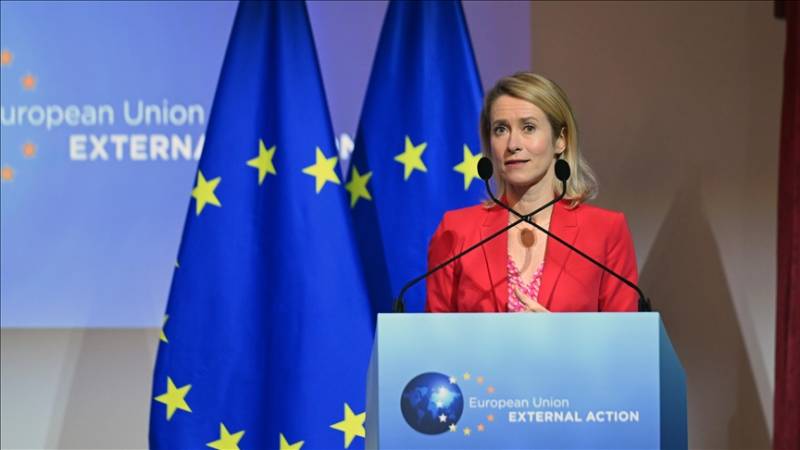
European democracies are engaged in a “cognitive war” that poses as significant a threat as physical conflicts, according to EU foreign policy chief Kaja Kallas. Speaking at the Countering Foreign Information Manipulation and Interference (FIMI) Conference on Tuesday, Kallas warned that information warfare is targeting the fundamental values that underpin democratic societies.
“It is clear that the security environment is getting more intense everywhere, and it’s not only the battles that we see on the ground,” Kallas stated during her address. “We also have the cognitive war, the war for the hearts and minds of the people. On one side, it is fought with lies, with false narratives, that is really undermining our democracies.”
This cognitive battlefield represents a complex challenge for the European Union, which has traditionally focused on conventional security threats. The Estonian politician, who assumed the role of EU foreign policy chief earlier this year after serving as Estonia’s Prime Minister, emphasized that European institutions must become more proactive in their approach to countering disinformation campaigns.
The EU has been developing various tools and strategies to combat foreign information manipulation, but Kallas cautioned against making these countermeasures public. She explained that transparency about defensive tactics could potentially backfire by allowing adversaries to identify and exploit weaknesses in the EU’s information security framework.
“We have to keep in mind that might make us weaker if our adversaries know, because they can then prepare to address these issues differently. So we have to constantly adapt and also change our course,” Kallas explained, highlighting the dynamic nature of information warfare.
This approach marks a departure from the EU’s traditional emphasis on transparency in policymaking. However, in the realm of security and counter-disinformation efforts, maintaining operational secrecy may be increasingly necessary to effectively combat sophisticated information operations directed at European citizens.
Kallas criticized what she characterized as the EU’s predominantly defensive posture in the information space. “They attack. We try to avoid and get out there. We should also use more offensive measures,” she stated, suggesting a strategic shift might be necessary to effectively protect European democratic systems from manipulation.
The FIMI Conference comes at a critical time when the EU faces multiple information challenges, including Russian disinformation related to the ongoing war in Ukraine, foreign interference in electoral processes, and coordinated campaigns aimed at polarizing European societies on issues ranging from migration to climate policy.
European security experts have long warned that information manipulation campaigns often precede or accompany conventional security threats, creating favorable conditions for adversaries by sowing division and eroding trust in democratic institutions. The EU has responded by establishing specialized units like the East StratCom Task Force and the European Digital Media Observatory, which monitor and analyze disinformation trends targeting EU member states.
The growing recognition of information warfare as a critical security threat reflects broader changes in the global security landscape, where traditional boundaries between peace and conflict have become increasingly blurred. Hybrid warfare tactics, which combine conventional military operations with cyber attacks and disinformation campaigns, have become standard practice for several state actors seeking to undermine European unity and democratic values.
As the EU continues to develop its strategic autonomy in security matters, Kallas’s comments suggest that counter-disinformation efforts will play an increasingly prominent role in the bloc’s overall security architecture. The challenge facing European policymakers now is how to effectively counter information manipulation while preserving the open information environment that characterizes democratic societies.
This balancing act represents one of the most significant challenges for European democracy in the digital age – defending against cognitive warfare without adopting tactics that themselves undermine democratic principles and values.
Fact Checker
Verify the accuracy of this article using The Disinformation Commission analysis and real-time sources.

8 Comments
Disinformation is a complex problem without easy solutions. I’m curious to see how the EU’s approach to countering these campaigns evolves over time.
It’s concerning to hear the EU foreign policy chief describe a ‘cognitive war’ targeting the very foundations of democracy. Safeguarding democratic values should be a top priority for European institutions.
I agree, the cognitive war on truth and facts is just as dangerous as physical conflicts. Disinformation erodes faith in institutions and the democratic process.
Disinformation is a serious threat to democratic systems, as it can undermine public trust and polarize societies. The EU is right to take a proactive approach in countering these malicious campaigns.
As a citizen, I’m concerned about the potential impact of disinformation campaigns on my country’s democratic systems. It’s reassuring to hear the EU is taking this issue seriously.
I share your concerns. Protecting the integrity of elections and public discourse should be a top priority for policymakers.
The rise of disinformation is a global challenge that requires a coordinated response. I’m interested to learn more about the specific tools and strategies the EU is developing to counter these threats.
The ‘cognitive war’ analogy is a powerful one. Information warfare is a real threat, and I’m glad to see the EU taking steps to defend democratic systems.