


Listen to the article
Election Commission Cracks Down on Online Misinformation Ahead of March Elections
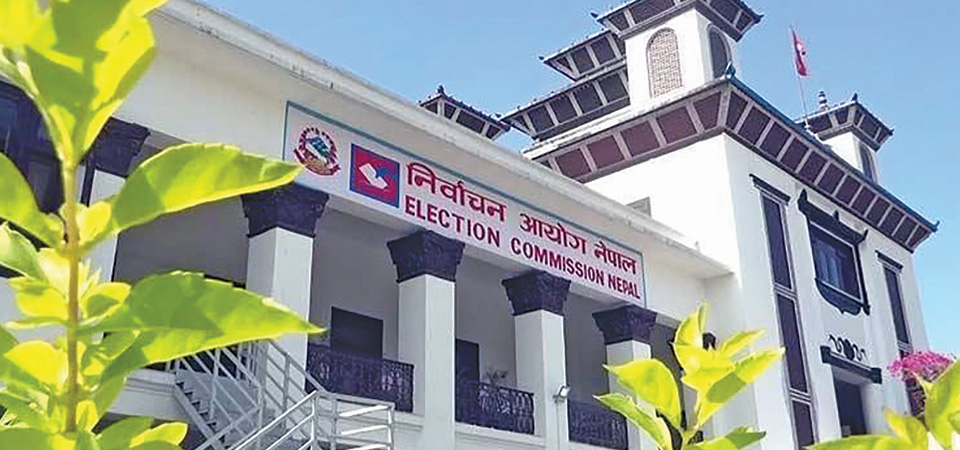
Nepal’s Election Commission has intensified efforts to combat the spread of misinformation, disinformation, and hate speech as the country approaches its House of Representatives election scheduled for March 5.
The Commission has established an Information Ethics Promotion Unit within its Election Information Dissemination and Coordination Center specifically tasked with monitoring violations of the electoral code of conduct in the digital space, according to Assistant Spokesperson Kul Bahadur GC.
“We have identified 302 instances of harmful information circulating online,” GC told the national news agency RSS. These cases have been forwarded to relevant authorities for appropriate action under multiple legal frameworks, including the Election Code of Conduct 2082, the Electronic Transactions Act 2063, and the Press Council Act 2048.
The comprehensive Election Code of Conduct, which officially took effect at noon on January 18, aims to ensure the upcoming parliamentary elections are conducted in a “fair, impartial, transparent and credible manner.” The code establishes strict guidelines for political parties, candidates, organizations, and government officials during the electoral period.
Authorities are actively accepting complaints regarding potential violations through multiple channels. “Citizens can report code violations in writing, verbally, or electronically,” GC explained. Complaints can be submitted to various electoral bodies including the Election Commission itself, the Office of the Chief Returning Officer, the Office of the Returning Officer, Provincial or District Election Offices, and District Code of Conduct Monitoring Officers.
The Commission has implemented a structured process for handling allegations, issuing formal requests for clarification from those accused of violations, whether they are political entities, individual candidates, organizations, or government officials.
This crackdown on digital misinformation comes amid growing concerns globally about the impact of online falsehoods on electoral processes. Nepal, like many countries, has witnessed an explosion of social media use in recent years, creating new challenges for election integrity and voter information.
The March 5 elections represent a crucial democratic exercise for Nepal, which has experienced political instability in recent years. The country adopted a new constitution in 2015 following a decade-long civil war and the abolition of its monarchy in 2008. Since then, Nepal has worked to strengthen its democratic institutions while navigating complex political dynamics.
Digital misinformation poses particular challenges in Nepal, where geographical isolation in mountainous regions, varying literacy rates, and the rapid adoption of smartphone technology have created an environment where false information can spread rapidly with limited oversight.
The Commission’s proactive stance reflects a growing recognition among electoral bodies worldwide that maintaining information integrity is as crucial to democratic processes as the physical security of polling stations. By leveraging existing legal frameworks to combat digital misinformation, Nepal joins countries like India, Indonesia, and the Philippines that have implemented similar measures during election periods.
GC emphasized that the Commission is particularly focused on content that could “raise questions about the dignity and integrity of the election,” suggesting authorities are prioritizing harmful content that could undermine public confidence in the electoral process rather than attempting to police all political speech.
As the March election approaches, the Commission’s efforts to maintain information integrity will likely intensify, with continued monitoring of social media platforms, news websites, and messaging applications where electoral misinformation typically proliferates.
Fact Checker
Verify the accuracy of this article using The Disinformation Commission analysis and real-time sources.
