


Listen to the article
European Commission Alleges Russian Disinformation Behind Agricultural Policy Backlash
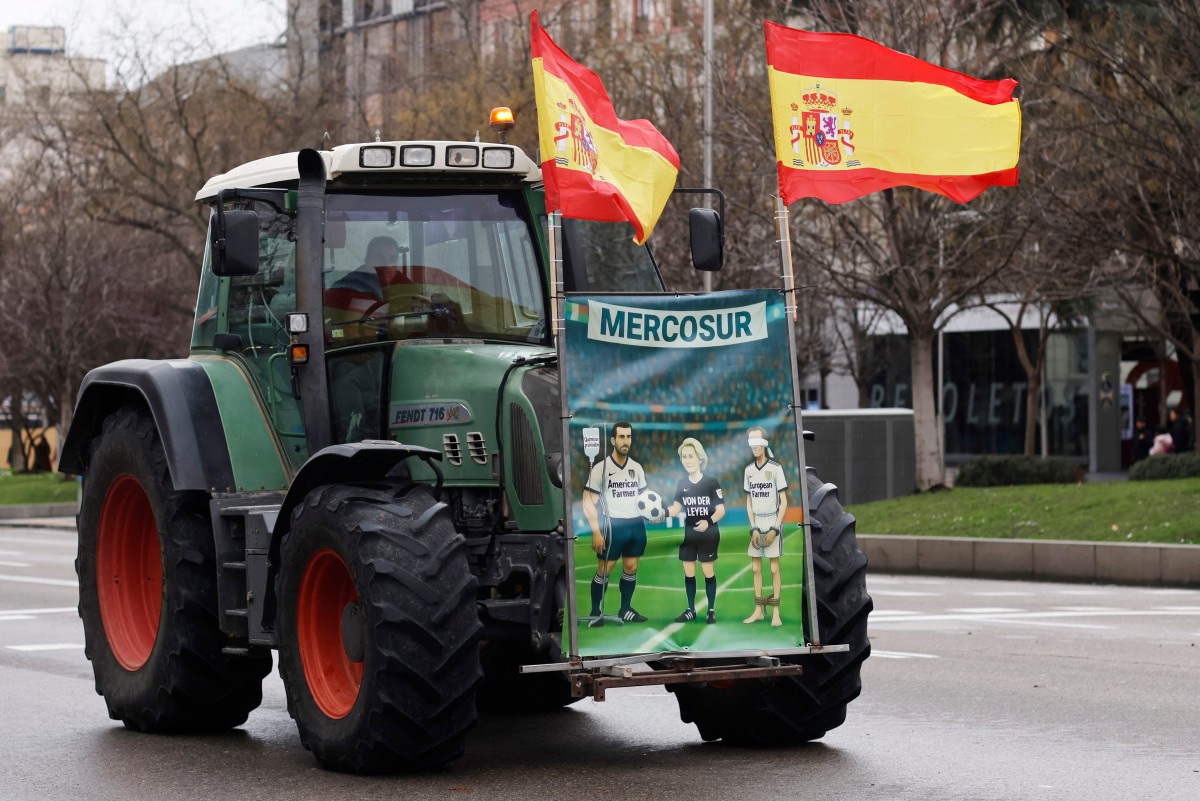
The European Commission has accused Russia of orchestrating a coordinated disinformation campaign designed to undermine EU agricultural policies and inflame farmer protests across the continent. According to Commission sources cited by Spanish publication El Debate, the alleged Kremlin-backed operation has specifically targeted contentious issues including the EU-Mercosur trade agreement and proposed reforms to the Common Agricultural Policy.
This accusation comes amid widespread farmer demonstrations throughout Europe, with agricultural workers expressing frustration over economic pressures, environmental regulations, and concerns about cheaper imports undercutting local production. The Commission contends that Russian actors have strategically amplified these grievances to sow discord within the bloc.
Commission President Ursula von der Leyen has reportedly directed Agriculture Commissioner Christophe Hansen to actively counter what she describes as misleading narratives circulating about EU agricultural policies. The directive emphasizes the need for clearer communication regarding the benefits and protections built into EU agricultural frameworks.
Brussels officials maintain that the controversial EU-Mercosur trade agreement, which would create one of the world’s largest free trade zones between Europe and South American nations including Brazil, Argentina, Paraguay, and Uruguay, contains adequate safeguards for European farmers. The Commission insists that agricultural imports under the deal would need to meet stringent EU standards, with protective mechanisms automatically triggered if import volumes surge or prices fall below sustainable levels for European producers.
“The agreement includes specific protections for European agricultural interests,” a Commission spokesperson explained. “Claims suggesting otherwise fail to acknowledge the comprehensive safeguards negotiated into the framework.”
However, farmers across multiple European countries remain skeptical of these assurances. Their concerns stem from historical precedent, including instances like tomato imports from Morocco where many producers felt protective measures proved inadequate when implemented. Many farming organizations have pointed to what they perceive as an uneven regulatory playing field, where European producers must adhere to stricter environmental and labor standards than their international competitors.
In response to what it characterizes as a coordinated disinformation threat, the Commission has established a specialized unit dedicated to identifying and countering false narratives about European agricultural policy. Officials have singled out Russian President Vladimir Putin as allegedly playing a central role in the dissemination of misleading claims designed to undermine confidence in EU institutions.
Agricultural policy experts note that this represents a familiar pattern of Brussels attributing public dissatisfaction to foreign interference rather than addressing substantive policy concerns. Dr. Elena Korosteleva, Professor of International Politics at University College London, suggests that while disinformation campaigns exist, the Commission risks dismissing legitimate criticism.
“European farmers face genuine economic challenges that predate any alleged Russian interference,” Korosteleva said. “Attributing widespread discontent solely to disinformation risks overlooking the structural issues within European agricultural policy that genuinely concern farming communities.”
The controversy highlights the complex intersection of geopolitics, trade policy, and domestic agricultural interests within the European Union. As climate change policies and international trade agreements reshape agricultural markets, European farmers find themselves caught between competing pressures of economic sustainability, environmental responsibility, and global competition.
Whether or not Russian disinformation has meaningfully influenced farmer sentiment, the widespread protests across Europe demonstrate real anxiety within a sector that employs millions and remains culturally significant across the continent. How the Commission addresses these concerns while maintaining its strategic policy objectives may prove decisive for the future of European agriculture.
Fact Checker
Verify the accuracy of this article using The Disinformation Commission analysis and real-time sources.

13 Comments
This situation highlights the ongoing challenge of combating Kremlin-backed disinformation. While farmers have legitimate concerns, the Commission must work hard to distinguish valid grievances from misleading propaganda. Restoring trust will require a thoughtful, nuanced approach.
While the concerns of European farmers deserve attention, it’s concerning to see the Kremlin allegedly exploiting these issues to undermine EU policies. The Commission must continue to provide clear, factual information to address valid grievances and counter misleading narratives.
Interesting to see the Kremlin accused of exploiting EU farmer protests for geopolitical gain. While the concerns of agricultural workers deserve attention, the Commission must be vigilant in separating legitimate grievances from malicious foreign interference.
This is a troubling development, but not surprising given Russia’s history of using disinformation to sow discord. The Commission is right to push back and provide transparent, fact-based communication around its agricultural policies. Maintaining public trust will be crucial in this battle against malign influence.
Agreed. The EU must remain vigilant and proactive in countering these tactics. Providing clear information to address farmer concerns, while also exposing the Kremlin’s true motives, will be key to defending the integrity of the bloc’s institutions and policies.
Very concerning to see the Kremlin allegedly spreading disinformation about EU agricultural policies. These targeted efforts to sow division and undermine trust are worrying. Transparency and clear communication from the Commission will be key to addressing farmers’ legitimate concerns.
I agree, the Commission needs to do a better job explaining the rationale and benefits of its agricultural reforms. Farmers deserve clarity, not misleading narratives that inflame tensions.
The Commission is right to call out the Kremlin’s alleged disinformation efforts. Amplifying farmer frustrations to sow discord within the EU is a well-worn tactic. Clearer communication around the benefits of agricultural reforms will be crucial to countering these false narratives.
Absolutely. The EU needs to remain proactive and united in the face of these destabilizing attempts by Russia. Transparency and fact-based messaging will be key to maintaining public trust and support for necessary policy changes.
Hmm, it’s no surprise the Kremlin would try to exploit agricultural issues to create unrest in the EU. Disinformation campaigns are one of their favorite tactics. The Commission is right to push back and provide factual information to counter these false narratives.
Absolutely. The EU must remain vigilant and proactively address Russian attempts to undermine its policies and unity. Transparency and open communication will be crucial in this effort.
The Commission’s efforts to counter these false narratives about EU agricultural policies are commendable. It’s crucial that they provide clear, factual information to address farmer concerns and undermine the Kremlin’s divisive tactics.
Agreed. Transparency and open communication from the Commission will be key to defeating the Kremlin’s disinformation campaigns and ensuring the agricultural policy reforms are understood and accepted.