


Listen to the article
Disinformation Campaigns Target Amazon Region Environmental Policies
Systematic disinformation about the Amazon rainforest has emerged as a deliberate political strategy, according to recent research. Rather than simple falsehoods, these campaigns construct a worldview that promotes predatory development models while undermining indigenous rights and environmental protection.
The Democracy in Check Institute describes this socioenvironmental disinformation as a systemic phenomenon deployed in strategic narrative waves that serve the interests of specific political and economic actors.
A prominent example occurred during the 2023 Parliamentary Inquiry Commission of NGOs held by Brazil’s Federal Senate. Led by northern representatives including Plínio Valério (PSDB-AM) and Márcio Bittar (União-AC), the commission became a platform for climate-change denial and attacks on environmental organizations. Speakers repeatedly claimed that international bodies, including the United Nations, were attempting to impede Brazil’s economic development.
This “constrained progress” narrative, however, contradicts actual public sentiment. The recent “Study of Environmental Attitudes and Values Regarding the Amazon” conducted by the Federal University of Pará found substantial support for environmental protection policies among regional residents. The study revealed high confidence (53.7%) in the Brazilian Institute of Environment and Renewable Natural Resources (Ibama), indicating that local populations are generally receptive to environmental protection measures.
Researchers have identified four primary disinformation narratives circulating about the Amazon:
“External Interference” claims suggest that deforestation control measures represent international meddling in Brazilian affairs. The “Stifling of Development” narrative alleges that environmental regulations unfairly restrict economic progress. “Enclosure of the Amazon” messaging portrays conservation policies as limitations on national sovereignty. The most targeted attacks focus on environmental agencies and managers—particularly the Ministry of Environment (MMA), the Chico Mendes Institute for Biodiversity Conservation (ICMBio), and Ibama—often featuring misogynistic attacks against Environment Minister Marina Silva.
These narrative attacks support a legislative agenda aimed at weakening environmental protections. Recent examples include Bill 2159/2021, which seeks to relax environmental licensing requirements; the controversial Temporal Framework Law (Law 14.701/2023); proposals to regularize illegally occupied lands (Bill 2633/2020, known as the “land fraud” bill); and legislation permitting mining on Indigenous territories (Bill 191/2020).
Digital platforms play a crucial role in amplifying these messages. X (formerly Twitter), Telegram, and WhatsApp function as engagement infrastructures that favor divisive content, promote polarization, and mobilize emotional responses. Platform algorithms optimized for emotional reactions amplify discourse based on ambiguity, fear, and nationalism, making narratives about “lost sovereignty” and “stifled development” especially effective in digital environments.
This coordinated disinformation system frequently activates during environmental crises. During the 2024 floods in Rio Grande do Sul, right-wing networks circulated content blaming environmental legislation for the disaster while downplaying climate factors. A similar pattern emerged during Amazon fires in 2019, when volunteer firefighters in Alter do Chão were falsely accused of starting fires they were actually combating.
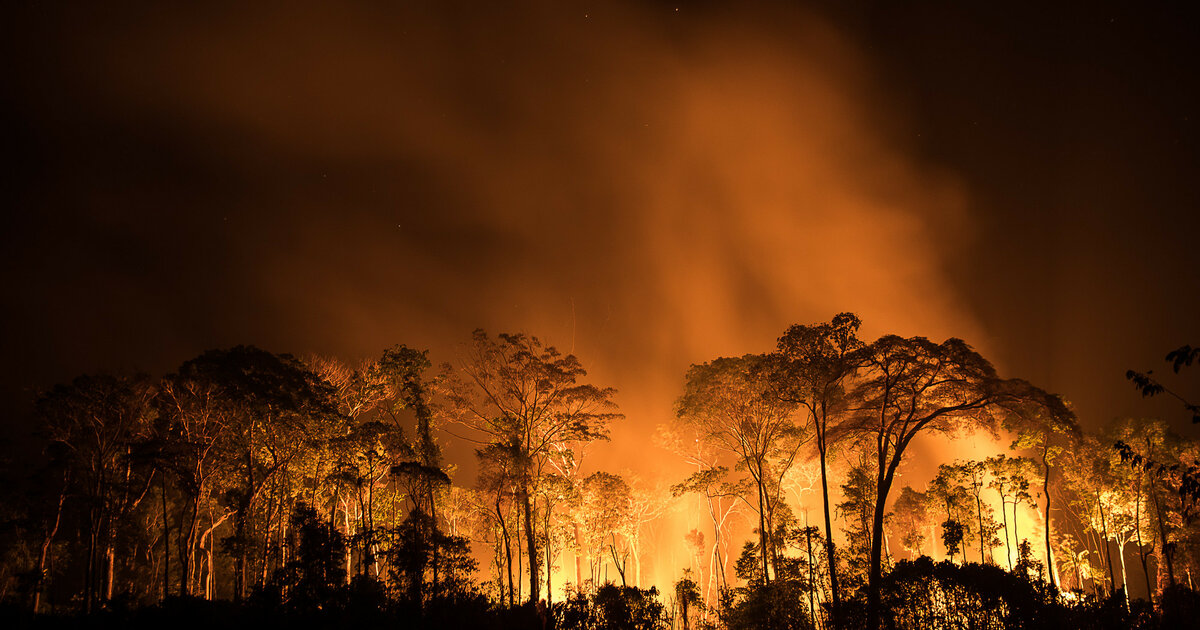
The system reactivated during severe drought and fires in the Amazon in August 2024, when opposition politicians, including Flávio Bolsonaro and Damares Alves, exploited the crisis to question the federal government and Minister Silva. Recent surveys indicate that posts undermining Brazil’s credibility as the host of the upcoming UN Climate Conference (COP30) more than doubled in August, reaching 1.2 million users compared to the average of 486,000 from January to July.
The northern region’s digital inequality compounds these challenges. States such as Acre, Amazonas, and Pará rank last in household internet access in Brazil, with connectivity largely limited to mobile phones. This precarious digital infrastructure restricts access to complex media and reinforces dependence on messaging apps like WhatsApp—already the most common online activity in Brazil. Combined with the scarcity of local journalism in the region, these conditions create an ideal environment for disinformation to circulate within closed networks.
Addressing these challenges requires coordinated efforts among government, universities, and civil society to strengthen local journalism, promote algorithmic transparency, and enhance media literacy. Preparations for COP30, to be held in Belém, are innovating by placing Information Integrity on Climate Change as a central pillar for successful climate action.
Concrete examples of this approach include the Global Initiative for Information Integrity on Climate Change—launched by Brazil, the UN, and UNESCO at the G20—and the Network of Partners for Information Integrity on Climate Change (RPIIC), which brings together over 120 Brazilian organizations coordinated by the Democracy In Check Institute.
These efforts represent fundamental steps toward combating climate denialism, protecting democratic institutions, and ensuring effective climate action in one of the world’s most critical ecosystems.
Fact Checker
Verify the accuracy of this article using The Disinformation Commission analysis and real-time sources.

30 Comments
Nice to see insider buying—usually a good signal in this space.
Good point. Watching costs and grades closely.
Good point. Watching costs and grades closely.
Interesting update on Environmental Misinformation in Northern Brazil: Impacts Ahead of COP-30. Curious how the grades will trend next quarter.
Good point. Watching costs and grades closely.
Good point. Watching costs and grades closely.
If AISC keeps dropping, this becomes investable for me.
Exploration results look promising, but permitting will be the key risk.
Silver leverage is strong here; beta cuts both ways though.
Good point. Watching costs and grades closely.
Exploration results look promising, but permitting will be the key risk.
Good point. Watching costs and grades closely.
Good point. Watching costs and grades closely.
I like the balance sheet here—less leverage than peers.
Good point. Watching costs and grades closely.
Good point. Watching costs and grades closely.
Silver leverage is strong here; beta cuts both ways though.
Good point. Watching costs and grades closely.
The cost guidance is better than expected. If they deliver, the stock could rerate.
The cost guidance is better than expected. If they deliver, the stock could rerate.
Good point. Watching costs and grades closely.
Production mix shifting toward Disinformation might help margins if metals stay firm.
Good point. Watching costs and grades closely.
Good point. Watching costs and grades closely.
Exploration results look promising, but permitting will be the key risk.
Good point. Watching costs and grades closely.
Good point. Watching costs and grades closely.
Uranium names keep pushing higher—supply still tight into 2026.
Good point. Watching costs and grades closely.
Good point. Watching costs and grades closely.