


Listen to the article
British officials have issued a stark warning about the growing threat of disinformation campaigns targeting the UK, with a new parliamentary report calling for more robust countermeasures against what one senior MP describes as an attempt to “undermine our democracies.”
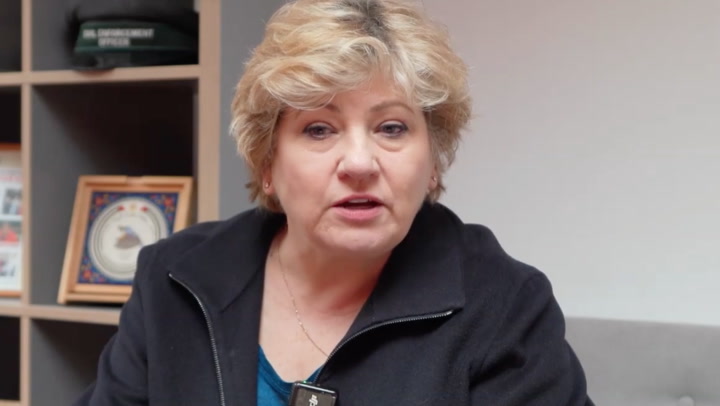
Dame Emily Thornberry, chair of the influential Foreign Affairs Committee, cautioned that Britain has become “complacent” in confronting coordinated disinformation efforts from hostile states. The committee’s report recommends the creation of a dedicated National Disinformation Centre to combat these increasing threats.
“Europe has two conflicts to tackle,” Thornberry told The Independent in an interview discussing the findings. Beyond Russia’s physical invasion of Ukraine, she pointed to a more insidious threat: the systematic efforts by certain countries to destabilize Western democratic systems through information warfare.
“These patterns of behaviour are actually things that we recognise as happening in the UK too. We think that it’s only something that affects Eastern Europe. It doesn’t,” she warned, highlighting the global nature of the challenge.
The committee’s investigation analyzed disinformation threats by region, with particular focus on activities originating from Russia, China, and Iran. These countries have been identified as primary sources of coordinated campaigns designed to sow discord, spread false narratives, and undermine public trust in democratic institutions.
Russia’s disinformation operations have received heightened scrutiny since its full-scale invasion of Ukraine in February 2022. Intelligence agencies have documented an intensification of Russian efforts to influence public opinion in the UK and other Western nations, attempting to weaken support for Ukraine and create divisions within NATO.
China’s approach typically focuses on more subtle influence operations, including the amplification of narratives that portray its governance model favorably while highlighting perceived flaws in Western democracies. Meanwhile, Iran has been linked to disinformation campaigns often targeting regional conflicts and attempting to influence perceptions of Middle Eastern politics.
The parliamentary report argues that the UK government has failed to prioritize counter-disinformation efforts adequately, leaving the country vulnerable to sophisticated influence operations. The proposed National Disinformation Centre would coordinate responses across government departments, intelligence agencies, and with international partners.
Media analysts note that social media platforms have become the primary battleground for information warfare, with foreign actors exploiting algorithmic amplification and targeted advertising to reach susceptible audiences. The speed at which false information can spread presents a particular challenge for traditional countermeasures.
The timing of the report coincides with growing concerns about electoral interference, as several Western democracies prepare for major elections in the coming year. Security experts have warned that periods of political transition represent prime opportunities for hostile actors to amplify divisions and undermine democratic processes.
Dame Emily Thornberry’s warning represents a significant escalation in official recognition of the threat, coming from a senior parliamentarian with access to sensitive intelligence briefings. As a former Shadow Foreign Secretary, her concerns carry substantial weight in policy discussions.
The report also highlights the need for greater digital literacy among the public as a defense against disinformation, recommending educational initiatives to help citizens better identify suspicious content and understand the techniques used in influence operations.
International cooperation is emphasized as essential to any effective response, with the committee calling for strengthened partnerships with NATO allies, the European Union, and the Five Eyes intelligence alliance to share information and coordinate counter-disinformation strategies.
The government is expected to respond to the committee’s recommendations in the coming weeks, amid mounting pressure to demonstrate a more coherent approach to what many security experts now describe as a continuous, low-intensity conflict being waged in the information space.
Fact Checker
Verify the accuracy of this article using The Disinformation Commission analysis and real-time sources.

20 Comments
This report serves as a stark warning that the UK is not immune to the destabilizing effects of disinformation campaigns. Decisive action is needed to protect our democratic institutions.
Absolutely. The proposed National Disinformation Centre could be a valuable tool in this fight, but it will require sustained commitment and resources to be effective.
This report highlights the urgent need for the UK to take the disinformation threat more seriously. Complacency is not an option when our democratic foundations are at risk.
Exactly. The creation of a dedicated National Disinformation Centre is a sensible proposal that could help the UK better detect and counter these coordinated efforts.
The warning from Dame Emily Thornberry about the UK becoming complacent in this disinformation war is a wake-up call. We can’t afford to be passive in the face of these insidious threats to our society.
Absolutely. The global nature of this challenge means we need a robust, multi-faceted response to counter disinformation campaigns from a variety of sources.
The committee’s findings are concerning, but not surprising. Disinformation is a persistent threat that requires constant vigilance and a proactive, multi-faceted response from the government.
Agreed. Complacency is a dangerous mindset when it comes to protecting the integrity of our democratic processes. I hope the government takes these warnings seriously and acts swiftly.
This report highlights the need for the UK to take a more robust and coordinated approach to combating disinformation campaigns from hostile states. Protecting our democracy should be a top priority.
Definitely. The establishment of a dedicated National Disinformation Centre could be a crucial step in this effort, but it will require sustained political will and investment to be effective.
It’s concerning to hear that disinformation efforts are not just an issue for Eastern Europe, but are also impacting the UK. We need to remain vigilant and take proactive steps to protect our democratic processes.
Agreed. Addressing this threat requires a coordinated, cross-border approach. I hope the government heeds the committee’s recommendations and takes decisive action.
It’s alarming to see the UK described as ‘complacent’ in the face of growing disinformation campaigns. We must remain vigilant and proactive in safeguarding our democratic processes.
I agree. The global nature of this challenge means we need robust cross-border cooperation to effectively combat these threats. Strong leadership and a comprehensive strategy are crucial.
This is a concerning report on the growing threat of disinformation campaigns targeting the UK. It’s critical that the government takes robust action to combat these destabilizing efforts and protect our democratic institutions.
I agree, the establishment of a dedicated National Disinformation Centre sounds like a sensible step. Coordinated efforts from hostile states to undermine democracy must be taken seriously.
It’s concerning to hear that the UK has become complacent in the face of these disinformation threats. We can’t afford to let our guard down when the integrity of our democratic system is at stake.
I agree. Disinformation campaigns are a global challenge, and the UK needs to work closely with international partners to develop a comprehensive strategy to combat this threat.
The warning from Dame Emily Thornberry is a wake-up call for the UK government. We must take decisive action to counter the systematic efforts by hostile states to destabilize our democratic systems.
Absolutely. The proposed National Disinformation Centre could be a valuable tool, but it will require sustained commitment and resources to be effective. Protecting our democracy should be a top priority.