


Listen to the article
Whitty Takes on Healthcare Misinformation at Nuffield Summit
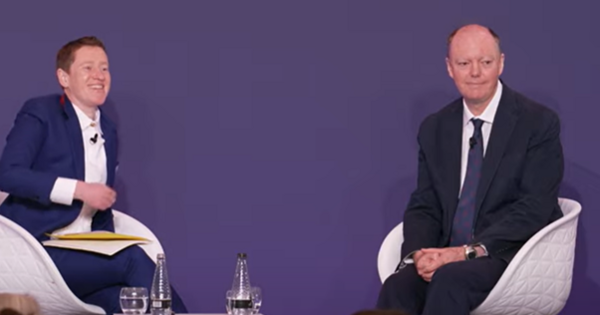
England’s Chief Medical Officer Sir Chris Whitty has offered a measured assessment of healthcare misinformation during his keynote address at the Nuffield Summit 2026, emphasizing that while most Britons maintain sensible health perspectives, targeted disinformation continues to undermine crucial medical interventions.
Speaking to healthcare leaders, Whitty began on a reassuring note, stating that “the British public are actually extraordinarily sensible on almost all of these topics.” He pointed to vaccination rates exceeding 90% as evidence that vaccine skeptics represent a small minority, despite their claims of widespread support.
Nevertheless, the veteran medical advisor acknowledged that misinformation remains “in some cases really problematic” and can “prevent incredibly powerful tools of medicine, either preventative or curative, from being used.” This concern has gained prominence following several public health challenges in recent years where disinformation campaigns affected healthcare outcomes.
According to Whitty, purveyors of health misinformation typically fall into four categories. The first and most common are those motivated by financial gain, ranging from entire industries like tobacco to individuals promoting alternative health products or seeking personal publicity. The second group consists of those attempting to discredit rivals, while the third includes individuals with genuine distrust of established institutions. The final category, Whitty noted somewhat candidly, comprises people who are simply “vain” and seeking attention through contrarian views.
In analyzing why misinformation gains traction, Whitty distinguished between conspiracy theorists and those with legitimate concerns. He described engaging with committed conspiracy theorists as “a completely pointless activity,” since contradictory evidence only reinforces their beliefs about “out of touch elites.”
By contrast, Whitty stressed the importance of addressing genuine public concerns “legitimately, fairly honestly” and with “technically accurate information.” He outlined four critical questions that determine public receptiveness: Is the disease serious? Does the treatment work? Do benefits outweigh risks? Is access straightforward? When any answer is “no,” engagement typically stops.
The address comes amid growing concern among public health officials about the impact of misinformation on healthcare outcomes. Recent studies have shown correlations between exposure to health misinformation and reduced uptake of preventative care, particularly in certain demographic groups.
Healthcare communication experts have praised Whitty’s practical approach. Dr. Melissa Highton, director of the Health Communications Institute, told reporters: “Sir Chris has correctly identified that we need different strategies for different audiences. The binary approach of treating all skepticism as conspiracy thinking has failed repeatedly.”
Whitty cautioned healthcare leaders against legitimizing conspiracy theorists by engaging them in public debates, noting this risks elevating fringe views to the same platform as scientific consensus. However, he acknowledged that the medical profession retains greater public trust than government institutions, positioning healthcare providers to effectively communicate evidence-based information.
The Chief Medical Officer highlighted the crucial role of community representatives in reaching underserved populations. During the COVID-19 pandemic, Somali doctors and nurses proved instrumental in addressing vaccine hesitancy within their community through culturally sensitive outreach—a model Whitty suggested for future public health campaigns.
In his concluding remarks, Whitty challenged healthcare leaders to examine systemic barriers to healthcare access before attributing declining vaccination rates to misinformation. “We need to look at ourselves and make sure we have done our job before we start blaming others for the fact that very often things are coming down,” he said, emphasizing that inconvenient access often plays a larger role than ideological opposition.
The Nuffield Summit continues through the week, bringing together healthcare leaders to address pressing challenges facing Britain’s health system.
Fact Checker
Verify the accuracy of this article using The Disinformation Commission analysis and real-time sources.
