


Listen to the article
ECOWAS Convenes Media Leaders to Combat Disinformation in West Africa
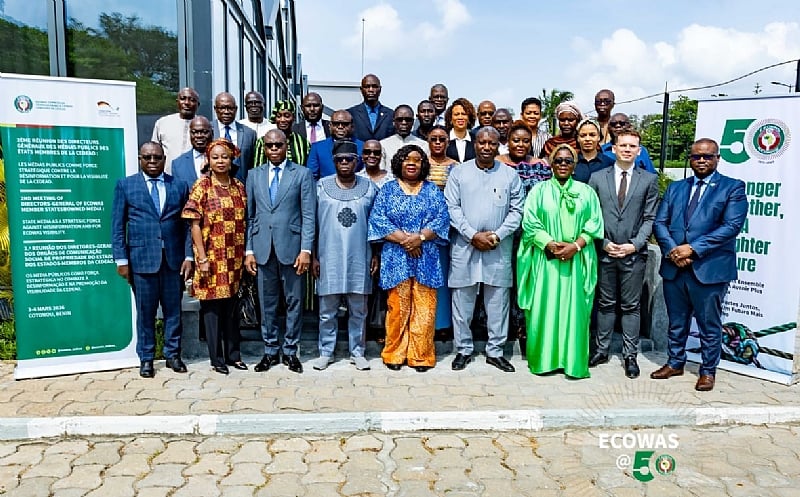
The Economic Community of West African States (ECOWAS) has launched its second meeting of Directors-General of national television stations in Cotonou, Benin, as part of a strategic effort to enhance regional communication and combat disinformation.
The two-day gathering, which began on Tuesday, March 3, brings together senior media executives and ECOWAS National Bureau chiefs from 12 member states across West Africa. Organized by the ECOWAS Commission’s Directorate of Communication with support from the German government, the meeting represents a significant step in strengthening media partnerships across the region.
At the heart of the conference is a pressing concern: how to counter misinformation about ECOWAS while improving public awareness of the regional bloc’s initiatives and achievements. This comes at a critical time when the organization faces political challenges across the region, including recent military coups in several member states and growing public skepticism about regional integration efforts.
Dr. Omar Alieu Touray, President of ECOWAS, emphasized the vital role that national broadcasters play in communicating the organization’s initiatives to citizens across West Africa. Speaking through his Senior Special Adviser, Abdoulie Gassama, Dr. Touray highlighted the importance of building stronger collaborative frameworks between the Commission and state broadcasters.
“National television stations remain the most trusted and accessible sources of information for millions across our region,” Gassama stated. “Their role in ensuring accurate, consistent, and sustained coverage of ECOWAS activities cannot be overstated.”
The meeting comes amid growing concerns about information integrity in the digital age, with social media platforms often serving as vectors for misinformation about regional politics and ECOWAS initiatives. Public broadcasters, with their established credibility and reach, are seen as critical partners in countering false narratives.
Komba Momoh, Chairman of the ECOWAS Administrative and Financial Committee, called for concrete action beyond dialogue. Represented by Laygbay Lilian Amadu, Deputy Director of the ECOWAS Country Office in Sierra Leone, Momoh officially opened the meeting with a call for practical recommendations that would promote regular programming focused on ECOWAS activities.
“We need to move beyond discussions to firm commitments that will ensure sustained media attention for regional integration programs,” Amadu emphasized on Momoh’s behalf. “Our citizens deserve accurate information about how ECOWAS policies affect their daily lives.”
The gathering reflects a broader trend among regional organizations worldwide to engage more strategically with mainstream media amid the challenges of the digital information landscape. For ECOWAS, improving public understanding of its work has become increasingly important as the organization navigates complex regional issues including security challenges, economic integration, and political transitions.
Media experts attending the conference are expected to develop frameworks for more consistent coverage of ECOWAS initiatives, potentially including dedicated programming slots, journalist training programs, and content-sharing mechanisms among national broadcasters.
The meeting also represents an opportunity to address practical challenges facing public broadcasters in the region, including resource constraints, political pressures, and technological limitations that can hinder comprehensive coverage of regional affairs.
As the conference concludes, participants are expected to produce a communiqué outlining specific commitments and action plans for strengthening collaboration between ECOWAS and national television stations. These outcomes could significantly influence how West Africans perceive and engage with regional integration efforts in the coming years.
The Cotonou meeting underscores ECOWAS’s recognition that effective communication through trusted media channels is not merely a public relations exercise, but an essential component of successful regional governance and integration.
Fact Checker
Verify the accuracy of this article using The Disinformation Commission analysis and real-time sources.

11 Comments
As someone with an interest in African geopolitics, I’ll be monitoring this story closely. Countering disinformation is crucial for ECOWAS to maintain its relevance and influence.
Agreed. The success of this initiative could have far-reaching implications for regional integration efforts across West Africa.
The timing of this meeting is significant, given the recent political turmoil in some ECOWAS member states. Strengthening the regional bloc’s communication channels is a prudent move.
Addressing public skepticism around regional integration efforts is no easy task. I’m curious to see what specific measures ECOWAS proposes to improve transparency and accountability.
A fair point. Building public trust will require sustained, coordinated efforts across the media landscape.
This meeting represents an important step, but the real test will be in the implementation. ECOWAS must ensure that national broadcasters follow through and deliver accurate, unbiased coverage.
Interesting move by ECOWAS to partner with national TV stations to combat disinformation. Strengthening regional media cooperation is crucial in this age of misinformation.
Absolutely. Giving national broadcasters a platform to share accurate information about ECOWAS initiatives is a smart strategy.
I hope the national TV directors can develop a cohesive, region-wide strategy to tackle disinformation. Coordinating messaging across borders will be crucial.
Agreed. Harmonizing communication efforts could strengthen ECOWAS’s ability to speak with a unified voice on important issues.
Kudos to ECOWAS for recognizing the power of the media in shaping public perceptions. Effective communication will be key to overcoming the organization’s current challenges.