


Listen to the article
Deep social divisions are pushing the world toward greater social instability and potential conflict, according to a major new risk assessment report released yesterday.
The annual Global Risks Report, published by the World Economic Forum in collaboration with Zurich Insurance Group and Marsh McLennan, highlights how polarization and misinformation are creating dangerous societal fractures that could have far-reaching consequences for global stability.
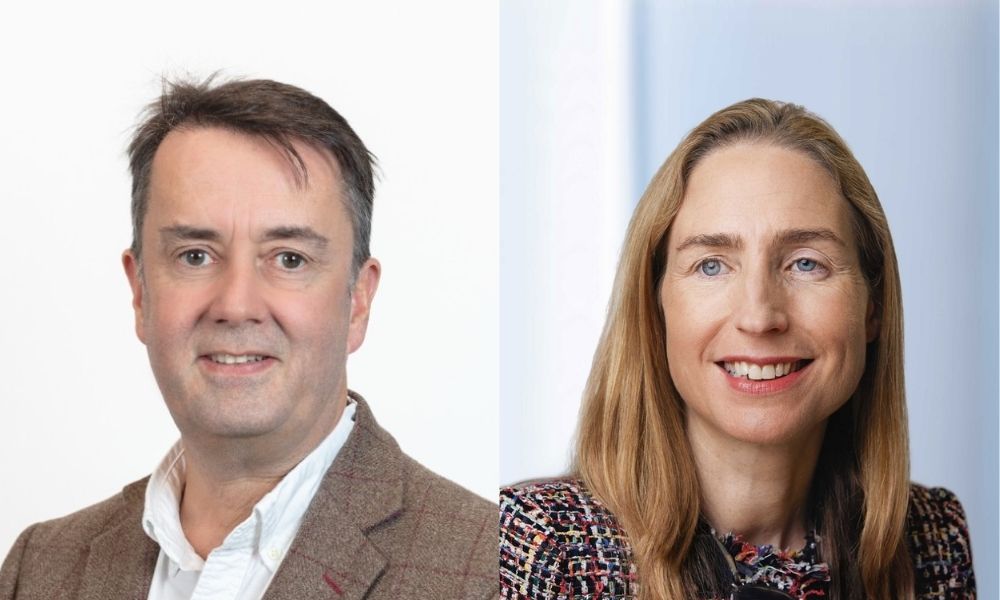
“Social polarization is really coming out strong,” said Carolina Klint, risk management leader for Continental Europe at Marsh McLennan. “When you look at the next two years, the number one risk is misinformation and disinformation, and then societal polarization ranks number four.”
This troubling trend emerges as nearly 70 nations, representing half the world’s population, prepare for elections in 2024. The report warns that increasing divisions, fueled by digital echo chambers and competing narratives about reality itself, create fertile ground for social unrest, political gridlock, and even violence.
John Scott, head of sustainability risk at Zurich Insurance Group, emphasized how these divisions complicate efforts to address other critical challenges. “When societies are divided and governments are constrained by competing domestic priorities and limited resources, our capacity to tackle pressing global challenges like climate change and AI governance becomes severely hampered,” he said.
The report identifies misinformation and disinformation as the most severe global risk for the next two years. The proliferation of false information, amplified by social media algorithms and increasingly sophisticated AI tools, threatens to undermine public trust in institutions at a critical moment for global cooperation.
Climate-related risks continue to dominate the long-term outlook, with extreme weather events ranked as the second most pressing short-term concern. The report highlights that environmental degradation is accelerating even as governments struggle to implement meaningful mitigation strategies, creating what analysts describe as a “climate time bomb.”
The convergence of these challenges—social polarization, climate change, and technological disruption—creates a particularly volatile environment for financial markets and business operations worldwide. Insurance industry leaders note that risk assessment models are being forced to evolve rapidly to account for these interconnected threats.
“We’re seeing traditional risk categories blurring,” explained a senior underwriter at a global reinsurance firm who requested anonymity to speak candidly. “Political risk now bleeds into supply chain disruption, which connects to climate vulnerability. The old siloed approach to risk management simply doesn’t work anymore.”
For businesses, particularly those operating across multiple jurisdictions, navigating this landscape requires new approaches to resilience planning. The report suggests that organizations should invest in scenario planning that accounts for social and political instability while strengthening their capacity to maintain operations during periods of disruption.
The insurance industry faces its own challenges in this environment. With increasing frequency and severity of both physical and non-physical risks, insurers must recalibrate pricing models while maintaining affordability. Some market segments, particularly those exposed to climate risks, are already seeing coverage gaps emerge as insurers reassess their appetite for certain categories of risk.
Economic inequality emerges as both a driver and consequence of these divisions. The report notes that in many countries, diverging economic fortunes have reinforced social and political polarization, creating a feedback loop that further entrenches divisions.
The findings come as global economic growth shows signs of slowing, with inflation pressures persisting in many regions despite central bank interventions. This economic backdrop could further strain social cohesion and complicate policy responses to emerging risks.
The report calls for renewed investment in cross-border cooperation and stronger multilateral institutions to address these challenges. However, it acknowledges that the current political climate in many countries makes such collaboration increasingly difficult to achieve.
“We face a pivotal moment,” the report concludes. “Either we continue down a path of fragmentation that leaves us collectively vulnerable to systemic risks, or we find new ways to rebuild consensus around shared challenges that transcend national and partisan divides.”
Fact Checker
Verify the accuracy of this article using The Disinformation Commission analysis and real-time sources.

10 Comments
The report’s emphasis on the role of digital echo chambers and competing narratives in fueling divisions is concerning. Addressing the challenge of misinformation and restoring shared truths feels essential for making progress.
This report highlights a troubling trend of rising social divisions and polarization fueled by misinformation. Addressing these complex challenges will require concerted efforts to bridge societal fractures and promote shared understanding.
Agreed, the risks of social instability and potential conflict due to these dynamics are concerning. Constructive dialogue and evidence-based discourse will be critical to navigate these issues.
The report’s findings underscore the interconnected nature of global challenges. Addressing social divisions, misinformation, and instability will require coordinated, multi-stakeholder efforts at the national and international levels.
Well said. Tackling these complex, systemic issues will demand collaboration across government, industry, civil society, and other key actors. A unified, holistic approach will be essential.
As someone with a background in the commodities sector, I’m interested to see how these broader sociopolitical dynamics could impact supply chains, trade flows, and investment decisions in mining and energy.
With so many elections looming globally, the potential for social unrest and political volatility is worrying. Maintaining social cohesion and democratic stability will be critical priorities for policymakers.
Absolutely. The risk of democratic backsliding and authoritarian tendencies amid polarization is a serious threat that requires vigilance and principled leadership.
As an investor in mining and energy equities, I’m curious to understand how these broader societal trends could impact the operating environments and long-term outlooks for companies in those sectors.
That’s a good question. Increased social instability and political gridlock could create regulatory and policy uncertainty that poses risks for mining and energy firms. Careful analysis of these factors will be important.