


Listen to the article
The invisible war of deceit: How disinformation shapes modern conflicts
Can fake news really change the course of a war? Behind the headlines and official statements lies a shadowy battlefield where hostile states work to distort the stories that reach your social media feed, potentially altering your perception of reality.
Information operations have been part of warfare for decades, but today’s digitized world, supercharged by social media algorithms, has created unprecedented opportunities for disinformation campaigns to flourish globally.
A revealing pattern emerged in June 2025 when US Air Force B-2 stealth bombers conducted a high-profile strike on Iran’s underground nuclear facility at Fordow. While international media focused on the dramatic demonstration of American power, intelligence analysts noticed something peculiar: a cluster of seemingly “Scottish nationalist” social media accounts simultaneously went offline at the precise moment Iranian internet access was disrupted by the strike.
This pattern repeated during subsequent internet outages imposed by Tehran to control domestic protests. The timing raised a critical question: why would genuine Scottish independence supporters operate from Iran? The more likely explanation points to regime-sponsored operatives using fabricated personas to amplify divisions within the UK.
“Disinformation works not by convincing everyone, but by confusing enough people that reality becomes negotiable,” explains Ana Revenco, director of Moldova’s Centre for Strategic Communication and Countering Disinformation. Her country, positioned precariously on the edge of Russia’s war in Ukraine, has become a testing ground for sophisticated influence operations.
According to Revenco, Moldova faces an industrial-scale assault that deploys deepfakes, cheapfakes, AI-promoted content, and networks of thousands of inauthentic accounts constantly promoting fabricated narratives designed to destabilize the government and sway public opinion.
The UK has not been immune to such tactics. Ciaran Martin, former chief of the National Cyber Security Centre, points to a 2023 incident involving an audio deepfake of London Mayor Sadiq Khan allegedly making inflammatory remarks before Remembrance Sunday. The fabricated recording circulated widely, sparking anger and confusion among Britons.
“I’m not saying this is Russia because I think we genuinely don’t know who did this,” Martin noted, “but no doubt you’ll recall the awful but very perniciously clever deepfake of the London mayor in November 2023 about the pro-Palestinian march and its clash with Remembrance parades. It turned out that was not an offence to make that.”
The manipulation of public perception extends beyond isolated incidents. A King’s College London study revealed that references to London as “dangerous” and “lawless” increased dramatically from 874 instances in 2008 to more than 258,000 by 2024. While no definitive evidence ties this shift to foreign influence operations, the pattern aligns with known disinformation strategies.
Lord Toby Harris, Chair of the National Preparedness Commission, explains the psychological impact: “If you’re told all the time crime in London is out of control, and there are bots feeding that dialogue all the time, you become more fearful about what’s going on. Actually, crime statistics suggest crime in London has declined, but if that’s the message you keep receiving, you become more fearful.”
Russian influence operations have a well-documented history. Before his death, Yevgeny Prigozhin, infamous leader of the Wagner mercenary group, established the Internet Research Agency, which employed hundreds of people to post, provoke and amplify Kremlin messaging across global social platforms.
This organization is widely believed to have interfered in the 2016 US presidential election, prompting America to launch counter-cyber operations against the agency in 2018. The FBI also indicted 11 Russian military intelligence officers for alleged election interference offenses.
Exiled Russian investigative journalist Andrei Soldatov offers insight into the tactical approach: “They don’t have to invent fractures in Western society; they just exploit what already exists. They didn’t create Trump, they didn’t create ultra-right movements in Europe, but they’re trying to exploit these feelings.”
Such operations can find local collaborators. In 2025, Nathan Gill, a former leader of Reform UK in Wales, was convicted of accepting bribes in exchange for making public statements supporting Russia and received a lengthy prison sentence.
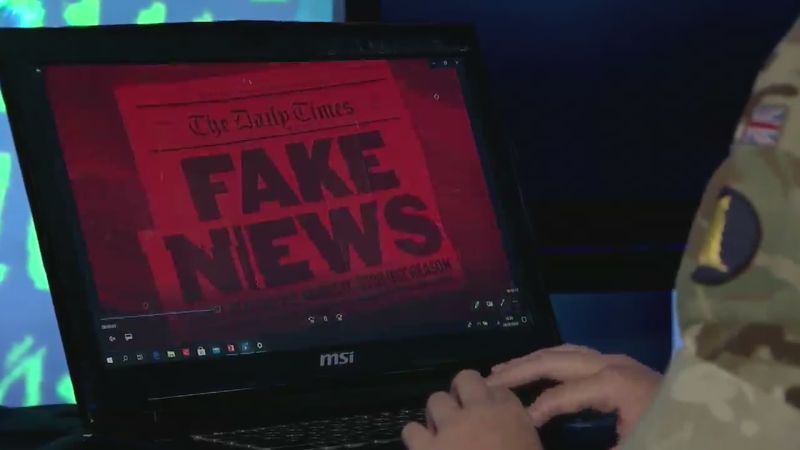
The UK military has established defenses, notably the British Army’s 77th Brigade, which focuses on countering hostile disinformation. However, experts highlight a fundamental asymmetry in the information battlefield: democratic governments operate under legal and ethical constraints that authoritarian regimes routinely disregard.
For ordinary citizens, becoming vigilant consumers of information offers the best protection. When encountering inflammatory content online, experts recommend pausing before sharing, verifying the source, questioning who benefits from the narrative, and seeking original context.
In modern information warfare, your engagement—likes, shares, and comments—is precisely what disinformation architects target. The battle for truth continues, with each social media user an unwitting participant on this shadowy front line.
Fact Checker
Verify the accuracy of this article using The Disinformation Commission analysis and real-time sources.

21 Comments
The cost guidance is better than expected. If they deliver, the stock could rerate.
Good point. Watching costs and grades closely.
Good point. Watching costs and grades closely.
If AISC keeps dropping, this becomes investable for me.
Good point. Watching costs and grades closely.
Good point. Watching costs and grades closely.
Nice to see insider buying—usually a good signal in this space.
Production mix shifting toward Disinformation might help margins if metals stay firm.
Good point. Watching costs and grades closely.
Good point. Watching costs and grades closely.
Uranium names keep pushing higher—supply still tight into 2026.
Good point. Watching costs and grades closely.
Interesting update on Disinformation’s Critical Impact on Warfare Dynamics. Curious how the grades will trend next quarter.
Good point. Watching costs and grades closely.
Silver leverage is strong here; beta cuts both ways though.
Good point. Watching costs and grades closely.
Good point. Watching costs and grades closely.
The cost guidance is better than expected. If they deliver, the stock could rerate.
Good point. Watching costs and grades closely.
Good point. Watching costs and grades closely.
Uranium names keep pushing higher—supply still tight into 2026.