


Listen to the article
Understanding Disinformation’s Threat to Environmental Action
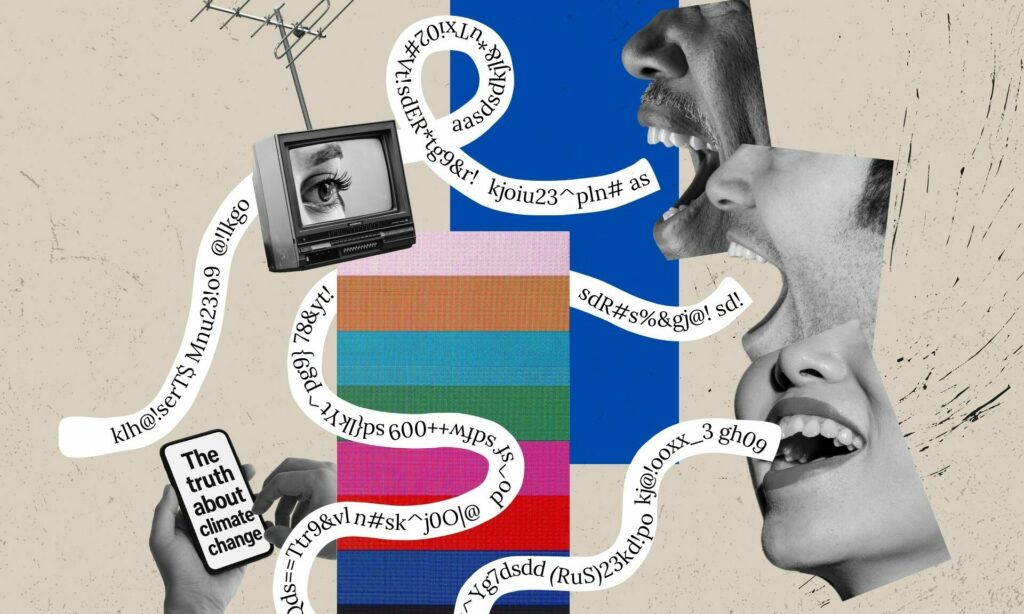
Disinformation poses a growing threat to global environmental efforts, undermining scientific consensus and delaying urgent action on climate change, biodiversity loss, and pollution. Unlike misinformation, which involves inaccurate information shared without malicious intent, disinformation represents deliberately false information designed to deceive and cause harm.
The World Economic Forum has identified disinformation among the most significant global risks, both in the short and long term. It weakens trust in institutions, amplifies social tensions, and complicates responses to crises, functioning as a risk multiplier that exacerbates existing vulnerabilities across sectors.
“Disinformation contributes to growing societal polarization and undermines collective responses to global challenges,” explains a recent UN report examining the phenomenon’s impact on environmental governance.
Environmental Issues Under Attack
Environmental issues prove particularly vulnerable to disinformation campaigns due to their technical complexity, reliance on long-term scientific projections, and impacts on economic interests. These characteristics create fertile ground for misleading narratives to take root.
Climate change disinformation has evolved from outright denial to more sophisticated tactics. These include “soft denial” that acknowledges climate change while downplaying its urgency, delay strategies that portray climate action as economically harmful, and greenwashing that presents environmentally damaging activities as sustainable.
“Common narratives include climate denial, climate delay, greenwashing, and climate conspiracy theories,” notes research from the Climate Action Against Disinformation coalition, which monitors these evolving tactics.
In biodiversity contexts, disinformation manifests as extinction denialism, where actors downplay the biodiversity crisis or suggest economic growth alone will resolve it. Recent developments include AI-generated imagery of endangered animals, which can distort public perception by suggesting threatened species are more abundant than reality.
The toxics and chemicals sector has seen particularly aggressive disinformation tactics, including industry “ghost-writing” of studies, deliberate misinterpretation of data, and hiding information about harmful substances.
Impact on Governance and Human Rights
Disinformation significantly undermines effective environmental governance at all levels by weakening science-based decision-making, delaying climate policies, distorting public debate, and eroding trust in institutions.
The Intergovernmental Panel on Climate Change highlighted this concern in its 2022 report, noting that “rhetoric and misinformation on climate change and the deliberate undermining of science have contributed to misperceptions of the scientific consensus, uncertainty, disregarded risk and urgency, and dissent.”
Beyond governance impacts, disinformation also threatens human rights. It undermines the right to seek and receive information, limits meaningful public participation in environmental decision-making, and can be used to discredit journalists, scientists, and environmental defenders.
UN Special Rapporteur on human rights and climate change, Elisa Morgera, recently documented how “the fossil fuel sector’s evolving strategies to keep the public uninformed about the severity of climate change” have “undermined the protection of all human rights that are negatively impacted by climate change for over six decades.”
Global Response Initiatives
In response to these challenges, several international initiatives have emerged to combat environmental disinformation:
The Global Initiative for Information Integrity on Climate Change, launched in 2024 by Brazil, the UN, and UNESCO, brings together countries and stakeholders to tackle climate disinformation through research funding, strategic communications, and policy development.
The Declaration on Information Integrity on Climate Change, endorsed by numerous countries including Canada, France, Germany, and the European Union, establishes principles for safeguarding climate information.
Verified for Climate, a UN initiative, promotes science-based climate information through trusted messengers, creative campaigns, and expert convenings to counter denialism, doomism, and delay narratives.
Climate Action Against Disinformation, a coalition of over 90 organizations, works on policy development, communication strategies, and research to hold technology platforms accountable for climate misinformation circulating on their platforms.
Geneva’s Central Role
International Geneva serves as a hub for addressing disinformation through its concentration of organizations working at the intersection of environment, human rights, and digital governance.
The Aarhus Convention, hosted by UNECE in Geneva, empowers people with rights to access environmental information, while the Office of the High Commissioner for Human Rights addresses disinformation through a human rights lens.
UN agencies based in Geneva, including UNDP, UNESCO, WHO, and WMO, each contribute specialized expertise to combat disinformation in their respective fields. UNDP, for example, supports digital tools like iVerify that combine AI with human fact-checking to counter false narratives about climate change.
Academic institutions in Geneva, including the University of Geneva and the Geneva Graduate Institute, conduct research on the dynamics of disinformation and potential solutions. The Geneva Graduate Institute has noted that “Geneva is uniquely positioned to become the global governance hub on combating disinformation.”
As UN Secretary-General Antonio Guterres emphasized, “Countering disinformation requires lasting investment in building societal resilience and media and information literacy.” This multi-stakeholder approach, exemplified by Geneva’s ecosystem of international organizations, academic institutions, and civil society, represents the most promising path forward in protecting the integrity of environmental information and enabling evidence-based climate action.
Fact Checker
Verify the accuracy of this article using The Disinformation Commission analysis and real-time sources.

9 Comments
The article highlights an important challenge. Disinformation can amplify social divisions and complicate coordinated responses to global environmental crises. Rebuilding trust in institutions and scientific consensus will be crucial.
Environmental challenges are inherently technical and require nuanced, evidence-based approaches. Disinformation campaigns that distort the facts or sow doubt are deeply counterproductive and must be called out.
This is a complex issue, but the stakes are high. Protecting the integrity of environmental policymaking from malicious disinformation is critical for our shared future. I hope robust solutions can be found.
This is a worrying trend. Disinformation campaigns that distort the scientific realities of environmental issues like climate change can have severe, far-reaching consequences. Robust fact-checking and accountability measures are needed.
This is a concerning trend. Disinformation can indeed hamper progress on critical environmental issues that require collective action. Transparency and independent fact-checking will be key to countering these threats.
Disinformation is a pernicious threat that undermines progress on urgent issues like climate change. Strengthening media literacy and fact-checking capabilities will be key to building societal resilience.
You raise a good point. Empowering citizens to critically evaluate information sources is vital to countering the corrosive effects of disinformation.
Disinformation is a major challenge, especially for complex, long-term issues like climate change. It’s crucial that policymakers and the public have access to credible, science-based information to make informed decisions.
Agreed. The role of neutral, reputable institutions like the UN and other multilateral bodies will be vital in providing authoritative, unbiased information.