


Listen to the article
Fake Social Media Network Targets Sahel Military Governments in Widespread Disinformation Campaign
A sophisticated network of fake social media accounts has been orchestrating coordinated disinformation campaigns targeting the Alliance of Sahel States (AES) since late 2025, according to a joint investigation by RFI’s Fact-Checking Unit and France 24’s Observers.
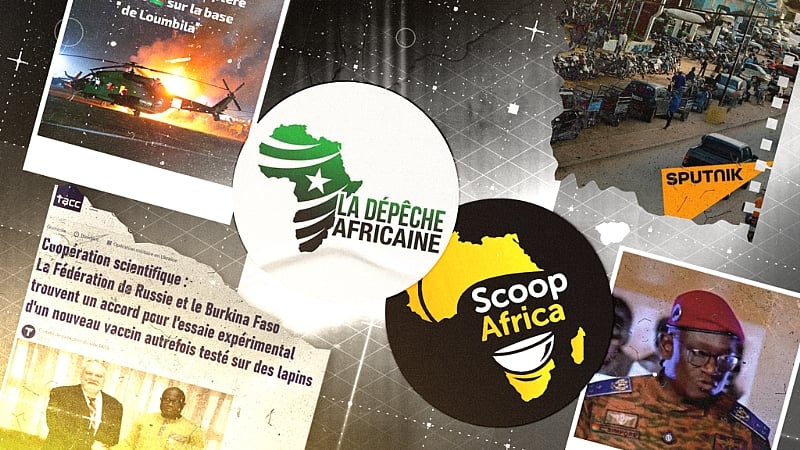
The investigation revealed multiple accounts impersonating legitimate news outlets with names like “Scoop Africa,” “La Dépêche africaine,” and “La Voix du Faso.” These accounts have systematically spread false information designed to discredit the military governments of Burkina Faso, Mali, and Niger – the three members of the AES formed in September 2023.
In a particularly striking example, a deepfake video circulated on social media appeared to show Burkina Faso’s state television (RTB) announcing that junta leader Ibrahim Traoré had ordered the deployment of “two infantry battalions to Tehran” to support Iran following the outbreak of conflict with the United States and Israel. Though RTB quickly denounced the video as fake on its Facebook page, the damage was done – one post sharing the deepfake from “La Dépêche africaine” alone garnered over 500,000 views on X (formerly Twitter).
According to the investigation, “Scoop Africa” and “La Dépêche africaine” appear to be the primary accounts in these disinformation operations. They form part of a broader ecosystem that has also targeted Russia’s growing presence in the Sahel region.
The methodology bears striking similarities to Russian influence operations documented across Africa and against Western countries in recent years. The AES countries have notably cultivated closer ties with Moscow since military leaders seized power through coups between 2020 and 2023, simultaneously distancing themselves from Western nations.
Analysis of subscriber patterns and engagement with these accounts revealed a network of approximately ten similar profiles operating across X, Facebook, and TikTok. Their tactics include impersonating both local and international media outlets, creating AI-generated content, and manipulating genuine news footage.
One account using the name Nikolai Piotr Melnikov, claiming to be a “Russian political scientist, whistleblower and investigative journalist,” exemplifies the network’s fluidity. Initially inactive, this account began posting false information about the Sahel in late 2025, including a fabricated Sputnik news item claiming Russia had called for its citizens to evacuate Mali due to security threats. The Russian embassy in Mali promptly denied this information.
The Melnikov account later changed its name to “Scoop Africa” after previously operating as “Le Continent.” Harouna Drabo, a journalist specializing in information influence strategies in Francophone Africa, noted that activity from these accounts intensified during Benin’s failed coup attempt last December.
“This acceleration occurred as massive disinformation was spread by pro-AES accounts during this event, targeting Beninese President Patrice Talon,” Drabo told RFI.
Despite relatively modest follower counts – “Scoop Africa” has 2,000 followers on X and 20,000 on Facebook, while “La Dépêche africaine” has 10,000 on X and 1,800 on Facebook – their disinformation campaigns have reached millions of users. Drabo explained that the influence extends beyond social media: “Some of their fake news is sometimes picked up by journalists. Through my contacts on the ground, I see that this content reaches end users, whether in the Sahel or in neighboring countries.”
Since May 2025, additional fake accounts presenting themselves as legitimate regional media have proliferated, including “Ouaga FM,” “La Voix du Faso,” “Info CivikTogo,” and “La Voix du Togo.”
According to the investigation, this network has participated in at least ten distinct disinformation campaigns. These include spreading a deepfake targeting the Burkinabe Armed Forces chief of staff Célestin Simporé and fabricating stories about Burkina Faso participating in clinical trials of an untested Russian vaccine.
“La Voix du Faso,” which boasts over 13 million followers on TikTok, has been instrumental in amplifying such false information.
Determining who controls these accounts remains challenging. Facebook data suggests most of the flagged pages operate from Côte d’Ivoire, though attribution remains uncertain.
“In several countries such as Côte d’Ivoire, constantly attacked by pro-AES disinformation agents, some players have clearly decided to respond with the same weapons,” said one regional expert who requested anonymity. “In Burkina Faso, for example, we know that those spreading disinformation are linked to the junta. However, we don’t know precisely who is behind this ecosystem based in Côte d’Ivoire.”
The proliferation of disinformation creates serious challenges for researchers and journalists working in the region. Philip Brant, who specializes in West African jihadism, told RFI: “All this content discredits information published by journalists that might be critical of the juntas. For example, if these accounts constantly spread false information about massacres of civilians, when such massacres actually occur this information loses all credibility.”
Drabo expressed similar concerns about the broader implications: “The risk is ending up in total informational chaos, where the population will no longer understand what is true or false.”
Fact Checker
Verify the accuracy of this article using The Disinformation Commission analysis and real-time sources.

13 Comments
This is a timely reminder of the growing threat of state-sponsored disinformation worldwide. While the focus here is on the Sahel, we’ve seen similar tactics used to target governments and sow discord in other regions as well. Strengthening digital resilience has to be a top priority.
Well said. Combating coordinated disinformation requires a multilateral, cross-border approach. I hope the international community can rally behind the AES to help address this challenge.
This is a concerning development that could undermine regional stability in the Sahel. Disinformation campaigns targeting military governments are a serious threat, as they can sow division and erode public trust. I hope the authorities can quickly identify and shut down these fake accounts to limit the spread of false information.
I agree, this type of coordinated disinformation is very worrying. Proper fact-checking and digital forensics will be crucial to exposing and stopping these kinds of influence operations.
The use of deepfake technology to spread disinformation is particularly alarming. Fake videos that appear to show official statements can be incredibly damaging, even if quickly debunked. Robust media literacy and digital authentication tools will be needed to combat this threat.
You’re right, the deepfake video is a concerning example of how advanced these disinformation tactics have become. Maintaining transparency and quickly correcting any false claims will be essential.
I’m curious to know more about the specific tactics and narratives being used in these disinformation campaigns. Understanding the playbook of the actors behind them will be key to developing effective countermeasures. Transparency and open-source intelligence sharing will be critical.
This highlights the complex geopolitical dynamics in the Sahel region. The military governments in Burkina Faso, Mali, and Niger are clearly facing external pressures, and the disinformation campaigns may be an attempt to destabilize their rule. It’s crucial that the AES works to counter this threat.
Absolutely, the regional security implications of these disinformation networks are very serious. The AES will need to coordinate closely with international partners to identify the source of these campaigns and shut them down effectively.
The Sahel region has faced significant security and governance challenges in recent years. These disinformation campaigns appear to be an attempt to exploit those vulnerabilities and further destabilize the region. Maintaining the integrity of information sources will be key to preserving stability.
I agree, the broader context of instability in the Sahel makes this disinformation campaign particularly dangerous. Strengthening the resilience of local media and online platforms will be crucial to combating these threats.
This is a worrying development that highlights the evolving tactics of bad actors seeking to undermine legitimate governments. The use of fake social media accounts and deepfake technology is particularly insidious. Vigilance and collaboration will be essential to exposing and disrupting these networks.
It’s concerning to see the use of deepfake technology to spread false narratives. This represents a worrying escalation in the disinformation tactics being deployed. Rigorous media verification and public awareness campaigns will be essential to counter this threat.