


Listen to the article
Disinformation Amplifies Economic Protests in Angola, Officials Claim
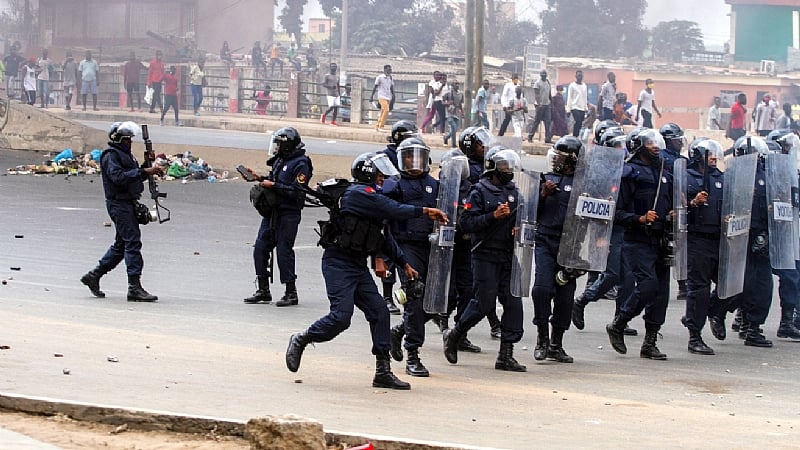
Recent unrest in Angola has evolved into a complex situation where legitimate economic grievances appear to have been intensified by coordinated disinformation campaigns, according to Angolan authorities. What began as protests against fuel price hikes has raised significant questions about information manipulation and its impact on civil stability.
The July 2025 protests originally erupted after the Angolan government implemented economic reforms that included substantial increases in fuel prices. This policy change triggered immediate economic ripple effects throughout the country, with transport costs rising sharply and the overall cost of living becoming increasingly unaffordable for many citizens.
Taxi drivers were among the first to mobilize, initiating strikes that quickly gained momentum. Their industry-specific concerns resonated with broader public discontent, transforming isolated demonstrations into nationwide protests. As participation grew, some gatherings turned violent, though the initial demands remained focused on economic relief.
Angolan prosecutors have now presented evidence suggesting that deliberate disinformation significantly escalated the situation beyond normal protest dynamics. Authorities claim that false narratives were systematically spread across social media platforms and messaging services, specifically designed to provoke fear and anger among protesters and bystanders alike.
“What we’re seeing is the weaponization of information to transform legitimate civic action into something far more destabilizing,” said one security analyst familiar with the government’s investigation but not authorized to speak publicly.
Among the most damaging forms of disinformation were fabricated reports claiming the government had authorized violent crackdowns on peaceful protesters. These false accounts often included doctored images or videos purportedly showing excessive force by security personnel. Additionally, grossly inflated casualty figures circulated widely, creating an atmosphere of fear and retribution that authorities say contributed to escalating violence.
The situation took an international turn when Angolan authorities detained two Russian nationals who now face serious charges including espionage and terrorism-related offenses. Prosecutors allege these individuals participated in a coordinated effort to distribute misleading content online with the explicit intent of intensifying anti-government sentiment and protest activity.
This case represents one of the most prominent examples of alleged foreign information operations in Africa, though similar concerns have been raised in other countries experiencing political instability. The pending court proceedings have attracted international attention, with diplomatic representatives monitoring the legal process.
Social media experts note that Angola’s experience reflects a growing global pattern where genuine social movements become vulnerable to manipulation through digital misinformation. The rapid spread of unverified claims through platforms like WhatsApp, Facebook, and Twitter can dramatically alter protest dynamics within hours.
“Disinformation creates a perfect storm when combined with real economic hardship,” explained Dr. Maria Fernandes, a specialist in African political communication at Lisbon University. “People are already angry and afraid about their economic situation, making them more susceptible to believing the worst about authorities.”
In response, the Angolan government has proposed new legislation targeting what it terms “fake news” and online misinformation. However, these proposals have sparked significant debate about potential impacts on free expression. Civil liberties organizations have voiced concerns that such measures could be used to suppress legitimate criticism and peaceful opposition.
“The challenge for Angola and similar nations is distinguishing between protecting national security and restricting civil liberties,” noted Joao Bernardo, a prominent Angolan human rights lawyer. “There’s a real danger that laws targeting disinformation become tools for silencing dissent.”
The Angolan situation highlights a growing challenge for governments worldwide: addressing genuine public grievances while countering deliberate attempts to weaponize information. As digital connectivity increases across Africa, the vulnerability to such information operations may continue to grow, creating new dimensions of complexity for countries already facing significant economic and social pressures.
The case continues to develop as investigations proceed, with both domestic and international observers closely monitoring how Angola navigates these interconnected challenges of economic reform, public dissent, and information integrity.
Fact Checker
Verify the accuracy of this article using The Disinformation Commission analysis and real-time sources.

10 Comments
The fuel price hikes appear to have been the catalyst, but this seems to have spiraled into a broader crisis of confidence in the government’s economic policies. Restoring trust and addressing core issues of affordability will be essential for resolving the unrest.
The use of disinformation to escalate these protests is very concerning. While the economic hardships faced by Angolan citizens are understandable, this tactic of spreading misinformation could make an already volatile situation even more destabilizing. Transparency and a measured response will be crucial.
This is a concerning situation in Angola. It’s critical that the government addresses the legitimate economic grievances behind the protests, rather than resorting to disinformation tactics to discredit the protesters. Transparency and open dialogue will be key to finding a constructive resolution.
It’s troubling to hear allegations of disinformation campaigns being used to escalate these protests. While the economic motivations seem legitimate, the introduction of misleading information could really complicate an already tense situation. Careful investigation will be crucial.
Exactly, the line between genuine grievances and malicious misinformation can easily become blurred. I hope the authorities are able to distinguish the two and respond accordingly, without resorting to overly repressive measures.
The fuel price hikes seem to have been a flashpoint, but the underlying issues of affordability and cost of living are clearly much broader. I hope the authorities take a measured approach and work to address the root causes, not just the immediate symptoms.
Agreed, a heavy-handed crackdown on protesters is unlikely to resolve the deeper socioeconomic challenges Angola faces. Constructive engagement and policy reforms to improve economic conditions would be a better path forward.
It’s concerning to hear about the potential use of disinformation to amplify these protests. While the economic hardships faced by Angolan citizens are understandable, the introduction of misleading information could make an already volatile situation even more destabilizing.
Agreed, the government will need to tread carefully here. Overly heavy-handed tactics could backfire, but ignoring the legitimate grievances behind the protests is also unlikely to resolve the underlying issues. A balanced, transparent approach seems most prudent.
This seems like a complex situation where valid economic concerns have become entangled with allegations of disinformation. I hope the authorities are able to get to the bottom of what’s driving the unrest and find constructive ways to address the root causes, rather than resorting to repression.