


Listen to the article
Bangladesh’s upcoming election on February 12 faces an unprecedented wave of digital manipulation, with analysts warning that voters’ choices are being threatened by a coordinated surge of disinformation campaigns, many originating from neighboring India.
The election marks the first since the 2024 student-led uprising that toppled former Prime Minister Sheikh Hasina, who subsequently fled to India where she has been hosted by the Hindu-nationalist government. Bangladesh’s interim leader, Nobel Peace Prize winner Muhammad Yunus, has raised alarms about the “flood of misinformation surrounding the elections” from both foreign and local sources, even appealing to the UN for assistance.
Authorities have established a special unit to combat the spread of false content, which has become increasingly sophisticated, often utilizing AI-generated images and videos. “We are noticing a huge amount of fake information compared to other times,” said Miraj Ahmed Chowdhury, head of the Dhaka-based research organization Digitally Right.
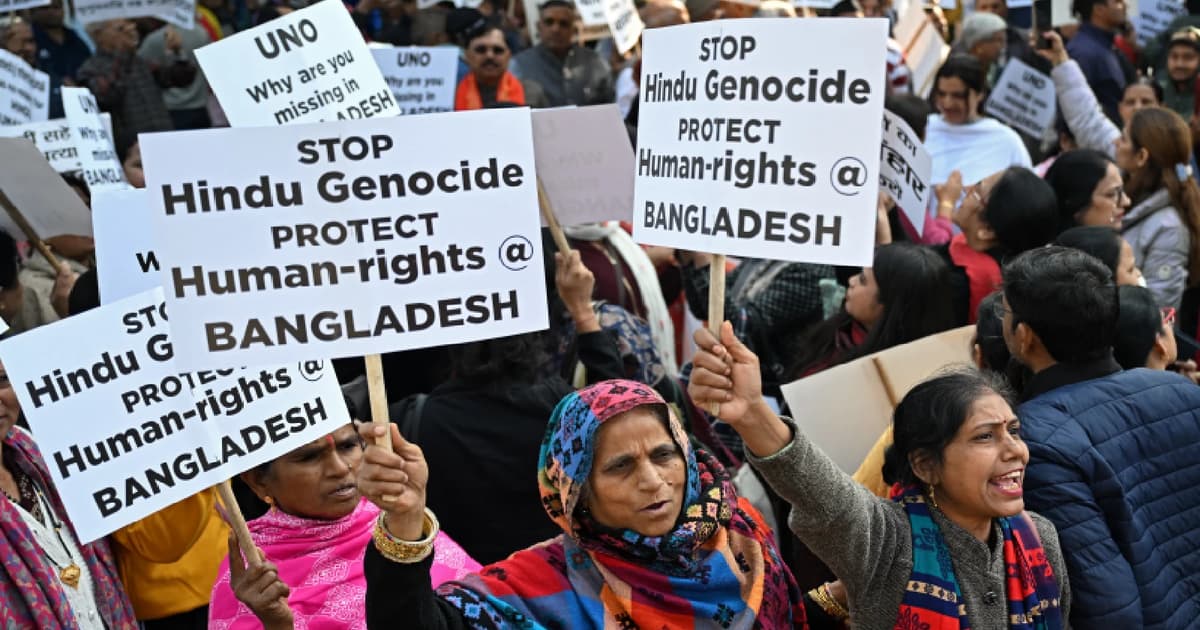
Much of the disinformation centers around alleged attacks against Bangladesh’s minorities. Approximately 10 percent of Bangladesh’s 170 million population is non-Muslim, with Hindus comprising the largest non-Muslim group. Social media platforms have seen mass posting of claims that Hindus are under attack, frequently employing the hashtag “Hindu genocide.”
However, according to police figures released in January, only 12 percent of the 645 incidents involving minority group members in 2025 were classified as having sectarian motives, contradicting the narrative being pushed online.
The US-based Center for the Study of Organized Hate has tracked more than 700,000 posts from over 170,000 accounts on X (formerly Twitter) making claims of “Hindu genocide” between August 2024 and January 2026. “We have tracked coordinated Indian disinformation online, falsely alleging large-scale violence against Hindus in Bangladesh,” said Raqib Naik, head of the think tank.
“More than 90 percent of this content originated from India, with the remainder linked to associated Hindu nationalist networks in the UK, US, and Canada,” Naik told AFP.
Among examples debunked by AFP Fact Check were AI-created videos shared tens of thousands of times, including one depicting a woman who had lost her arm appealing not to vote for the Bangladesh Nationalist Party (BNP), which many consider a frontrunner in the election. Another computer-generated video showed a Hindu woman claiming that people of her faith had been instructed to vote for Jamaat-e-Islami, a key Islamist party, or face exile to India.
The technological sophistication of these campaigns is particularly concerning, as few of the hundreds of AI-generated videos documented by fact-checkers across platforms like YouTube, Facebook, TikTok, and Instagram carry AI disclaimers.
The surge in disinformation follows years of repression under Hasina’s government, when political opposition was crushed and outspoken voices were silenced, creating a vacuum of reliable information.
The India-Bangladesh tension has spilled over into other areas as well. Social media outrage by Hindu fundamentalists about a Bangladeshi cricket player in India’s domestic IPL league resulted in his club cancelling his contract – a controversy that escalated to Bangladesh’s national team withdrawing from this month’s T20 World Cup in India.
While analysts point to India as the origin of much disinformation, there is no concrete evidence that these campaigns are organized by the Indian government. India’s foreign ministry has stated they have recorded a “disturbing pattern of recurring attacks on minorities” by “extremists in Bangladesh” but also emphasize their support for “free, fair, inclusive and credible elections.”
Bangladesh Election Commission spokesperson Md. Ruhul Amin Mallik said they are working with Meta and have established a unit to monitor social media posts, but acknowledges that the sheer volume of online content makes this a challenging task. “If our team detects any content as harmful and misleading, we instantly announce it as fake information,” Mallik stated.
Election expert Jasmine Tuli, a former election commission official, highlighted the particular vulnerability of Bangladesh to such manipulation. With over 80 percent of urban households and nearly 70 percent of rural areas having at least one smartphone according to government statistics, many citizens are relatively new to digital technology.
“It is a big threat for a country like Bangladesh, since people don’t have much awareness to check the information,” Tuli said. “Due to AI-generated fake visuals, voters get misguided in their decision.”
Fact Checker
Verify the accuracy of this article using The Disinformation Commission analysis and real-time sources.

29 Comments
If AISC keeps dropping, this becomes investable for me.
Good point. Watching costs and grades closely.
Interesting update on Disinformation Floods Bangladesh as Election Approaches. Curious how the grades will trend next quarter.
Good point. Watching costs and grades closely.
Good point. Watching costs and grades closely.
Interesting update on Disinformation Floods Bangladesh as Election Approaches. Curious how the grades will trend next quarter.
Good point. Watching costs and grades closely.
Good point. Watching costs and grades closely.
Uranium names keep pushing higher—supply still tight into 2026.
Good point. Watching costs and grades closely.
I like the balance sheet here—less leverage than peers.
Good point. Watching costs and grades closely.
Production mix shifting toward Disinformation might help margins if metals stay firm.
Good point. Watching costs and grades closely.
If AISC keeps dropping, this becomes investable for me.
Good point. Watching costs and grades closely.
Good point. Watching costs and grades closely.
The cost guidance is better than expected. If they deliver, the stock could rerate.
Good point. Watching costs and grades closely.
Good point. Watching costs and grades closely.
Interesting update on Disinformation Floods Bangladesh as Election Approaches. Curious how the grades will trend next quarter.
Exploration results look promising, but permitting will be the key risk.
Good point. Watching costs and grades closely.
Good point. Watching costs and grades closely.
Silver leverage is strong here; beta cuts both ways though.
Good point. Watching costs and grades closely.
If AISC keeps dropping, this becomes investable for me.
Good point. Watching costs and grades closely.
Good point. Watching costs and grades closely.