


Listen to the article
In the digital battleground of the Middle East conflict, truth has become the first casualty as social media transforms modern warfare into an unprecedented information war. Governments and military forces now deploy propaganda with surgical precision, reaching billions of users instantaneously.
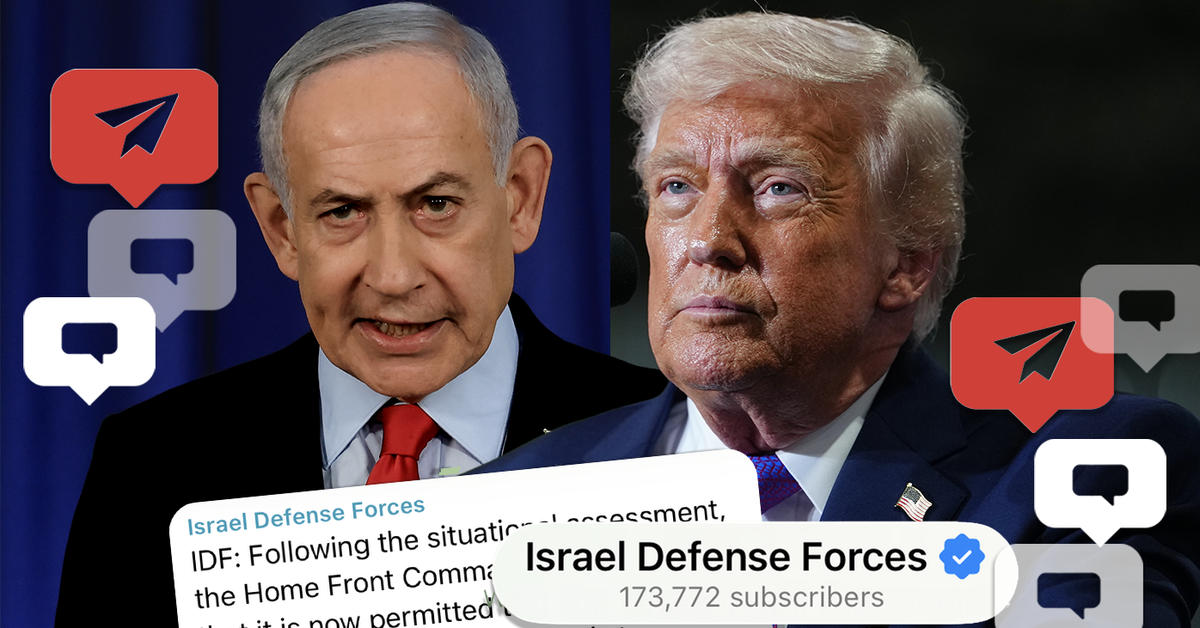
Global audiences are witnessing the Israel-Iran conflict unfold in real-time, with both the Israeli Defense Forces (IDF) and the Islamic Revolutionary Guard Corps (IRGC) broadcasting war communications directly to smartphones via platforms like Telegram and X. This unfiltered stream of updates creates a confusing information ecosystem further complicated by citizen journalism, fabricated reports, and artificial intelligence.
“You get flooded with information and you think you’re being informed, but often you’re just getting pummeled with unverified data,” explains David Andrews, Senior Policy Advisor at Australian National University’s National Security College. “Basically no one is equipped to be able to filter that, and it’s actually really bad for your mental health as well. It undermines your critical thinking, which is almost what these attempts rely on.”
A perpetual struggle for narrative control underlies the conflict, with Iran, the United States, and Israel each working to position themselves as righteous actors battling malevolent forces. Social media platforms have become their primary battlefields for shaping public perception.
The digital landscape now teems with unverified imagery, recycled footage, and fabricated battlefield reports. One particularly alarming example included an AI-generated video depicting Dubai’s iconic Burj Khalifa engulfed in flames, while another false report claimed Israeli Prime Minister Benjamin Netanyahu had been killed.
The sophistication of today’s AI-generated content has made distinguishing authentic material nearly impossible for average users. Neither side rushes to correct misinformation, allowing falsehoods to propagate rapidly across platforms, much like viral contagion.
“I think the disinformation campaigns are definitely ramping up now in a way that we haven’t seen before, which is a function of the information environment that we’re in,” Andrews notes. “And that is an opportunity that our adversaries have taken advantage of, I think, quite effectively.”
The Institute for War & Peace Reporting has highlighted AI’s role as a “force multiplier, enhancing the speed, precision, and scale of military operations, while simultaneously enabling sophisticated, automated disinformation campaigns.”
Andrews elaborates: “And the more that AI-based systems and technology are normalised and pushed, I think those risks only accelerate to an enormous degree.”
Military communications frequently feature exaggerated successes or fabricated victories. This strategic deception proves particularly effective within closed regimes where information can be tightly controlled.
“It could be creating a generalised sense of uncertainty and distrust, a generalised sense that one side is doing much better than they are in reality,” Andrews explains. “But it could also be directed inwards and to say, ‘Well, look, there’s these reports of how wonderfully our forces are doing and how the enemy has been defeated’.”
While technological advancement has outpaced our collective ability to manage misinformation, Andrews suggests several approaches for individuals seeking to separate fact from fiction.
Managing one’s information diet and diversifying news sources represents a critical first step. “You have to read widely and try and find things that sort of complement the quick and reactive with the slower and more considerate,” he advises. “Each has their place, but if we’re just relying on something like social media that provides that minute-by-minute update, none of us are actually equipped to translate that information effectively.”
Andrews recommends balancing immediate social media updates with more thorough analyses developed over days rather than minutes. “You might look at the flow of social media for a little bit, but then you’ve got to sit back and then read reports that happen over multiple days to try and balance that out and apply that critical lens.”
As this digital propaganda war intensifies alongside physical conflict, the responsibility for information discernment increasingly falls to individual users navigating an ever more complex and deceptive media environment.
Fact Checker
Verify the accuracy of this article using The Disinformation Commission analysis and real-time sources.

9 Comments
It’s alarming to see how governments and military forces are exploiting social media to spread their narratives and propaganda. This ‘information war’ makes it incredibly hard for the public to get an accurate picture of what’s really happening on the ground. A troubling trend.
This article highlights the serious challenges of cutting through disinformation during modern conflicts. The weaponization of social media by governments and military forces is truly concerning. We need better ways to verify information and inoculate the public against manipulation.
The article raises valid concerns about how disinformation is compounding the difficulties of understanding complex geopolitical conflicts in real-time. The flood of unverified data and propaganda on social media is clearly undermining critical thinking and mental health. A worrying development.
This is a sobering look at the challenges of cutting through disinformation during modern conflicts. It’s alarming how easily false narratives can spread on social media and overwhelm people’s critical thinking. We need better ways to verify information and arm the public against manipulation.
The weaponization of information is a concerning trend. Governments and military forces are exploiting social media to broadcast propaganda and sow confusion. This creates an environment where it’s increasingly difficult for the public to discern truth from fiction.
You’re right, the flood of unverified data makes it almost impossible for the average person to stay informed. This undermines our ability to think critically and form accurate views on complex geopolitical situations.
Interesting to see how the information war is playing out in the Middle East conflict. Both sides are using social media to disseminate their narratives directly to global audiences. This ‘unfiltered stream of updates’ certainly adds to the fog of war and confusion.
Interesting to see how the information war is playing out in the Middle East. Both sides are leveraging social media to broadcast their narratives directly to global audiences. This ‘unfiltered stream of updates’ certainly adds to the confusion and undermines critical thinking.
This article highlights the serious challenges of navigating information during modern conflicts. The rise of citizen journalism, fabricated reports, and AI-driven propaganda make it extremely difficult to discern truth from fiction. A concerning trend that undermines public understanding.