


Listen to the article
Social media-savvy, young swing voters are emerging as a key demographic for political parties as Japan heads into Sunday’s general election. In response, digital platforms are working to limit the impact of disinformation on Generation Z voters through educational initiatives.
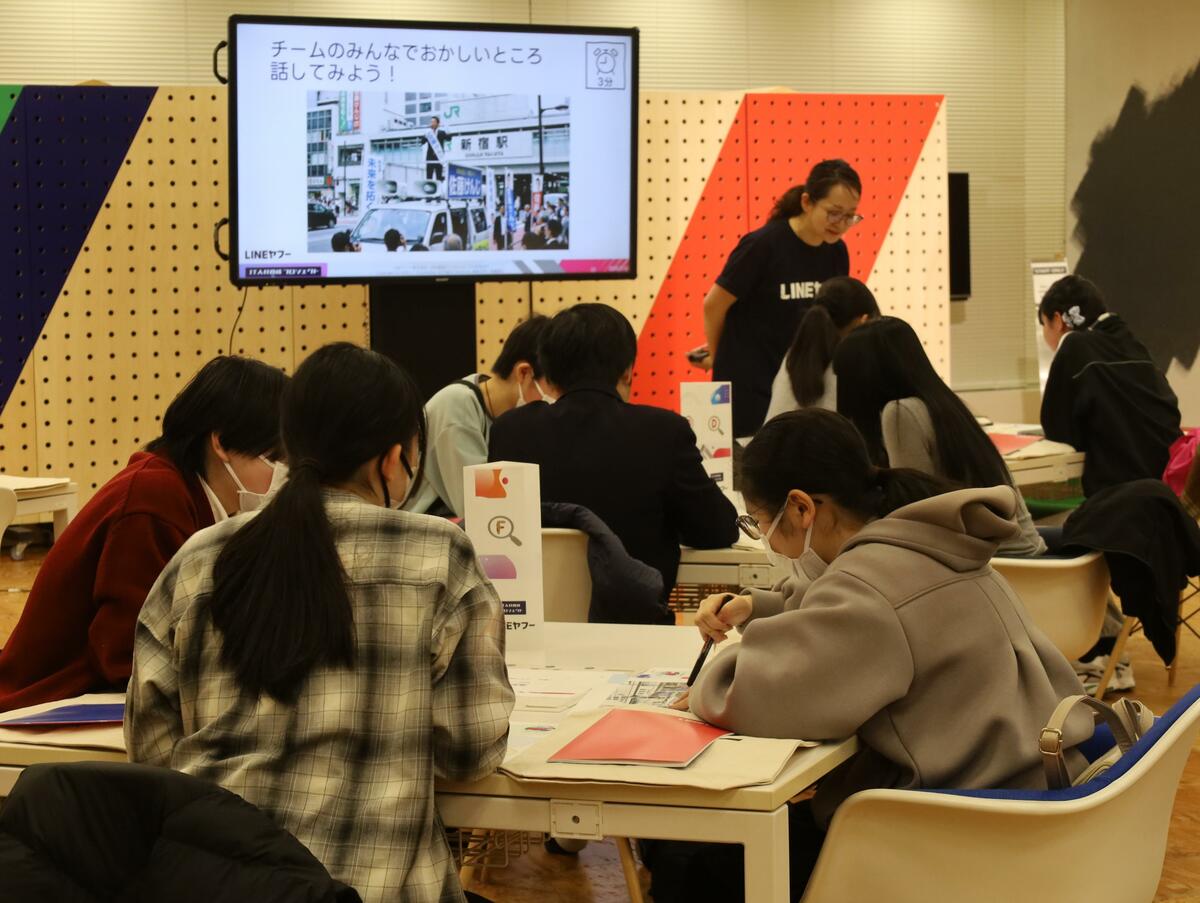
In Tokyo, approximately 20 junior high and high school students recently participated in a workshop designed to help them evaluate information sources critically, a skill increasingly important as deepfakes and AI-generated content become more sophisticated.
Working in groups, the teenage participants analyzed real-world examples including AI-generated images, composite photos, and misleading edits. They learned practical methods for determining information reliability and understanding the threats posed by fake accounts.
During one exercise, students examined what appeared to be an authentic image of a candidate giving a campaign speech near Shinjuku Station. The image, entirely created by generative AI, contained subtle errors including a misspelled station name and fabricated campaign banners on nearby buildings.
“I couldn’t find any errors in those AI-generated images. It made me realize I may have overestimated my ability to spot fake news,” admitted an 18-year-old high school senior preparing to vote for the first time. “With the election approaching, I want to sort through information while fact-checking it.”
The workshop’s relevance is underscored by a survey conducted by LY Corp., the Line messaging app operator that organized the event. The study revealed that 87 percent of young respondents believed they had encountered disinformation or misinformation, with 54 percent acknowledging they may have been influenced by such content. Most concerning, 88 percent noted a significant lack of educational efforts addressing disinformation awareness.
The timing is critical as major political parties intensify their social media campaigns to reach unaffiliated voters in the shortened House of Representatives election period. Current media polls suggest the ruling coalition – comprising the Liberal Democratic Party and the Japan Innovation Party – is positioned to secure at least a majority of the 465 contested seats, while opposition groups struggle to expand their support base.
Japan lowered its voting age from 20 to 18 in 2016, but youth voter turnout has consistently lagged behind other age demographics. This election represents an important opportunity to engage this newer voting bloc through digital platforms.
While political parties embrace social media’s reach, they remain concerned about its potential negative impacts. The Ministry of Internal Affairs and Communications has requested platform operators to act swiftly in removing harmful information during the election period.
“Fake news has become a social issue,” said Narumichi Oyama, a manager at LY. “Although younger generations, including junior and senior high school students, appear adept at using social media and AI, it remains quite questionable whether education has kept pace with the growing influence of social media and the evolution of AI.”
The problem appears widespread. A 2025 communications ministry survey with approximately 2,800 respondents aged 15 and above found that roughly half of those in their teens to 30s who had encountered false information acknowledged sharing it in some form.
“Most people vaguely know that fake news is terrifying and they need to be careful not to be misled, but relatively few students, particularly those in their teens, pursue the truth and verify the information on their own,” Oyama observed.
As Japan’s youngest voters prepare to cast ballots that could shape the nation’s political future, these digital literacy initiatives take on added significance. “As they will soon become voters and are expected to contribute to society, they should do so to filter out various noises and purely benefit from social media, the internet or AI,” Oyama concluded.
Fact Checker
Verify the accuracy of this article using The Disinformation Commission analysis and real-time sources.

8 Comments
This is a great example of digital platforms taking responsibility to combat disinformation. Equipping young voters with the ability to think critically about online information is a wise and necessary step.
This is a fascinating initiative to help young voters in Japan discern fact from fiction during election season. Deepfakes and AI-generated content are a growing challenge, so training digital natives to spot manipulation is crucial.
Absolutely. Teaching critical analysis skills is key to empowering voters to make informed decisions. I’m glad to see this proactive approach from digital platforms.
Kudos to the digital platforms for taking this proactive stance. Empowering young voters to spot fabricated content is a smart investment in the future of Japan’s political discourse.
With the rise of sophisticated disinformation tactics, it’s heartening to see efforts to equip the next generation with the tools to navigate online information. This type of voter education could have a lasting impact.
Agreed. Protecting the integrity of elections is vital for democracy, and initiatives like this that build media literacy are an important part of the solution.
Analyzing AI-generated images for subtle errors is a clever way to teach these students how to discern authentic information from deepfakes. Hands-on exercises like this will serve them well as they navigate the digital landscape.
Definitely. Giving them practical experience identifying manipulated content is invaluable. This kind of critical thinking skill is essential for informed decision-making.