


Listen to the article
Spain Elevates Digital Sovereignty to National Security Status, Seeks EU Leadership
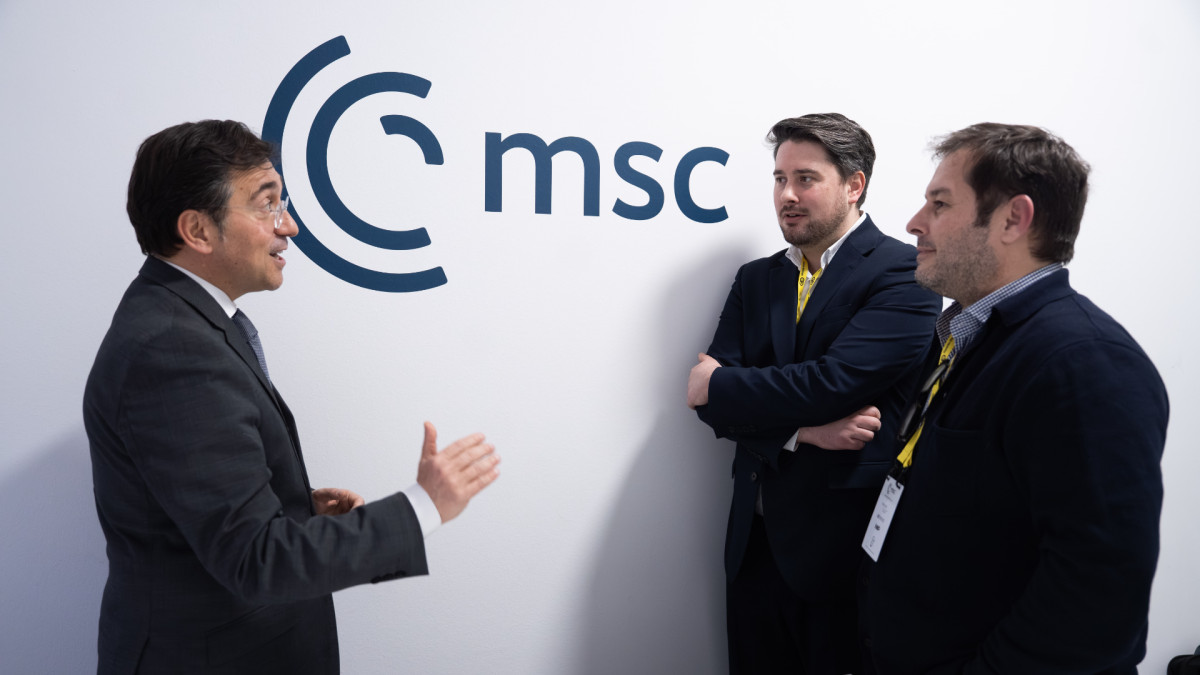
Spain has positioned digital sovereignty as a critical matter of national and international security, according to Foreign Minister José Manuel Albares, who outlined the country’s strategy at the recent Munich Security Conference. In a detailed conversation with Jeremy Cliffe, editorial director of the European Council on Foreign Relations, Albares emphasized Spain’s ambition to lead the construction of a European digital market that would reduce technological dependency.
“If we really want to be free from coercion, if we want to make sure our way of life is the one we decide, then we require a sovereign Europe,” Albares explained, drawing a direct connection between political freedom and economic competitiveness in the digital realm.
The minister argued that Spain currently stands “at the forefront of the international agenda,” comparing its leadership on digital regulation with its prominent role in addressing the Gaza and Ukraine crises. Positioning Spain as a “pivot state,” Albares noted that the country advocates for its own identity while remaining “deeply embedded in European values.”
Albares identified two primary challenges in the digital space: disinformation and dependency. “New technologies have allowed citizens to be better informed than ever, but at the same time there is more disinformation than ever,” he said. “For a democracy to be healthy, information must be verified and real.”
The minister expressed particular concern about foreign interference in democratic processes, emphasizing that citizens need accurate information to make informed decisions, especially during elections. He also highlighted Europe’s technological dependence on foreign companies, stating that “citizens don’t even realize we are in the hands of a few companies. Sometimes even one single company.”
When asked about the relationship between digital platforms and authoritarian political styles, Albares was unequivocal. “Without these digital platforms, there couldn’t be such a wide spread of speech that, many times, is not only strongman speech but hate speech,” he noted. “That is very corrosive and divisive for our societies.”
He framed the debate as a fundamental choice between competing worldviews: “Either you believe confrontation is stronger than cooperation, or you believe the opposite. It’s the law of the jungle or the law of democracy and international law.”
The Spanish approach emphasizes multilateral solutions, with Albares arguing that “you cannot manage competition without cooperation—because otherwise it just leads to a clash: the stronger imposes itself on the weaker.” He cited the Ibero-American Digital Charter and the creation of a European digital market as concrete initiatives Spain is championing.
Despite increased pressure from digital giants, including threats of sanctions against European officials involved in regulation efforts, Albares expressed confidence in the European consensus. “There is momentum, and the consensus is building. Things are moving very, very fast,” he said, adding that progress over the past year has been substantial.
When questioned whether Europe’s regulatory approach is sufficient, Albares suggested that the issue isn’t a lack of instruments but rather “awareness that we can use them—and sometimes the will.” He characterized digital regulation as “a huge challenge for our democracies and for the European project,” warning that failure to address it would leave Europe vulnerable to division.
Spain’s assertive stance on digital policy aligns with its active international posture on other issues, including migration, the Gaza conflict, and broader European affairs. Albares described Spain’s approach as having “a global vision of the world” while maintaining “its own identity… deeply embedded in European values and in the principles of the United Nations Charter.”
As technological regulation continues to gain prominence on the global agenda, Spain’s efforts to position itself as a leading voice in shaping a humanistic, democratic approach to digital governance highlight the growing intersection between technological policy and geopolitical influence.
Fact Checker
Verify the accuracy of this article using The Disinformation Commission analysis and real-time sources.

9 Comments
Spain’s ambition to lead on digital regulation is an intriguing development. I’m curious to see how they navigate the complex dynamics within the EU and broader international community on this issue.
Interesting take on the tension between democracy and lawlessness. Curious to see how Spain’s push for digital sovereignty plays out on the European stage. Will they be able to strike the right balance?
The idea of ‘technological dependency’ is a real concern for many nations. Spain’s push for a more sovereign European digital market is a bold move that could have significant implications.
Spain’s emphasis on reducing technological dependency and asserting its identity within the EU values framework is an intriguing strategic move. It will be important to see how they navigate the complex geopolitics of digital governance.
It will be interesting to see if Spain can effectively position itself as a ‘pivot state’ on digital governance issues. Their ability to balance their own identity with European values will be key.
The connection between political freedom and economic competitiveness in the digital realm is a thought-provoking perspective. Spain’s strategic approach to this challenge is worth watching closely.
Spain’s positioning as a ‘pivot state’ on digital regulation is an ambitious goal. It will be interesting to see if they can rally support from other EU members and truly lead the construction of a more sovereign European digital market.
The connection between political freedom and economic competitiveness in the digital realm is a fascinating point. Spain seems to be trying to carve out a unique path that balances its values with its strategic interests.
Digital sovereignty is a growing concern for many nations, not just Spain. The ability to control and shape one’s technological future is becoming a critical national security issue. I’m curious to see how this plays out globally.