


Listen to the article
A reproductive health researcher’s legal battle against misinformation highlights growing challenges faced by scientists speaking out on controversial topics.
Chelsea Polis, Principal Research Scientist at the Guttmacher Institute, found herself defending against a $1 million defamation lawsuit in 2020 after challenging misleading marketing claims about a fertility thermometer. The device was being promoted as a highly effective contraceptive method – claims that Polis publicly disputed based on scientific evidence.
“It was a blatant attempt to try to silence me, merely for speaking truth to try to protect people and their reproductive health,” Polis said, describing the lawsuit that threatened both her personal finances and professional reputation.
What made the lawsuit particularly troubling was its timing. Both a scientific journal and the U.S. Food and Drug Administration had already acted on Polis’s concerns, validating her scientific critique of the product’s effectiveness claims. Despite this validation from respected institutions, Polis faced a two-year legal battle before finally prevailing.
Her experience illustrates a growing trend of researchers facing intimidation and legal threats when they challenge misinformation, especially in politically contentious areas like reproductive health. These tactics raise serious concerns about scientific freedom and public access to accurate health information.
The Guttmacher Institute, a leading research organization focused on sexual and reproductive health policy, sees combating misinformation as increasingly central to its mission. Kelly Baden, Vice President for Public Policy at Guttmacher, is spearheading these efforts.
“Data are necessary but not sufficient to change the world,” Baden explained. “Evidence has to be coupled with strong communication and collaborators on the ground to set a narrative about what the research tells us.”
This approach reflects a recognition that in today’s polarized information environment, solid research alone often fails to influence public discourse or policy without strategic communication efforts. Research institutions must actively work to ensure evidence-based perspectives reach policymakers and the public.
Polis believes organizations like Guttmacher are uniquely positioned to counter misinformation. “Our staff have the methodological chops to spot flawed studies, the deep familiarity with the evidence base to know what the best science says and the policy insight to recognize when falsehoods could do real harm on a large scale,” she noted. “We’re committed to making sure the facts matter—even when they’re inconvenient or complex.”
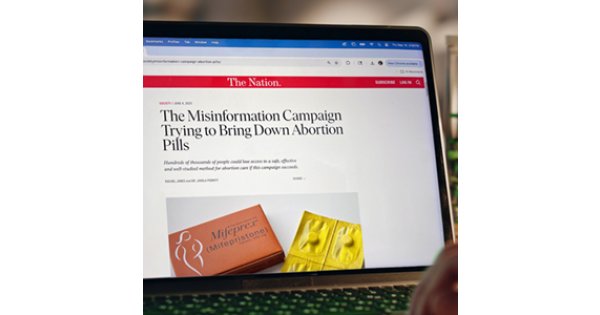
The institute demonstrated this commitment earlier this year when responding to attempts to undermine medication abortion access. In May, an anti-abortion organization published a paper challenging the established safety record of mifepristone, a medication used in the most common abortion regimen in the United States.
Guttmacher researchers conducted a detailed analysis of the paper, identifying numerous conflicts with existing scientific evidence. This rapid response allowed them to equip congressional offices and advocacy partners with factual information as legal and regulatory challenges to mifepristone access intensified.
The institute further amplified its evidence-based perspective when Rachel K. Jones, a Principal Research Scientist at Guttmacher, co-authored an op-ed with Dr. Jamila Perritt of Physicians for Reproductive Health. Their piece highlighted methodological flaws in the study and contextualized it within broader efforts to restrict abortion access through questionable scientific claims.
These conflicts over reproductive health information come amid growing concerns about the politicization of science and increasing legal threats against researchers who speak out on controversial topics. For scientists like Polis, the risks of engaging in public debates have never been higher, even as the need for evidence-based perspectives in policy discussions becomes increasingly critical.
As misinformation continues to proliferate, research institutions face mounting pressure to defend scientific integrity while effectively communicating complex evidence to policymakers and the public – a balancing act that has significant implications for both public health and scientific freedom.
Fact Checker
Verify the accuracy of this article using The Disinformation Commission analysis and real-time sources.

9 Comments
This is a disturbing example of how disinformation can be weaponized to target and silence those trying to uphold scientific integrity. We need robust safeguards to ensure researchers can speak truth without fear of retaliation.
This is a concerning trend. Researchers should be able to voice scientific critiques without facing legal threats and intimidation tactics. Protecting free speech and academic freedom is crucial, especially on sensitive health topics.
Agreed. Legitimate scientific debate and evidence-based discourse must be defended against cynical attempts to silence experts. Kudos to Chelsea Polis for persevering.
It’s troubling to see how misinformation and disinformation can be weaponized to target and silence scientists. This highlights the need for stronger protections and support systems for researchers speaking truth to power.
Absolutely. Institutions and the public must stand up for scientific integrity and the right of experts to freely share their findings, even on controversial topics.
This case underscores the growing threats to evidence-based policymaking and public discourse. Researchers shouldn’t have to fear legal retaliation for voicing factual critiques. Tackling disinformation remains a critical challenge.
Agreed. We need to find ways to robustly defend the scientific process and empower researchers to openly share their expertise without fear of reprisal.
The use of lawsuits to silence scientific dissent is deeply troubling. Researchers must be able to freely challenge misleading claims, especially on public health issues, without facing punitive legal action.
Absolutely. This case highlights the urgent need for stronger protections for whistleblowers and expert voices against strategic lawsuits and other intimidation tactics.