


Listen to the article
CTV News Criticized for Unchallenged Anti-Israel Narrative in Gaza Aid Coverage
Israeli forces recovered the body of hostage Ran Gvili on January 27, the last remaining Israeli captive who was kidnapped during the Hamas terrorist attack on October 7, 2023. Despite a ceasefire agreement stipulating Hamas should have returned his body nearly four months ago, the terrorist group failed to comply with those terms.
However, when reporting this development, CTV’s Your Morning host Anne-Marie Mediwake described the situation simply as “remains of an Israeli police officer returned home,” using passive language that critics say obscured key details about Gvili being a hostage and the circumstances of his recovery.
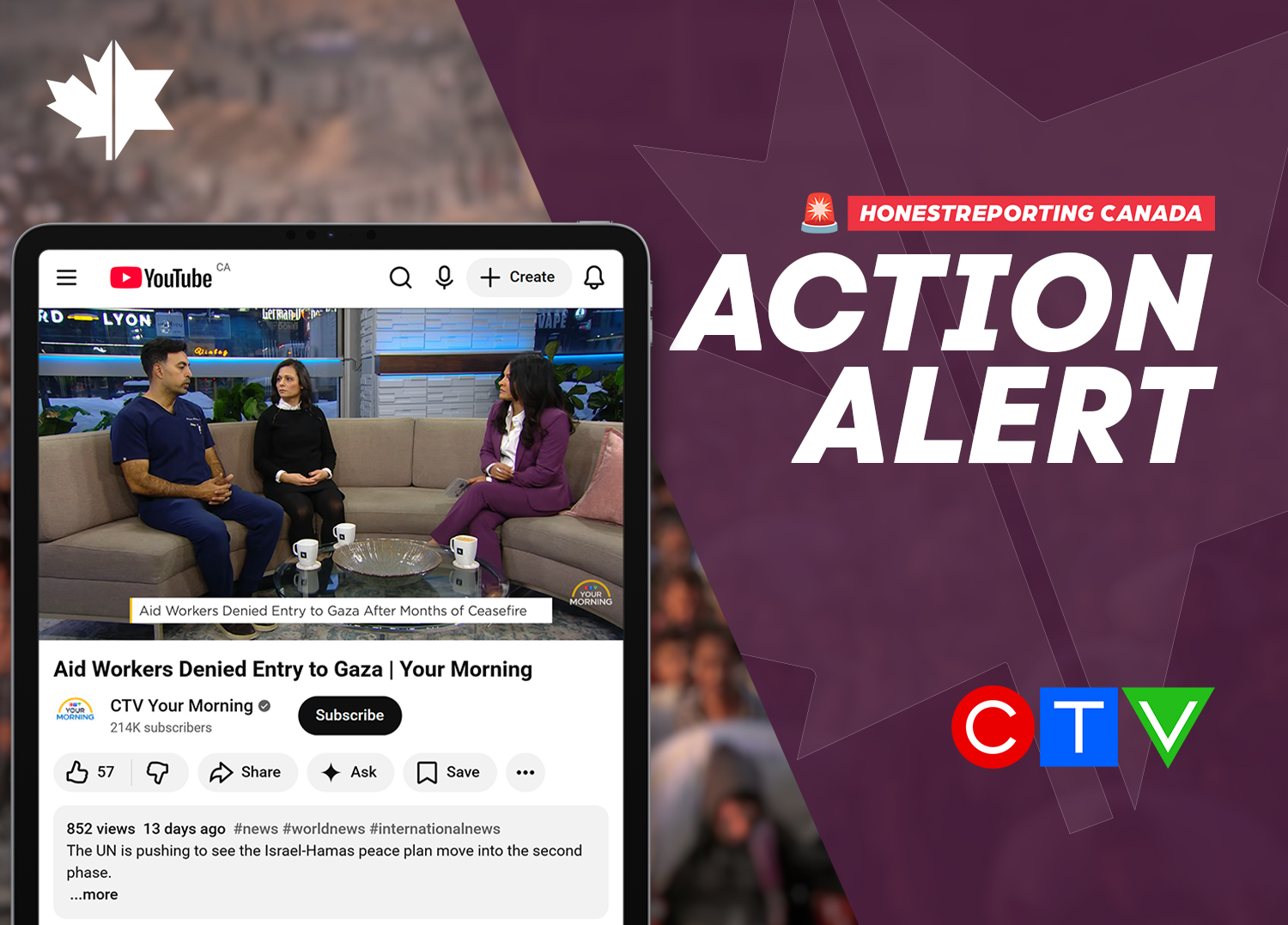
This framing set the tone for a subsequent segment titled “Aid Workers Denied Entry to Gaza,” which featured two individuals identified as aid workers but who have established records of anti-Israel activism, according to media watchdogs.
One guest, Dorotea Gucciardo, serves as director of development for Glia, an organization whose team includes controversial figures such as Tarek Loubani, a physician who was previously detained by Israeli authorities and later injured during protests under contested circumstances. Another Glia team member, Benjamin Thomson, a nephrologist at Mackenzie Health Hospital in Richmond Hill, was suspended for promoting conspiracy theories denying sexual violence perpetrated by Hamas terrorists during the October 7 attacks.
Gucciardo herself has previously written opinion pieces alleging starvation in Gaza while omitting any mention of Hamas’s role in the crisis.
The second interviewee, Dr. Rizwan Minhas (also known as Mohammad Rizwan Minhas), a Toronto-area family physician, has been vocal in his criticism of Israel. Just three weeks after the Hamas attack, he signed an open letter accusing Israel of “genocide” without acknowledging Hamas or the hostage situation in Gaza.
Throughout the segment, Mediwake allowed both guests to make serious allegations about Israel blocking humanitarian aid to Gaza without challenging their claims or providing context. Gucciardo described Gaza as being in a “constant state of survival,” while Minhas claimed there was “no clean water” in the territory.
Media analysts note these characterizations contradict social media evidence showing that parts of Gaza have resumed some normal activities, with functioning shops, restaurants, and availability of various goods in certain areas, though humanitarian conditions remain dire in others.
Minhas also referenced Israeli strikes on Nasser Hospital without acknowledging reports from Israeli military and intelligence sources that Hamas has consistently used hospitals and other civilian infrastructure for military purposes – a fact that would change their protected status under international law.
Critics argue that Mediwake’s failure to provide counterpoints or question these narratives undermines CTV’s journalistic standards and its promise to deliver “original perspectives and unique insights into the headlines of the day.”
The controversy highlights the ongoing challenge of balanced reporting on the Israel-Hamas conflict, where advocates on both sides scrutinize media coverage for perceived bias. Journalism experts emphasize that even in interview formats, hosts have a responsibility to ensure viewers receive complete information that includes relevant context and challenges to questionable claims.
As tensions in the region continue and humanitarian concerns grow, the incident serves as a reminder of the media’s crucial role in presenting complex geopolitical issues with accuracy and nuance, particularly when featuring commentators with established positions on contentious topics.
Fact Checker
Verify the accuracy of this article using The Disinformation Commission analysis and real-time sources.

9 Comments
The passive language used to describe the return of the Israeli hostage’s remains is puzzling. Journalists should be precise in their reporting, especially on sensitive geopolitical issues.
Agreed. Obscuring key details like the hostage status of the individual is concerning and suggests an attempt to downplay the situation.
It’s troubling to see news outlets allow guests with known biases to make unchallenged claims. Responsible journalism should strive for balance and scrutiny, rather than amplifying one-sided perspectives.
Absolutely. Giving a platform to activists with clear agendas undermines the credibility of the coverage and fails to serve the public interest.
This type of coverage is troubling and does a disservice to the public. Responsible journalism should strive for objectivity, even on contentious geopolitical issues, rather than advancing specific agendas.
While aid workers should have access to Gaza, the credibility of the individuals featured in this segment is questionable given their activist backgrounds. Balanced reporting requires vetting sources carefully.
Exactly. Journalists need to ensure they are not inadvertently amplifying propaganda or one-sided narratives, even if it’s in the guise of humanitarian concerns.
This coverage seems to have a clear bias. Downplaying the details around the Israeli hostage and giving a platform to known anti-Israel activists raises concerns about the objectivity of the reporting.
I agree, the framing of the story is concerning and appears to push a particular narrative rather than present the facts objectively.