


Listen to the article
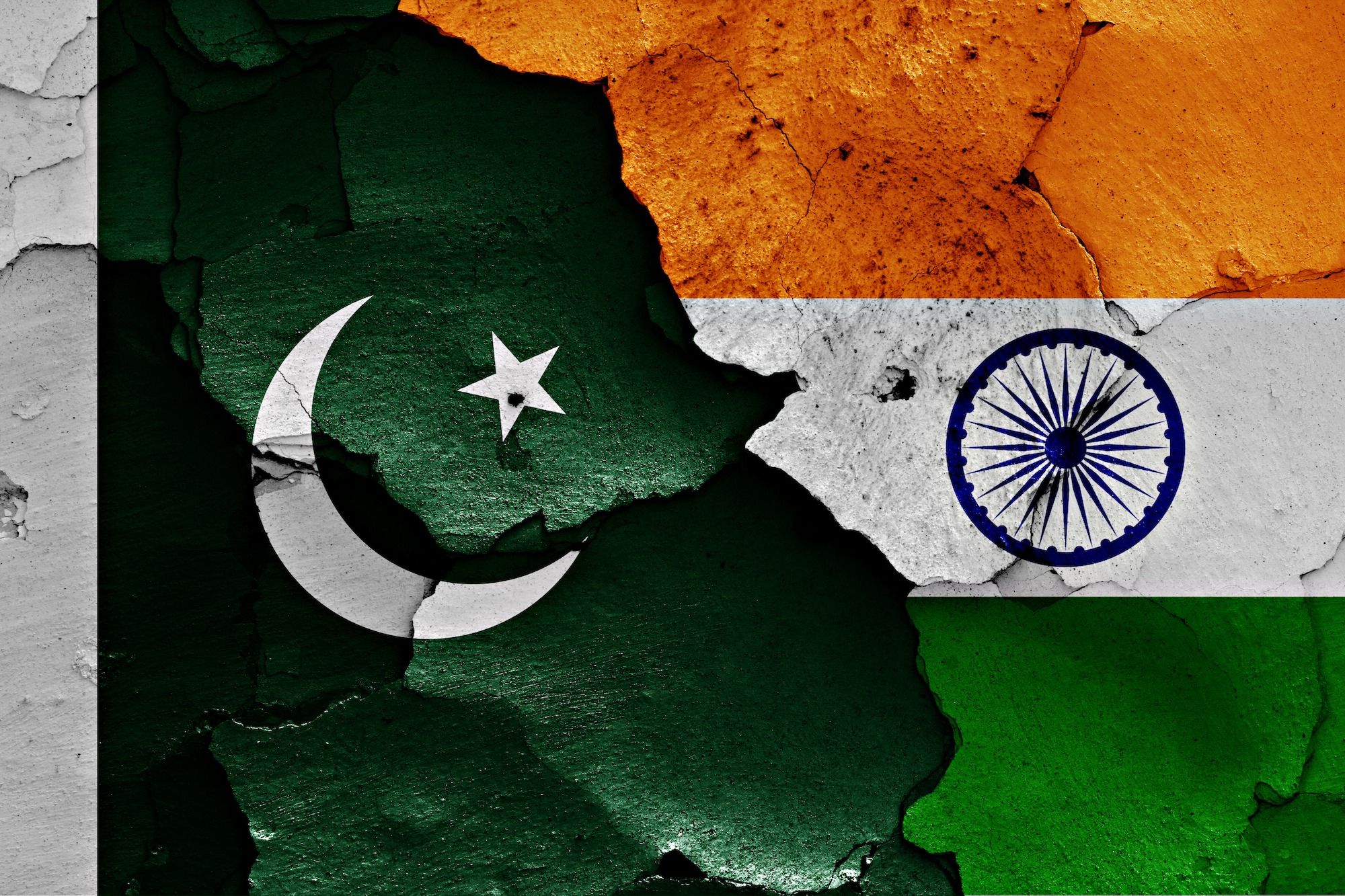
The escalating crisis between India and Pakistan in May 2025 took on a dangerous new dimension as both nuclear powers weaponized disinformation during their four-day military confrontation. The integration of AI-generated deepfakes and false information into conventional warfare made distinguishing fact from fiction nearly impossible, creating a perilous environment where even seasoned journalists and government officials were deceived.
The crisis revealed how rapidly synthetic content can intensify tensions between the two nuclear-armed neighbors. While disinformation may not trigger conflicts, it significantly amplifies existing ones by creating strategic confusion and increasing the risk of catastrophic misinterpretation.
A particularly dangerous episode emerged when social media platforms circulated false allegations that India had attacked Pakistan’s Kirana Hills nuclear site, causing radioactive leakage. A fabricated letter about the incident went viral, lending credibility to the hoax. The situation escalated when Indian Defense Minister Rajnath Singh publicly stated that “Pakistan is an irresponsible state and [the International Atomic Energy Agency] should take charge of the nuclear weapons of Pakistan.” Though the IAEA later confirmed no radioactive event had occurred, Singh’s statement had already lent credibility to the false narrative.
Communication breakdowns further complicated the crisis. Following a terrorist attack in India-administered Kashmir in April 2025 that killed more than two dozen people, India expelled Pakistani diplomats and recalled its own from Pakistan. This diplomatic rupture eliminated crucial channels for clarification and de-escalation. India’s subsequent ban on social media accounts belonging to Pakistani celebrities and scholars created information silos where each country’s government controlled the narrative, making objective assessment virtually impossible.
Indian news outlet WION falsely reported that Pakistan had convened a meeting of its nuclear weapons authority, a claim Pakistan’s defense minister Khawaja Asif immediately denied. This incident highlighted how misinformation can disrupt clear signaling during crises and potentially trigger catastrophic misperceptions.
Security analysts have identified five policy recommendations that could mitigate the dangers of disinformation between these nuclear rivals.
First, both countries need robust state-run fact-checking mechanisms. While India’s Press Information Bureau actively debunked claims during the crisis, it focused exclusively on Pakistani disinformation. Pakistan’s equivalent platform, Fake News Buster, was inactive during the critical period, allowing falsehoods like the Kirana Hills hoax to proliferate unchallenged.
Second, independent media fact-checking capabilities must be strengthened. During the 2025 crisis, mainstream media in both countries often amplified misinformation rather than scrutinizing it. News organizations should establish dedicated verification desks modeled after international standards like Reuters Fact Check and BBC Verify. Pakistan’s Geo News has developed a fact-checking initiative that could serve as a template, while most Indian news channels lack similar resources.
Third, cross-border journalistic presence should be restored. Until 2014, both countries maintained correspondents in each other’s territories, providing first-hand verification of claims. The absence of these journalists during the crisis left both populations vulnerable to unchecked social media assertions.
Fourth, backdoor diplomatic channels must remain open even when official relations deteriorate. Historical precedent suggests that Track 1.5 and Track 2 initiatives – semi-official and unofficial diplomatic efforts – can be particularly valuable during tense periods. The Neemrana Dialogue and collaborative work between experts like Pakistan’s Rabia Akhtar and India’s Rohee Neog demonstrate how neutral platforms can facilitate productive exchange even during politically charged times.
Finally, a direct leader-to-leader hotline between prime ministers should be reactivated. While a military hotline exists, it typically functions only after escalation has begun. The prime ministerial hotline, established in 1989 and used during the 1999 Kargil War, would enable immediate high-level communication to clarify intentions and prevent misinterpretation.
Implementation of these measures faces significant challenges. Government fact-checking efforts must overcome institutional biases that prioritize national narratives over objective truth. Reinstating cross-border journalists and diplomats requires a level of trust that has eroded over years of antagonism.
Most critically, political will remains the greatest obstacle. The 2022 BrahMos incident, when India accidentally fired a cruise missile into Pakistan, demonstrated that existing communication channels often go unused precisely when they are most needed.
The May 2025 crisis has shattered previous assumptions about escalation limits between these nuclear powers. In South Asia’s increasingly volatile security environment, where fabricated information can rapidly inflame tensions, the margin between restraint and catastrophe may ultimately depend on whether reliable communication and verification mechanisms exist – and whether leaders choose to use them when it matters most.
Fact Checker
Verify the accuracy of this article using The Disinformation Commission analysis and real-time sources.

12 Comments
This is a timely and important article. The integration of AI-generated content into conventional warfare is a serious concern that needs to be addressed. Developing robust verification systems and enhancing early-warning mechanisms will be essential to countering the threat of disinformation and deepfakes.
This is a timely and important article. The weaponization of synthetic content in conflicts is a growing concern that needs to be addressed. Strengthening crisis communications and information-sharing between India and Pakistan is critical to avoiding miscalculation and escalation.
The escalating crisis between India and Pakistan highlights the dangers of synthetic content being used to intensify tensions between nuclear-armed neighbors. Strengthening crisis communications and improving cross-border cooperation will be crucial to navigating these challenges and avoiding potential miscalculation.
The weaponization of synthetic content in conflicts is a worrying trend. Distinguishing truth from fiction becomes incredibly difficult, heightening the risk of miscalculation. Improved coordination and transparency between India and Pakistan is essential to mitigate the danger of disinformation.
The escalating crisis between India and Pakistan highlights the dangers of disinformation and deepfakes. The ability of false narratives to intensify tensions between nuclear-armed neighbors is deeply troubling. Developing robust verification systems and enhancing diplomatic channels will be essential to mitigating this threat.
Disinformation can indeed amplify existing tensions, with potentially catastrophic consequences. The integration of AI-generated content into conventional warfare is a worrying development that requires a multi-pronged response. Enhancing early-warning systems and fact-checking protocols should be top priorities.
This is a complex and concerning issue. The integration of AI-generated content into conventional warfare raises serious risks. Strengthening crisis communications, improving media literacy, and enhancing cross-border cooperation will be crucial to countering the threat of disinformation and deepfakes.
The weaponization of synthetic content in conflicts is a worrying trend that requires a multi-faceted response. Strengthening crisis communications, enhancing media literacy, and improving diplomatic coordination between India and Pakistan will be crucial to mitigating the dangers of disinformation and deepfakes.
Disinformation can indeed amplify existing conflicts, with potentially catastrophic consequences. The ability of fabricated narratives to influence public perception and decision-making is deeply worrying, especially between nuclear-armed neighbors. Improving verification protocols and transparency will be essential to navigating these challenges.
Spreading false information about nuclear incidents could have disastrous effects. It’s alarming how quickly fabricated narratives can gain traction and influence public perception, potentially provoking rash actions. Robust verification systems and enhanced cross-border cooperation are needed to counter this threat.
This is a complex issue without easy solutions. Deepfakes and disinformation pose serious challenges to crisis management and national security. Strengthening media literacy, digital forensics, and diplomatic channels will all be crucial to navigating these dangerous waters.
This is a serious issue that could have catastrophic consequences. The ability of disinformation and deepfakes to escalate tensions between nuclear-armed neighbors is deeply concerning. Strengthening crisis communications and fact-checking protocols is crucial to avoid potential misunderstandings.