


Listen to the article
In a significant shift affecting childhood health, experts are raising alarms about the growing influence of health misinformation, as documented in a recent consensus statement by the American Psychological Association. This trend comes at a critical juncture for pediatric healthcare in the United States.
A comprehensive 2025 report in JAMA by Forrest and colleagues reveals concerning patterns in children’s health outcomes, including increases in chronic conditions and functional limitations. These findings coincide with a separate study showing the negative impact of excessive electronic device use on musculoskeletal health, vision, and psychosocial well-being among young people.
Nutritional factors are also playing a significant role in the decline of children’s health. Research published in Nature Medicine demonstrates clear links between consumption of processed meats, sugar-sweetened beverages, and trans fats with negative health outcomes. The MAHA Commission Report, referenced in JAMA, specifically addresses these diet-related diseases in youth as requiring urgent intervention.
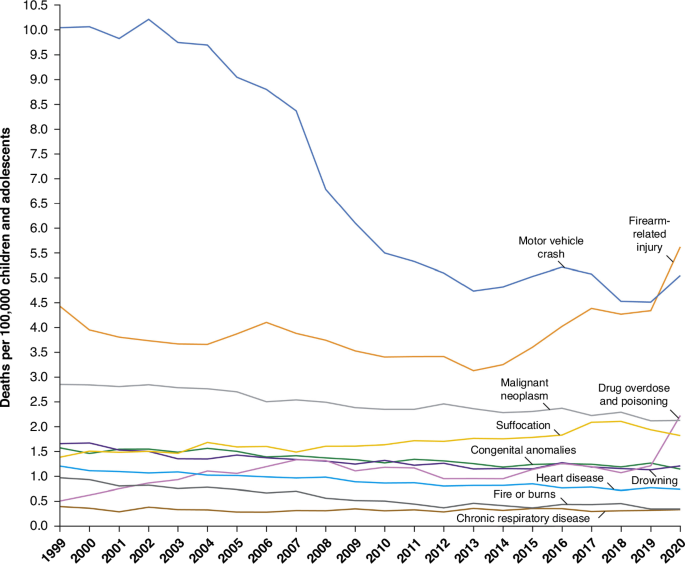
While some areas of pediatric care have seen remarkable progress—such as the development of surfactant therapy for respiratory distress syndrome in premature infants—other metrics show troubling regression. Woolf, Wolf, and Rivara documented an alarming rise in all-cause mortality among U.S. children and adolescents in a 2023 JAMA publication, while Goldstick’s research in the New England Journal of Medicine highlighted firearms becoming the leading cause of death in children.
Social determinants of health continue to play a critical role in these outcomes. Research by Singh and colleagues tracked major health inequality trends from 1935 to 2016, showing how socioeconomic factors consistently influence childhood health outcomes across generations.
Of particular concern is the decline in childhood vaccination rates, a public health intervention the CDC previously named among the greatest achievements of the 20th century. A 2024 report in the Morbidity and Mortality Weekly Report estimated that routine childhood immunizations between 1994-2023 prevented approximately 440 million illnesses and saved 1.3 million lives.
This progress is now threatened by widespread vaccine misinformation. Studies by Moran and colleagues document how “conspiratorial wellness influencers” monetize alternative health content that undermines established medical science. Despite numerous studies disproving links between vaccines and conditions like autism, and recent research by Andersson and colleagues finding no association between aluminum-adsorbed vaccines and chronic diseases, vaccination hesitancy continues to grow.
The consequences are becoming evident. Hill and colleagues reported significant declines in vaccination coverage among children born in 2020 and 2021, while Kirkland and Greer warned that the antivaccine movement threatens health both domestically and globally. The 2022 detection of poliovirus in New York State and recent measles outbreaks demonstrate the tangible risk of once-eliminated diseases returning.
Health misinformation disproportionately affects certain communities. A 2017 measles outbreak in Minnesota’s Somali American community followed anti-vaccine campaigns targeting the community, and research by Chandrasekaran identifies racial and demographic disparities in susceptibility to health misinformation on social media.
Medical experts emphasize the importance of rebuilding trust rather than simply correcting misinformation. Southwell and colleagues advocate for healthcare professionals to go beyond fact-checking when addressing patient misconceptions, while Tandar’s research in Lancet Digital Health outlines strategies for rebuilding trust in medical institutions.
As childhood health faces this critical crossroads, the National Academies of Sciences, Engineering, and Medicine report calls for transformative approaches to pediatric care that address both medical needs and the broader social factors affecting children’s health outcomes.
Fact Checker
Verify the accuracy of this article using The Disinformation Commission analysis and real-time sources.

14 Comments
This is a timely and important topic. The data on declining pediatric health is really concerning. I agree that addressing lifestyle factors like excessive screen time and poor nutrition should be a priority. Curious to learn more about the specific recommendations.
Absolutely. Equipping parents and healthcare providers with accurate, evidence-based information will be key to turning these trends around. I’m hopeful the solutions outlined in this article can make a real difference.
This is a concerning trend, but I’m glad experts are taking it seriously. Misinformation can have real impacts on children’s health, so combating it is crucial. I hope the solutions proposed in this article are effective.
Absolutely. Providing parents with accurate, evidence-based information is key to ensuring kids get the care they need.
As a parent, I find this article very relevant. Cutting through health misinformation to get the facts can be challenging. I appreciate the emphasis on evidence-based solutions to support children’s wellbeing.
Me too. Having clear, trustworthy guidance from medical experts is crucial for making informed decisions about our kids’ health.
As someone who works in healthcare, I’m glad to see this issue getting attention. Misinformation can be really damaging, especially when it comes to children’s wellbeing. I hope the strategies outlined in this article are effective.
Me too. Combating misinformation requires a multi-faceted approach, from improving public education to regulating social media. I’ll be interested to see how the proposed solutions unfold.
The data on declining pediatric health outcomes is troubling. Excessive device use and poor nutrition seem to be major contributing factors. Addressing these issues through education and policy changes could make a big difference.
You’re right, a multi-pronged approach targeting both individual and systemic changes will be important. I’m curious to learn more about the specific interventions recommended in the article.
As a pediatrician, I’ve seen firsthand the impacts of misinformation on my patients’ health. This article highlights some critical challenges, but also offers promising solutions. I’m eager to dive deeper into the research and recommendations.
That’s great to hear your perspective as a practitioner. Bringing together experts from different fields to tackle this issue is crucial. I look forward to seeing how these strategies are implemented to support children’s wellbeing.
Interesting that the rise in chronic conditions coincides with increased device use and poor nutrition. It makes sense that addressing those factors could yield significant improvements. I’m curious to learn more about the specific interventions proposed.
Yes, the connections drawn between those lifestyle factors and pediatric health outcomes are quite compelling. I’ll have to check out the full report to see the recommended solutions in more detail.