


Listen to the article
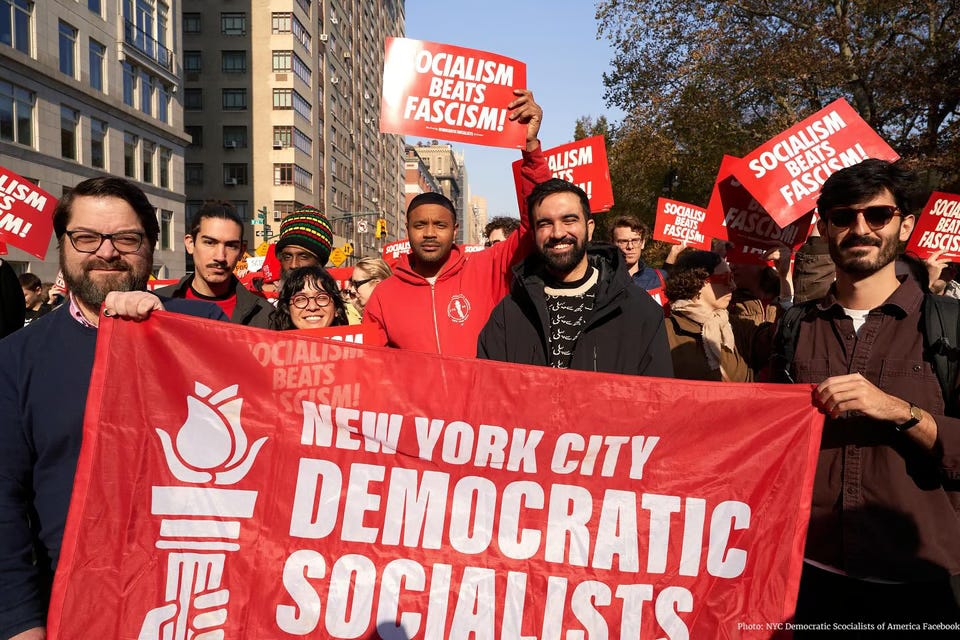
The influential nonprofit Network Contagion Research Institute (NCRI) has called on the Justice Department to investigate the Democratic Socialists of America (DSA), citing alleged “convergence with hostile foreign states” in a controversial new 29-page report. The organization, which presents itself as a watchdog against disinformation, has placed particular focus on DSA’s role in helping propel New York politician Zohran Mamdani to electoral victory last year.
The report, which was highlighted in congressional testimony, claims that DSA’s positions on sanctions and election integrity “synchronize” with narratives promoted by the Venezuelan, Cuban, and Chinese governments. NCRI uses artificial intelligence modeling and data visualization to argue that similarities in messaging indicate concerning alignment, though the report notably fails to demonstrate actual coordination between the parties.
NCRI founder Adam Sohn testified before the House Ways and Means Committee at a hearing titled “Foreign Influence in American Non-profits: Unmasking Threats from Beijing and Beyond.” While acknowledging a lack of evidence for direct foreign funding, Sohn introduced the concept of a “threat vector” involving “foreign-facilitated access,” “in-kind benefits,” and “narrative synchronization” that supposedly connects DSA’s domestic activism to foreign interests.
“NCRI has documented DSA chapters playing a central organizing role in nationwide anti-ICE protests,” Sohn told Congress, suggesting that anti-immigration enforcement protests are somehow linked to foreign influence operations.
The report specifically highlights DSA delegations’ visits to countries like Venezuela and points to accommodations such as “a stay at a posh hotel in Caracas” as potential hooks for Foreign Agents Registration Act (FARA) investigations. Critics see these connections as tenuous at best, amounting to guilt by association rather than substantive evidence of improper foreign influence.
Committee Chairman Jason Smith (R-MO) has explicitly used NCRI research to justify investigations into the tax-exempt status of what he terms “radical” and “anti-American” nonprofits, signaling potential regulatory consequences for organizations that deviate from certain political viewpoints.
When questioned about the motivations behind the report, NCRI co-founder Joel Finkelstein told reporters it was simply driven by a “search for the truth.” He maintained that the organization receives no government funding and that its donors—all U.S. citizens—support research that “sometimes frustrates political people on both sides of the aisle.”
The NCRI has previously targeted Mamdani in other releases, highlighting his DSA connections and positions on issues such as Zionism. These efforts coincide with separate actions against Mamdani by other groups, including criminal referrals filed by the Coolidge Reagan Foundation alleging his campaign accepted approximately $13,000 in “foreign” donations—including a $500 contribution from his mother-in-law in Dubai.
Critics view NCRI’s methodology as deeply flawed, noting that it employs sophisticated-sounding terminology like “narrative synchronization” to give scientific credibility to what essentially amounts to identifying political viewpoints that don’t align with mainstream positions. Some observers characterize the approach as “McCarthyite guilt-by-association, dressed up in 21st-century tech.”
This development comes amid growing concerns about restrictions on civil liberties under the Trump administration’s National Security Presidential Memorandum 7 (NSPM-7), which targets “anti-American” sentiment and “organized political violence”—broad categories that critics fear could be weaponized against legitimate political dissent.
The controversy highlights the evolving landscape of political discourse in America, where allegations of foreign influence are increasingly deployed to delegitimize domestic political movements, particularly those on the left.
Fact Checker
Verify the accuracy of this article using The Disinformation Commission analysis and real-time sources.

5 Comments
Allegations of foreign interference in domestic politics are always serious. However, this report seems to rely heavily on AI modeling rather than direct evidence. I hope the investigation is rigorous and objective.
You raise a fair point. AI analysis can be a useful tool, but shouldn’t be the sole basis for such serious claims. Transparency and independent verification will be crucial.
This is a concerning report, if true. I’d like to see more evidence before drawing conclusions about foreign influence and potential collusion. We should be cautious about making sweeping claims without solid proof.
Agreed, we need to be careful not to jump to conclusions here. More thorough, impartial investigation is warranted to fully understand the situation.
As someone interested in mining and energy issues, I’m curious to learn more about this controversy and its potential impacts on the industry. Objectivity and fact-finding will be key to understanding the situation.