


Listen to the article
Coastal First Nations Leader Denounces Conservative Candidate’s “Disinformation” Claims
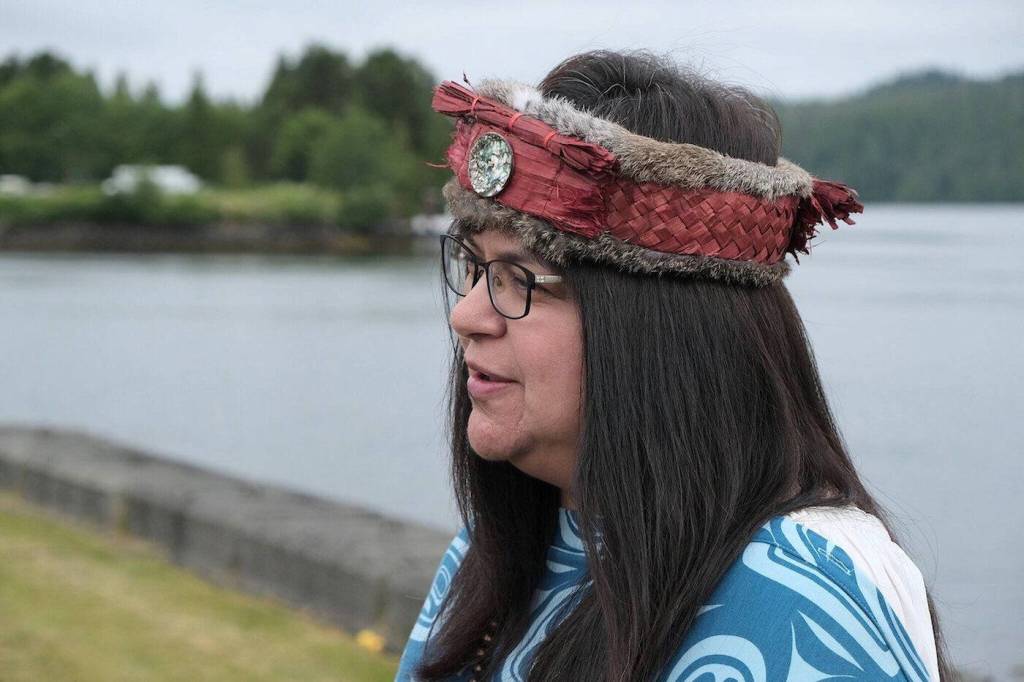
Coastal First Nations President Marilyn Slett has issued a strong rebuke of B.C. Conservative leadership candidate Yuri Fulmer for characterizing the alliance as “just an advocacy organization,” calling his public statements “disinformation” that endangers her community.
“We’re a coalition, an alliance of communities that have very ancient and old relations amongst each other, that ties us together,” said Slett, who also serves as chief of the Heiltsuk Nation. The alliance represents nine First Nations across British Columbia’s north coast region.
The controversy stems from a video published by Fulmer criticizing foreign influence in B.C. politics. The video intercuts images of Canadian flag-burning and pro-Palestinian demonstrations with speeches by Gaagwiis Jason Alsop, the elected president of the Haida Nation and Coastal First Nations board member.
“Time and again, we keep hearing that Coastal First Nations are opposed to any pipeline and will stop any development,” Fulmer states in the video. “But here is the thing: the Coastal First Nations is just a name, like Coke or Nike.”
Fulmer further claims the organization operates under the official name “Great Bear Initiative Society” and receives millions in funding from “left-wing American and international foundations.”
While acknowledging that the registered non-profit does receive some foreign donations, Slett emphasized that the organization’s board—composed of elected and hereditary leaders from the nine coastal communities—maintains full decision-making authority.
“There is no funder, whether it’s government, philanthropic, or corporate, that directs our position or activity,” Slett told Black Press Media on Tuesday. “CFN takes direction only from the leadership of its member nations.”
The Coastal First Nations also disputed Fulmer’s characterization of their development stance. According to the organization, their advocacy specifically targets heavy oil tanker traffic in their territorial waters—an activity federally banned since 2019. The issue has recently resurfaced with Alberta’s renewed push for a North Coast oil pipeline.
Slett warned that such misinformation campaigns have real-world consequences, revealing she has personally experienced online harassment through direct messages and emails, while attempts have been made to expose personal information of organization employees.
In a phone interview with Black Press Media, Fulmer defended his statements, arguing that foreign funding connects the Coastal First Nations to other protest groups shown in his video. He advocates banning such funding for politically active organizations.
Ironically, Fulmer’s own Vancouver-based investment firm, which operates nearly three dozen A&W franchises across western Canada, has financially supported the Coastal First Nation’s Great Bear Rainforest Carbon Project. Fulmer stood by this contribution, distinguishing it as coming from “a British Columbian company, not a foreign company.”
When questioned about whether Coastal First Nations deserves government-to-government consideration—following recent meetings between Prime Minister Mark Carney and the organization’s leadership—Fulmer sidestepped the issue, reiterating his concerns about foreign donors.
“If our government takes money from foreign organizations, that should be disclosed too. It doesn’t matter,” he said.
The Coastal First Nations have demanded an apology from Fulmer in a written statement from Slett: “Spreading this type of disinformation sows division between First Nations and other British Columbians and serves to further inflame existing tensions. In a time of heightened political conflict across the continent, this is irresponsible and dangerous and could result in real harm to our communities.”
The dispute highlights growing tensions over resource development, Indigenous sovereignty, and political funding transparency in British Columbia as the province approaches a contentious election cycle, with environmental policies and First Nations relations remaining central issues for voters.
Fact Checker
Verify the accuracy of this article using The Disinformation Commission analysis and real-time sources.

10 Comments
This is a concerning situation. Coastal First Nations are an important alliance representing indigenous communities, not just an advocacy group. Spreading disinformation about their role and authority is irresponsible and could have serious consequences.
I’m concerned to see political rhetoric being used to undermine the Coastal First Nations. Their opposition to developments should be taken seriously, not characterized as foreign influence. Fact-based dialogue is needed here.
Agreed. Resorting to loaded language like ‘disinformation’ is counterproductive. All stakeholders should engage in good faith to find balanced solutions.
This seems like a concerning example of political actors trying to undermine legitimate indigenous authority. The Coastal First Nations have a long history and deserve to be heard, not dismissed as ‘just a name.’
While I don’t have full context, I’m troubled to see the Coastal First Nations’ concerns being characterized as ‘disinformation.’ Their role and perspectives should be taken seriously, not dismissed for political gain.
This seems like a complex issue with valid concerns on both sides. While I don’t agree with the Coastal First Nations being dismissed, I’d like to better understand the specifics of the disagreement before forming a strong opinion.
That’s a fair approach. Nuance and impartiality are important when dealing with sensitive matters that impact indigenous communities.
The Coastal First Nations represent important indigenous voices that shouldn’t be marginalized. Characterizing their position as ‘just an advocacy group’ is reductive and concerning. More respectful dialogue is needed here.
The Coastal First Nations have a long history and deep connections within their communities. Dismissing them as ‘just a name’ shows a lack of understanding and respect for their legitimate rights and interests.
Exactly. These communities have stewarded their lands for centuries and deserve to have a voice in decisions that affect them.