


Listen to the article
First Nations Coalition Challenges Conservative Leadership Candidate’s Claims
Coastal First Nations President Marilyn Slett has strongly refuted B.C. Conservative leadership candidate Yuri Fulmer’s characterization of the alliance as “just an advocacy organization,” labeling his statements as “disinformation.”
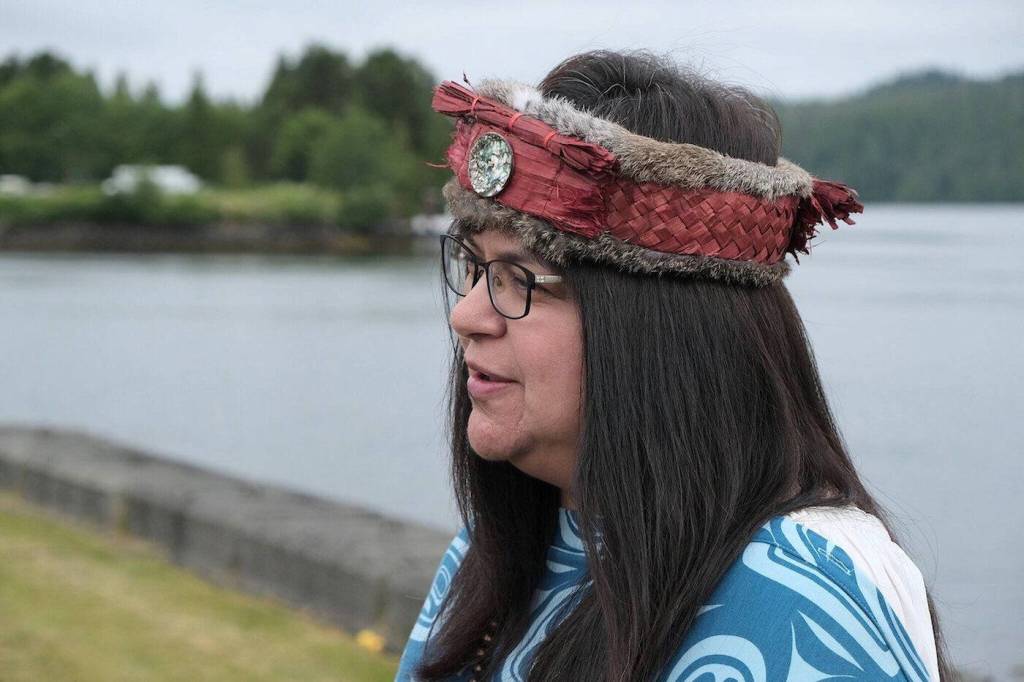
“We’re a coalition, an alliance of communities that have very ancient and old relations amongst each other, that ties us together,” said Slett, who also serves as chief of the Heiltsuk Nation. The alliance represents nine First Nations communities across British Columbia’s north coast region.
The dispute arose after Fulmer released a video criticizing foreign influence in provincial politics. The video intercuts images of Canadian flag-burning and pro-Palestinian demonstrations in Vancouver with speeches by Gaagwiis Jason Alsop, the elected president of the Haida Nation and a Coastal First Nations board member.
“Time and again, we keep hearing that Coastal First Nations are opposed to any pipeline and will stop any development,” Fulmer claims in the video. “But here is the thing: the Coastal First Nations is just a name, like Coke or Nike.”
Fulmer further alleges that the organization, officially registered as the “Great Bear Initiative Society,” is a political advocacy group established with “millions of dollars in funding from left-wing American and international foundations.”
While Coastal First Nations is indeed a registered non-profit, Slett emphasized that the organization’s governance structure consists of elected and hereditary leaders from the nine member communities who direct all decision-making processes.
“There is no funder, whether it’s government, philanthropic, or corporate, that directs our position or activity,” Slett told Black Press Media. “CFN takes direction only from the leadership of its member nations.”
The alliance acknowledges receiving some foreign donations but maintains strict independence in its positions and activities. When asked to disclose its donor list, the organization cited compliance with B.C.’s Personal Information Protection Act while also respecting donor privacy.
Slett also challenged Fulmer’s characterization of the alliance’s stance on development. She clarified that their opposition is specifically focused on heavy oil tanker traffic in their territorial waters – an activity banned since 2019 under federal law. This issue has resurfaced recently with Alberta’s renewed push for a north coast oil pipeline.
The dispute highlights ongoing tensions between resource development interests and Indigenous rights in British Columbia, a province with mostly unceded territories and complex negotiations around land use, environmental protection, and economic development.
Slett expressed concern about the real-world consequences of what she terms “misinformation,” revealing that she has experienced online harassment through direct messages and emails. Additionally, she noted attempts to dox individuals working for the organization.
In an interview defending his statements, Fulmer maintained that his primary concern is foreign funding influencing political activities in Canada. Ironically, Fulmer’s own investment firm, which owns dozens of A&W franchises across western Canada, has donated to the Coastal First Nation’s Great Bear Rainforest Carbon Project.
Fulmer justified this apparent contradiction by stating: “As a company, we believe in conservation. We are a British Columbian company, not a foreign company, and we invested in a conservation project we believe in.”
When questioned about whether Coastal First Nations should be engaged on a government-to-government basis – noting that Prime Minister Mark Carney and federal officials recently met with the organization’s leaders – Fulmer deflected, insisting the core issue was foreign funding disclosure.
The Coastal First Nations coalition has formally called for Fulmer to apologize for his characterization of their organization.
“Spreading this type of disinformation sows division between First Nations and other British Columbians and serves to further inflame existing tensions,” Slett stated. “In a time of heightened political conflict across the continent, this is irresponsible and dangerous and could result in real harm to our communities.”
The controversy unfolds against the backdrop of British Columbia’s ongoing reconciliation efforts with Indigenous peoples and evolving discussions about resource governance, environmental protection, and economic development in traditional territories.
Fact Checker
Verify the accuracy of this article using The Disinformation Commission analysis and real-time sources.

9 Comments
This seems like a concerning attempt to discredit the legitimate concerns and perspectives of the Coastal First Nations. I hope the public can see through any disinformation and focus on the real issues at hand.
Agreed, it’s critical that we don’t let political rhetoric obscure the important role of Indigenous communities in resource development decisions.
Interesting development in the ongoing dispute over resource development. It’s important to hear from the Coastal First Nations directly on this issue and not rely on potential disinformation from political candidates.
Absolutely, transparency and factual information are crucial when it comes to complex resource and Indigenous rights issues.
As an investor in mining and energy stocks, I’m always interested in understanding the views of local stakeholders like the Coastal First Nations. Their perspective deserves to be heard, even if it doesn’t align with certain political agendas.
Good point. Responsible investors should consider the full range of social, environmental and political factors when evaluating opportunities in the resource sector.
The allegations of disinformation are troubling. It’s critical that the public has access to accurate, unbiased information about resource development projects and their impacts on Indigenous communities.
Agreed, disinformation can have real consequences, especially when it comes to complex issues involving Indigenous rights and environmental concerns.
This dispute highlights the ongoing tensions between resource development, environmental protection, and Indigenous sovereignty. I hope all parties can come together to find balanced, ethical solutions that respect the rights and concerns of the Coastal First Nations.