


Listen to the article
International Experts Convene to Address Climate Disinformation Challenge
Global stakeholders gathered virtually on March 3, 2026, for the Disinfo Correspondents Meeting (GSN), a critical forum focused on combating the growing threat of climate-related misinformation. The Italian Ministry of the Environment and Energy Security (MASE) participated through its Directorate-General for European, International Affairs and Sustainable Finance.
The meeting highlighted mounting concerns among policymakers and environmental advocates about the impact of false information on climate action. As climate policies face increased scrutiny worldwide, experts emphasized that misinformation threatens to undermine scientific consensus and delay urgent environmental initiatives.
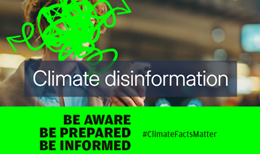
The European Commission’s Directorate-General for Climate Action presented its comprehensive #ClimateFactsMatter campaign, designed to counter misleading narratives about climate science and policy. The initiative includes the development of a multilingual toolkit and a dedicated online portal featuring extensive resources to help citizens identify and respond to climate disinformation.
“The campaign represents a significant shift in strategy,” explained one participant. “Rather than simply correcting false claims after they’ve spread, we’re focusing on prevention through ‘prebunking’ – helping people recognize disinformation tactics before encountering them.”
This preemptive approach reflects growing recognition that reactive fact-checking alone cannot keep pace with the rapid spread of misleading content across digital platforms.
The United Nations also showcased its Global Initiative on Information Integrity on Climate Change, presented by Charlotte Scaddan. This effort emerged from the Declaration on Information Integrity, signed by numerous countries committed to preserving factual discourse on environmental issues.
The initiative gains particular significance in light of the first UN Global Risk Report, which ranks misinformation and disinformation among the world’s most pressing vulnerabilities. Climate change communication faces unique challenges as technical information becomes distorted through political and ideological lenses.
Several European nations shared their innovative approaches to tackling the problem. Belgium highlighted its Environmental Information Barometer project, which systematically monitors media coverage of environmental topics and tracks the proliferation of misleading content across social platforms. This data-driven approach provides valuable insights into how climate narratives evolve and spread.
Poland’s Climate DezInfoHUB represents another promising model, serving as a centralized coordination point for anti-disinformation efforts. The hub mobilizes environmental experts and institutional partners to respond quickly to emerging false narratives. This collaborative structure allows for more efficient resource allocation and consistent messaging across different stakeholders.
Sweden’s Environmental Protection Agency outlined its comprehensive strategy, which includes specialized training for staff members who engage with the public. The agency also partners with research institutes to produce accessible materials debunking common misconceptions, particularly regarding renewable energy technologies like wind power.
The diverse approaches presented reflect the complex nature of climate disinformation, which varies significantly across different regions and cultural contexts. What works in one country may require adaptation for effectiveness elsewhere.
“Climate misinformation isn’t uniform across Europe,” noted one participant. “Each region faces distinct challenges based on their economic structure, energy mix, and political landscape. That’s why sharing these different national models is so valuable.”
The meeting concluded with participants reaffirming their commitment to continued collaboration. Attendees agreed to maintain regular communication channels for sharing emerging strategies and coordinating responses to cross-border disinformation campaigns.
The next Disinfo Correspondents Meeting is scheduled for September 2026, when participants will evaluate the progress of current initiatives and address evolving challenges in the information ecosystem.
As climate policy continues to advance globally, experts stress that protecting information integrity will remain essential for building public support and accelerating necessary transitions in energy, transportation, and other carbon-intensive sectors.
Fact Checker
Verify the accuracy of this article using The Disinformation Commission analysis and real-time sources.

11 Comments
This summit highlights the growing threat of climate disinformation and the urgent need to address it. I’m curious to learn more about the specific tactics and initiatives that will be discussed to counter these misleading narratives.
Good question. The development of a multilingual toolkit and dedicated online portal sounds like a promising approach to reach a wide audience. I’m also interested to see how they plan to coordinate globally on this issue.
The #ClimateFactsMatter campaign sounds like a promising initiative to help counter misleading narratives. I’m curious to see how they plan to effectively reach and engage the public, as that will be key to its success.
Good point. Effective public outreach and education will be essential. I hope they leverage a variety of digital and traditional media channels to maximize their impact and ensure the campaign resonates with diverse audiences.
It’s great to see the Italian Ministry of the Environment and Energy Security involved in this effort. Their participation underscores the global nature of the climate disinformation challenge and the need for coordinated international action.
Absolutely. Climate change is a truly global issue, so it’s encouraging to see diverse stakeholders coming together to tackle the problem of misinformation. A unified, multinational response will be crucial for success.
Strengthening information integrity around climate change is so important. I’m glad to see the European Commission taking a proactive approach with their #ClimateFactsMatter campaign. Providing citizens with reliable resources is key.
Absolutely, empowering the public to identify and respond to climate disinformation is a smart strategy. Equipping people with the right tools and knowledge is crucial for building trust in climate science and policy.
This climate disinformation summit seems like a crucial step to safeguard the integrity of climate information and policy. It’s vital that we counter the spread of misleading narratives that can delay urgent action on this critical issue.
Agreed, misinformation can have severe consequences when it comes to something as vital as climate change. I’m glad to see global experts coming together to address this challenge.
Combating climate disinformation is such a critical issue, and I’m glad to see global experts coming together to address it. The development of multilingual resources and an online portal is a smart approach to reach people around the world.