


Listen to the article
In a significant move to combat the rising tide of disinformation across the Caucasus region, media organizations from Armenia and Georgia joined forces this week in Yerevan to share strategies and strengthen regional cooperation in fact-checking efforts.
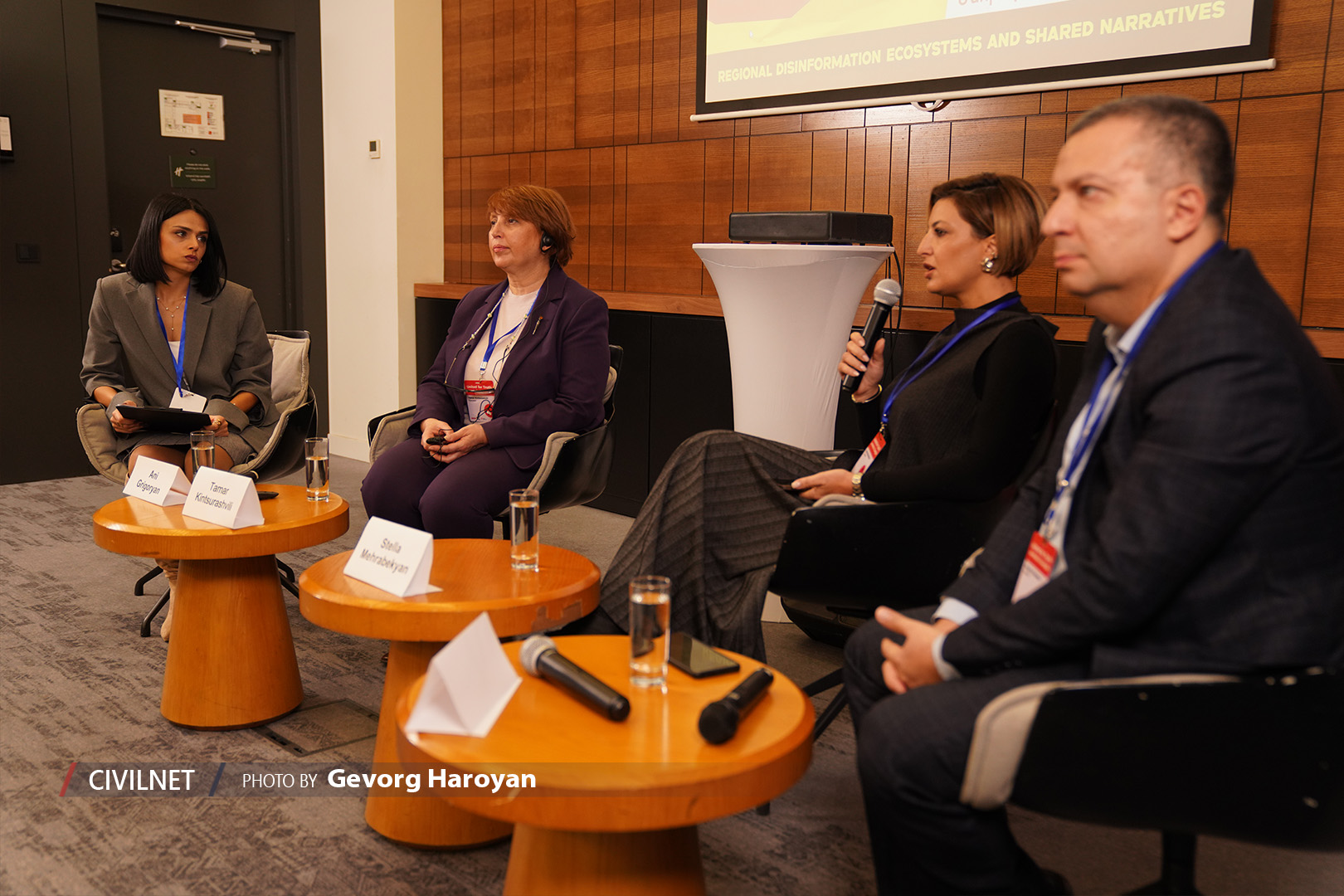
The regional forum on disinformation and media resilience, held on December 4, brought together journalists, media experts, and civil society representatives from both countries in what participants described as a timely response to growing concerns about information manipulation affecting the region.
Organized by CivilNet’s fact-checking team from Armenia and the Georgian fact-checking organization Myth Detector, the event highlighted the transnational nature of disinformation campaigns that have increasingly targeted countries in the South Caucasus.
“Disinformation knows no borders, and the fight against it must be just as borderless,” noted one of the organizers during the opening remarks, emphasizing the importance of regional cooperation in addressing shared threats.
The forum comes at a critical time for both countries, which have experienced significant political and security challenges in recent years. Armenia continues to navigate the aftermath of the Nagorno-Karabakh conflict, while Georgia has faced its own set of political tensions and information warfare challenges.
Participants engaged in detailed discussions about common disinformation narratives circulating in the region, many of which experts say are designed to create societal divisions, undermine democratic institutions, and shape public perception during times of crisis. The prevalence of foreign-sponsored disinformation was identified as a particular concern, with both countries frequently targeted by sophisticated information operations.
The practical portion of the forum featured intensive workshops where media professionals were introduced to cutting-edge verification techniques. These included tools for detecting AI-generated content – an increasingly problematic source of fake news – as well as methods for geolocation verification to authenticate images and videos circulating online.
Media resilience during crisis situations formed another key component of the discussions. Representatives shared experiences from recent events where accurate reporting faced significant challenges, including the 2020 Nagorno-Karabakh war and various political crises in Georgia.
“The media’s role becomes even more crucial during times of conflict or political instability,” explained a senior fact-checker from CivilNet. “Our ability to quickly verify information and debunk falsehoods can literally save lives and prevent panic.”
Regional experts note that the collaboration between Armenian and Georgian media organizations represents an important step in building cross-border resilience against information threats. The South Caucasus region has increasingly become a testing ground for various disinformation tactics, often exploiting historical tensions and geopolitical vulnerabilities.
Fact-checking organizations in both countries have developed specialized knowledge of local contexts and language nuances that make them particularly effective at identifying and countering region-specific disinformation. By sharing these insights across borders, the organizations aim to create a more robust defense against information manipulation.
The forum also addressed the technological challenges facing fact-checkers, including the rapid advancement of AI tools that can create increasingly convincing fake content. Participants were trained on specialized software designed to detect AI-generated images, videos, and text – technologies that have become essential in modern fact-checking operations.
Media literacy initiatives were discussed as a long-term strategy for building societal resilience against disinformation. Representatives from both countries shared successful educational programs aimed at helping citizens become more discerning consumers of information.
Organizers indicated that this forum would be the first in a series of collaborative efforts between Armenian and Georgian fact-checking organizations, with plans to expand participation to include other countries in the region facing similar challenges.
As the forum concluded, participants emphasized that combating disinformation requires constant vigilance and adaptation. The cross-border nature of the threat demands a coordinated response that transcends national boundaries – a principle that guided the Yerevan gathering and will likely shape future regional cooperation in the ongoing struggle for information integrity.
Fact Checker
Verify the accuracy of this article using The Disinformation Commission analysis and real-time sources.

25 Comments
Nice to see insider buying—usually a good signal in this space.
If AISC keeps dropping, this becomes investable for me.
Good point. Watching costs and grades closely.
Good point. Watching costs and grades closely.
Uranium names keep pushing higher—supply still tight into 2026.
Good point. Watching costs and grades closely.
Good point. Watching costs and grades closely.
Production mix shifting toward Disinformation might help margins if metals stay firm.
Production mix shifting toward Disinformation might help margins if metals stay firm.
Interesting update on CivilNetCheck Partners with Myth Detector to Combat Disinformation. Curious how the grades will trend next quarter.
If AISC keeps dropping, this becomes investable for me.
Good point. Watching costs and grades closely.
I like the balance sheet here—less leverage than peers.
Good point. Watching costs and grades closely.
Interesting update on CivilNetCheck Partners with Myth Detector to Combat Disinformation. Curious how the grades will trend next quarter.
Good point. Watching costs and grades closely.
Silver leverage is strong here; beta cuts both ways though.
Good point. Watching costs and grades closely.
Silver leverage is strong here; beta cuts both ways though.
The cost guidance is better than expected. If they deliver, the stock could rerate.
Good point. Watching costs and grades closely.
If AISC keeps dropping, this becomes investable for me.
Good point. Watching costs and grades closely.
If AISC keeps dropping, this becomes investable for me.
Good point. Watching costs and grades closely.