


Listen to the article
Urban Truth Collective Launches to Combat Misinformation About City Planning
A new initiative has emerged to counter widespread misinformation about urban development and city planning. The Urban Truth Collective, launched this week by a trio of experts, aims to challenge persistent myths that hinder the creation of more livable, accessible cities.
“When it comes to cities, we’re inundated with lies,” the founders note, pointing to common misconceptions such as the notion that fifteen-minute cities are “open air prisons” or that there’s a “war on cars.” These narratives, though factually unsound, have gained traction in public discourse and sometimes influence policy decisions.
The collective specifically addresses the fifteen-minute city concept, which simply promotes neighborhoods where residents can access essential services within a short walk or bike ride. Despite being based on traditional urban planning principles, this approach has become the target of conspiracy theories. As a result, many municipalities now avoid the terminology entirely, even while implementing similar concepts under different names.
“It makes no sense that we should be afraid of places where people can get most of what we need, closer by,” the group states, noting that such neighborhood designs were standard before car-dependent infrastructure became the norm in many regions.
The collective also challenges the narrative around homelessness, arguing that housing availability is fundamentally linked to the crisis. They point to restrictive zoning laws in cities like San Francisco, where 85% of land is zoned to prohibit apartment buildings, creating artificial scarcity in the housing market.
Transportation myths are another focus area. The group highlights research showing that wider roads typically lead to more traffic through induced demand, rather than reducing congestion as often claimed by developers and some transportation departments. Despite this evidence, road-widening projects continue to be presented as solutions to traffic problems in many urban areas.
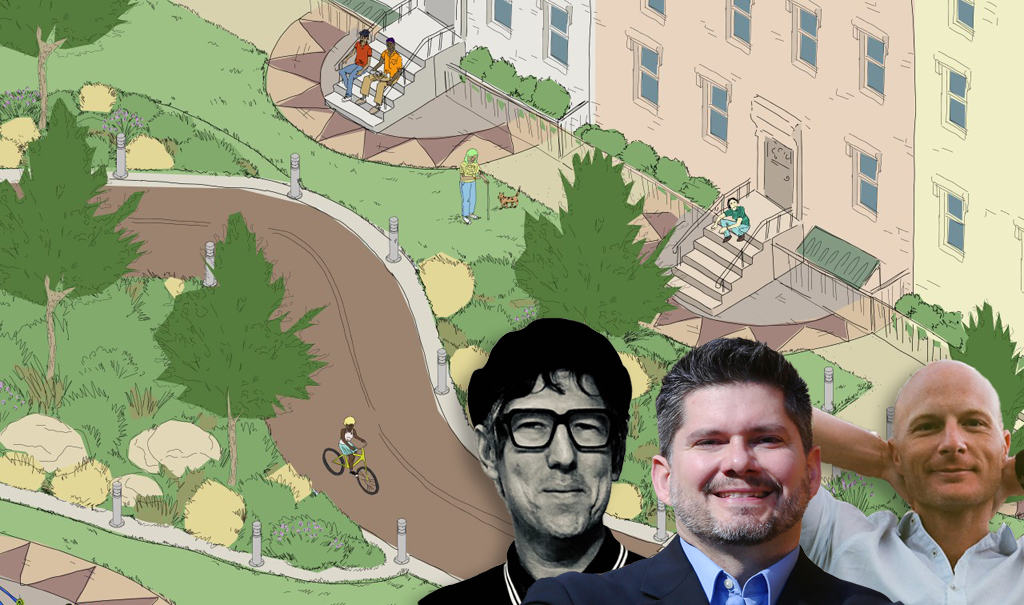
The Urban Truth Collective brings together three specialists: a global city planning practitioner, a marketing expert who previously worked for automotive companies, and a researcher who authored work on corporate disinformation. This interdisciplinary approach combines urban planning expertise with communication strategies to more effectively counter misinformation.
“We will work to be more clear and persuasive. Not just when it comes to debunking what isn’t true and doesn’t work — but also championing more effectively what does,” they explain.
The group points to successful precedents in changing urban narratives, such as Transportation Alternatives’ campaign to replace the term “accident” with “crash” when referring to vehicle collisions, recognizing that most are preventable rather than inevitable.
They also highlight cities that have successfully implemented progressive urban policies, including Minneapolis, which has rezoned significant portions for higher-density housing to address affordability concerns, and Paris, which rapidly transformed its streets to prioritize pedestrians and cyclists.
The Paris example demonstrates both challenges and opportunities. While the city faced significant opposition to its 15-minute city approach, Mayor Anne Hidalgo persevered, resulting in measurable improvements including record-low air pollution levels, decreasing road deaths, and more child-friendly streets.
Since its soft launch, the Urban Truth Collective has generated significant interest. The founders are exploring collaborations with publications, podcasts, video producers, and organizations while producing opinion pieces and interviews about urban planning facts.
The initiative has established a presence on social media platforms including Bluesky, Instagram, and LinkedIn, and invites public engagement through its website, urbantruthcollective.com.
“A better world requires great cities, communities, streets, and places,” the collective states, “and the path to get there starts with the truth.”
Fact Checker
Verify the accuracy of this article using The Disinformation Commission analysis and real-time sources.

18 Comments
Disinformation about urban planning is a concerning trend. Cities should be designed to improve quality of life, not constrain it. I’m hopeful the Urban Truth Collective can effectively counter the myths and promote more evidence-based discourse.
Absolutely. Transparent, fact-based discussions on urban development are essential. Looking forward to seeing the Urban Truth Collective’s impact in this space.
Interesting take on the urban planning debate. It’s concerning how misinformation can distort important discussions around making cities more livable and accessible. I’m curious to learn more about the Urban Truth Collective’s efforts to combat these misleading narratives.
Agree, it’s crucial to have fact-based dialogue on urban development. Glad to see initiatives pushing back against the spread of disinformation in this space.
The 15-minute city concept seems like a sensible urban planning approach, but it’s concerning to hear it’s been targeted by misinformation. The Urban Truth Collective’s efforts to challenge these false narratives are commendable. Transparency and facts are key in these discussions.
Absolutely. Combating the spread of disinformation is vital, especially around issues that impact communities so directly. Kudos to the Urban Truth Collective for taking on this important work.
Interesting to see an initiative like the Urban Truth Collective emerge to address misinformation around city planning. Concepts like 15-minute cities seem like positive steps, so it’s concerning to see conspiracy theories take hold. Looking forward to seeing their work.
Definitely. Cutting through the noise of disinformation is so important, especially on issues that impact people’s daily lives. The Urban Truth Collective’s efforts could make a real difference.
It’s troubling to see how misinformation can distort important urban planning discussions. The 15-minute city idea seems constructive, focused on improving livability. The Urban Truth Collective’s mission to counter these false narratives is much needed. Looking forward to seeing their impact.
Well said. Fact-based dialogue is crucial when it comes to shaping the future of our cities. The Urban Truth Collective’s efforts to challenge misinformation are commendable and could make a real difference.
Glad to see an initiative like the Urban Truth Collective emerge to address misinformation around urban planning. Concepts like 15-minute cities seem positive, so it’s concerning to see them targeted by conspiracy theories. Transparent, evidence-based discourse is key in these discussions.
I agree. Cutting through the noise of disinformation is so important, especially on issues that impact people’s daily lives. The Urban Truth Collective’s work could help foster more rational, fact-based policymaking.
Misleading narratives around urban planning are problematic. Initiatives like the Urban Truth Collective that aim to provide factual information and counter misinformation are much needed. Curious to learn more about their approach and impact.
Agreed. Promoting evidence-based discourse on city design is crucial. Glad to see the Urban Truth Collective taking this on – their work could help policymakers and the public make more informed decisions.
The 15-minute city concept seems like a positive urban planning approach, promoting walkability and access to amenities. It’s unfortunate that conspiracy theories have emerged to undermine this. Fact-checking initiatives like the Urban Truth Collective are much needed.
Well said. Misinformation can be very damaging, especially when it comes to important public policy issues. Kudos to the Urban Truth Collective for taking this on.
The idea of 15-minute cities sounds sensible to me – reducing car dependency, improving walkability and access. It’s a shame misinformation has muddied the waters on this. Kudos to the Urban Truth Collective for taking on this challenge.
Agreed. Debunking false narratives around urban planning is crucial. Hoping the Urban Truth Collective can elevate the discourse and promote more rational, evidence-based policies.