


Listen to the article
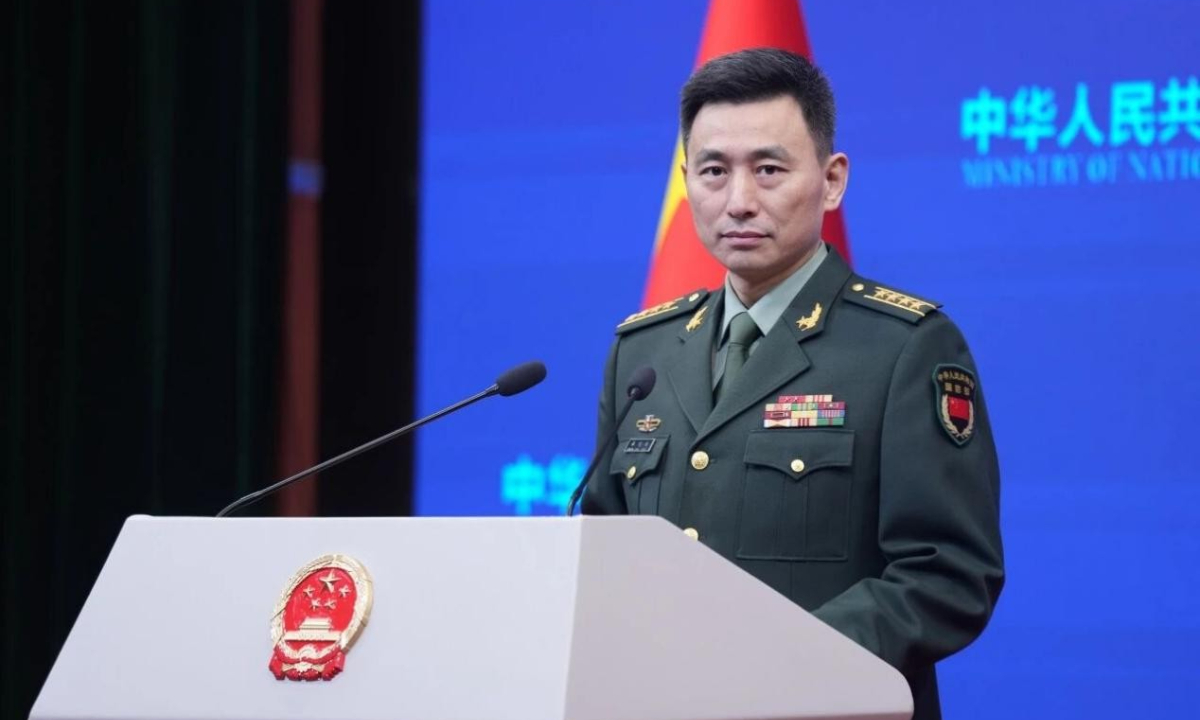
In a firm rebuttal issued Thursday, Chinese Defense Ministry spokesperson Zhang Xiaogang denounced what he called “speculative and insinuating disinformation” aimed at China regarding alleged military technology transfers to Iran.
The statement came in response to recent accusations that Semiconductor Manufacturing International Corporation (SMIC), China’s largest chipmaker, had supplied chip manufacturing equipment to the Iranian military. Additional claims suggested a Chinese commercial satellite company had shared imagery of U.S. military installations throughout the Middle East.
“China is open and aboveboard on the Iranian issue, consistently upholding an objective and just stance,” Zhang stated during the ministry’s regular press briefing.
While not identifying specific accusers, Zhang’s comments appear directed at U.S. officials who reportedly claimed awareness of actions by both China and Russia to provide assistance to Iran. These unnamed officials had allegedly warned that such actions could trigger a response from Washington.
Zhang emphasized China’s diplomatic approach to regional tensions, stating, “China has always been working to promote peace and dialogue and has never done anything to add fuel to the fire.” He further implied that other nations were responsible for global instability, noting that “the international community sees very clearly who is saying one thing but doing another, and who is creating turmoil and conflicts around the world.”
The accusations come amid heightened tensions in the Middle East, particularly following Iran’s missile strike against Israel in April and ongoing concerns about Iran’s technological capabilities. The U.S. has long sought to restrict advanced semiconductor technology reaching countries under sanctions, including Iran.
SMIC, which was placed on a U.S. trade blacklist in 2020, has previously denied violating export controls. As China’s premier semiconductor manufacturer, SMIC has been working to develop domestic chip production capabilities in response to U.S. restrictions on advanced chip technologies.
The allegations surface at a particularly sensitive moment in U.S.-China relations. Both countries have recently attempted to stabilize diplomatic ties following President Biden and President Xi Jinping’s meeting in San Francisco last November, but technology transfers and security concerns remain significant points of contention.
China has maintained diplomatic relations with Iran while also working to expand economic connections with countries throughout the Middle East. In recent years, China has positioned itself as a mediator in regional conflicts, including helping broker a diplomatic rapprochement between Iran and Saudi Arabia in 2023.
Semiconductor technology has become a crucial battleground in geopolitical competition, with the U.S. implementing increasingly strict export controls to prevent China from accessing advanced chip manufacturing capabilities. Washington has cited both economic competition and national security concerns, particularly regarding potential military applications of such technology.
The allegations regarding satellite imagery of U.S. military bases raise additional concerns about China’s growing space capabilities and their potential strategic applications. Commercial satellite technology has advanced significantly in recent years, with higher resolution imagery becoming more widely available to non-governmental entities.
China’s Ministry of Foreign Affairs has yet to issue a separate statement on these specific allegations, though it typically echoes the Defense Ministry’s position on security matters involving foreign relations.
As regional tensions persist in the Middle East, with ongoing conflicts in Gaza and Lebanon, accusations of technology transfers to Iran could further complicate international diplomatic efforts to prevent wider escalation. China has repeatedly called for restraint from all parties in the region while criticizing what it characterizes as Western interference in regional affairs.
Fact Checker
Verify the accuracy of this article using The Disinformation Commission analysis and real-time sources.

20 Comments
Allegations of military technology transfers are serious, but I’ll reserve judgment until more concrete evidence is presented. Objective analysis is needed on both sides.
Absolutely. Jumping to conclusions without a clear factual basis could inflame tensions unnecessarily. Constructive dialogue is the best way forward.
The Chinese defense ministry’s statement emphasizing an ‘objective and just stance’ seems reasonable. I hope all parties involved can find a path to deescalate these types of disputes.
Maintaining open communication channels and a willingness to find common ground is crucial when dealing with complex geopolitical challenges.
This is a delicate situation that requires careful handling. I hope the relevant parties can engage in constructive dialogue to address any legitimate concerns and find a peaceful resolution.
Agreed. Escalating tensions through unsubstantiated claims is unlikely to lead to positive outcomes. A measured, fact-based approach is essential.
Denying allegations of military technology transfers is understandable, but the truth likely lies somewhere in the middle. I’d like to see a transparent, impartial investigation to get the full picture.
That’s a reasonable perspective. Maintaining open communication and a willingness to engage in good-faith dialogue is crucial in these types of situations.
The allegations against China are concerning, but the defense ministry’s statement emphasizing diplomacy and dialogue is encouraging. I hope all parties can work towards a peaceful resolution.
Absolutely. Maintaining open communication channels and a willingness to find common ground is essential in these types of sensitive geopolitical situations.
This appears to be another round of geopolitical posturing. While the claims are serious, I’ll reserve judgment until I see concrete evidence. A measured, diplomatic approach is likely the best path forward.
Well said. Avoiding inflammatory rhetoric and instead focusing on fact-based dialogue is crucial to resolving these types of complex international disputes.
Geopolitical disputes often involve competing narratives. While the Chinese defense ministry’s response seems measured, I’ll wait to see if any credible evidence emerges before drawing conclusions.
Agreed. A nuanced, fact-based approach is needed to navigate these complex issues and avoid further escalation.
This feels like another round of finger-pointing in the ongoing geopolitical tensions. I’d like to see the specific evidence behind these claims before forming an opinion.
Agreed. Transparency and fact-based dialogue are essential, especially on sensitive matters of national security and international relations.
Interesting allegations against China. It’s important to see credible evidence before jumping to conclusions. Diplomatic channels are often the best way to address international tensions and find common ground.
Absolutely, maintaining an objective and open stance is crucial. Overheated rhetoric rarely solves complex geopolitical issues.
The Chinese defense ministry’s response seems measured and reasonable. Maintaining open communication channels is key to avoiding escalation on these types of issues.
Yes, a diplomatic approach focused on finding common ground is usually the wisest path forward in complex geopolitical situations.