


Listen to the article
Canadian researchers have harnessed artificial intelligence to bolster their fight against online disinformation campaigns targeting national unity, according to a recent announcement from the Canadian Institute for Advanced Research.
The institute’s debunking tool, CIPHER, now incorporates AI technology to better track and analyze the constant flow of false and misleading claims circulating online. This technological enhancement allows the system to process significantly more content than was previously possible with human analysis alone.
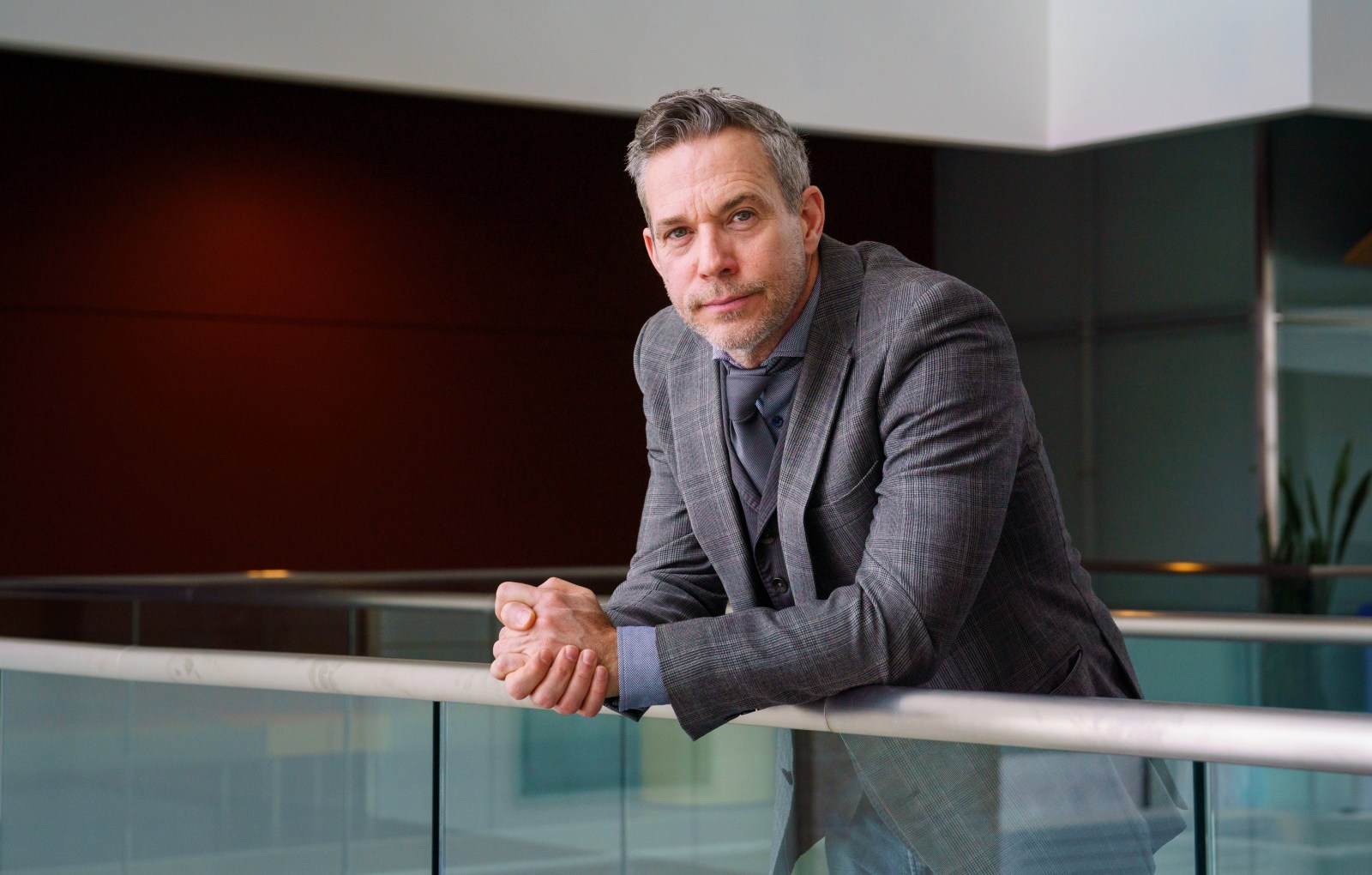
Brian McQuinn, an associate professor at the University of Regina and one of CIPHER’s project leaders, explained that while the system currently focuses on Russian disinformation campaigns, it is being expanded to analyze Chinese-language content and potentially material originating from the United States.
“Russia was the main threat targeting Canada most generally,” McQuinn said in a recent interview. “We are now beginning to shift.”
The system operates by scanning foreign media sites for dubious claims, which are then assessed by human fact-checkers who verify the accuracy of the information. McQuinn cited a recent example where CIPHER identified a false report from a Russian media outlet claiming Alberta is moving toward independence – a distortion of reality that took kernels of truth about separatist sentiment and twisted them into a misleading narrative.
“Effective disinformation often has kernels of truth in it,” McQuinn noted.
CIPHER launched three years ago following a report by McQuinn and colleagues that uncovered pro-Kremlin social media accounts targeting both far-right and far-left groups in Canada with false narratives about the war in Ukraine. These included fabricated claims that Russia invaded to eliminate a neo-Nazi regime and that Ukraine had been pursuing nuclear weapons.
According to McQuinn, the primary objective of these disinformation campaigns is to divide societies and potentially incite violence. These campaigns become particularly effective when ordinary citizens share misleading content with their personal networks, amplifying the reach and perceived credibility of false information.
“It is essential for China and for Russia, especially, to show that it looks like the Western project is decaying, is falling apart economically, politically, socially,” he explained.
The research team has identified the United States as an increasingly significant source of disinformation affecting Canadian audiences, largely due to the dominance of U.S.-based social media platforms in the Canadian information ecosystem.
“You have to always remember that most of Canada’s dialogue when it comes to social media is on U.S. platforms,” McQuinn said. “We have seen that Canadian news and certain types of Canadian content are being downgraded and throttled within these algorithms.”
While artificial intelligence has contributed to the proliferation of disinformation across social media, the CIPHER team determined that employing AI was necessary to keep pace with the volume and sophistication of false information campaigns.
“We are in an AI arms race around disinformation,” McQuinn acknowledged.
The research team aims to eventually transfer CIPHER technology to government agencies or non-profit organizations better positioned to implement widespread debunking efforts. Currently, the tool is being utilized by DisinfoWatch, an organization dedicated to exposing falsehoods to Canadian audiences.
Marcus Kolga, founder of DisinfoWatch, has called for stronger legislation and regulations governing digital media platforms to restrict the spread of disinformation through social networks.
“Us doing it alone is not sufficient enough. It requires technology and for us to harness existing technologies in order to sort of make up that gap that we have,” Kolga stated.
McQuinn confirmed discussions with government agencies about potential applications of CIPHER but declined to provide specific details. The Canadian Institute for Advanced Research has received financial support from both federal and Alberta government sources.
For individual Canadians, McQuinn offered practical advice: take a brief moment to consider content before sharing it on social media.
“If I’m going to forward something, what am I forwarding?” he said. “The research has shown if you just take like an extra 10 seconds, the amount of disinformation that gets transferred is significantly less.”
Fact Checker
Verify the accuracy of this article using The Disinformation Commission analysis and real-time sources.

10 Comments
It’s encouraging to see Canadian researchers taking proactive steps to combat disinformation. The incorporation of AI into CIPHER’s analysis is an innovative approach that could significantly improve the system’s effectiveness. Curious to see how this tool is implemented and refined over time.
While Russia may have been the main disinformation threat targeting Canada, the shift to also analyzing Chinese and US-based content is a prudent move. Disinformation is a global challenge that requires a multi-faceted approach.
The expansion of CIPHER to analyze Chinese-language content is a smart move. Disinformation campaigns can originate from a variety of sources, so having a versatile tool that can adapt is essential. Impressed by the AI-powered capabilities of this system.
The development of CIPHER is an important step in the fight against online disinformation. Combining AI with human verification is a smart strategy to combat the constant flow of false claims. Curious to see how this tool evolves to address emerging threats.
Harnessing AI to bolster fact-checking capabilities is a wise decision. The ability to process more online content will be crucial in staying ahead of the rapid spread of disinformation. Looking forward to seeing how CIPHER performs in the real world.
Glad to see Canadian researchers taking proactive steps to combat disinformation campaigns, especially those originating from Russia and China. AI-powered tools like CIPHER could be a valuable asset in promoting truth and transparency online.
Agreed, the expansion to analyze Chinese-language content is an important move. Disinformation can come from many sources, so a versatile system that can adapt is key.
The ability of CIPHER to process significantly more online content than human analysis alone is an impressive feat of AI. Fact-checking at scale will be crucial to staying ahead of the rapid spread of false narratives.
Leveraging AI for this purpose makes a lot of sense. Curious to see how the accuracy and reliability of CIPHER’s assessments compare to traditional fact-checking methods over time.
Interesting development in the fight against online disinformation. Using AI to help track and analyze false claims is a smart approach, though human verification will still be crucial. Curious to see how effective this system becomes at identifying and debunking misleading narratives.