


Listen to the article
The Canadian government’s potential procurement of F-35 fighter jets continues to generate significant debate, with experts warning that misinformation has clouded public understanding of this complex military acquisition.
Negotiations between Ottawa and Lockheed Martin, the American aerospace giant behind the F-35 Lightning II, have sparked polarized reactions across political lines, with critics questioning the aircraft’s cost and capabilities while supporters emphasize its technological superiority.
“There’s an extraordinary amount of misinformation circulating about this potential deal,” says Dr. Michael Thompson, director of the Institute for Defence Analysis. “The public discourse has been filled with oversimplified claims from both proponents and opponents, making it difficult for Canadians to assess the merits objectively.”
The F-35 procurement saga has spanned multiple Canadian administrations, with the initial selection process beginning under former Prime Minister Stephen Harper’s Conservative government. The Liberal government under Justin Trudeau initially campaigned against the purchase before reconsidering the F-35 as part of a competitive process to replace Canada’s aging CF-18 fleet.
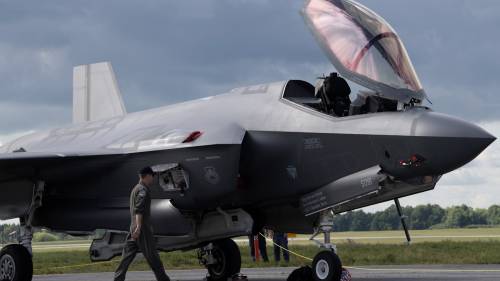
Defence industry analysts point out that the F-35’s fifth-generation stealth capabilities represent a significant technological leap over Canada’s existing fighter aircraft. The jets feature advanced sensor fusion, reduced radar signature, and enhanced interoperability with NATO allies – capabilities that proponents argue are essential for defending North American airspace.
“We’re not just buying an aircraft; we’re buying into an international program with significant industrial benefits,” explains Katherine Williams, a defence procurement specialist at the Canadian Global Affairs Institute. “Canadian aerospace companies have already secured over $2 billion in contracts related to the global F-35 supply chain, with potentially more to come if the purchase proceeds.”
Critics, however, raise concerns about the program’s lifecycle costs. Initial estimates suggest the acquisition could cost between $15-19 billion, with total lifecycle expenses potentially reaching $77 billion over several decades. These figures have become ammunition for opposition parties who question whether Canada is getting value for money.
“The issue isn’t whether Canada needs new fighters – clearly our CF-18s are approaching the end of their operational life,” says Robert Chen, a defence economist at Queen’s University. “The question is whether the F-35 represents the most cost-effective solution given Canada’s unique geographic and strategic requirements.”
Industry observers note that several of Canada’s closest allies, including the United States, United Kingdom, Australia, and Norway, have already committed to the F-35 program. This creates both opportunities for interoperability and potential concerns about being left behind technologically if Canada opts for a different aircraft.
The debate intersects with broader questions about Canada’s role in global security. Russia’s increased military activities in the Arctic and China’s growing assertiveness have prompted security experts to argue that Canada needs cutting-edge capabilities to meet emerging threats.
“The security environment has changed dramatically since this procurement process began,” notes former Canadian Air Force commander Lieutenant-General (Ret.) James Davidson. “The capabilities that seemed optional a decade ago now look increasingly necessary given the deterioration in relations with Russia and the growing strategic competition with China.”
The procurement also carries significant implications for Canada’s defense industrial base. If finalized, the deal would include industrial and technological benefits requiring Lockheed Martin to invest in Canadian companies, potentially generating thousands of jobs across multiple provinces.
Provincial leaders, particularly in Quebec and Ontario where aerospace manufacturing is concentrated, have expressed support for the economic dimensions of the deal while remaining cautious about overall costs.
As the government moves toward a final decision, defence policy experts emphasize the need for transparent communication about both capabilities and costs. “Canadians deserve an honest accounting of what we’re buying, why we need it, and what it will cost over the long term,” says Williams. “Only then can we have a meaningful national conversation about whether this represents the right strategic choice.”
With geopolitical tensions rising and Canada’s existing fighter fleet approaching obsolescence, the decision carries significant implications for national security and fiscal policy that will extend decades into the future.
Fact Checker
Verify the accuracy of this article using The Disinformation Commission analysis and real-time sources.

5 Comments
Interesting to see the back-and-forth between the governments on this. Replacing aging military aircraft is a big investment, so it’s understandable there’s debate around the best path forward. I hope the public discourse can remain constructive.
The F-35 procurement is a complex issue with valid arguments on both sides. I appreciate the expert’s call to separate fact from fiction and assess the merits objectively. This is an important national decision that deserves thoughtful, nuanced discussion.
I’m curious to learn more about the specific capabilities and costs of the F-35 versus other fighter jet options. It seems like there’s a lot of politicized rhetoric, so I’d like to see a more impartial analysis of the tradeoffs.
This decision will have long-term implications, so it’s important the government gets it right. I appreciate the expert’s call for fact-based debate. Looking forward to seeing how the procurement process unfolds.
As a taxpayer, I want to ensure Canada gets the best value for its defense spending. The F-35 has faced criticism, but I’m open to hearing the government’s rationale if they believe it’s the superior choice. Transparency will be key.