


Listen to the article
Bulgaria Adopts Euro Despite Russian Opposition, Strengthening EU Integration
Bulgaria began the new year by becoming the eurozone’s 21st member, abandoning its 145-year-old currency, the lev, in favor of the euro. While officials in Sofia and Brussels celebrated this milestone as a step forward in European Union integration, the move represents something far more significant: a strategic defeat for the Kremlin.
After years of concerted efforts to prevent Bulgaria from joining the eurozone, Moscow failed to block a decision that anchors Bulgaria more firmly within the European framework. This currency transition not only exposed the limitations of Russia’s hybrid influence tactics but also significantly reduced its remaining leverage in the country.
Russia has consistently viewed Bulgaria’s westward orientation with suspicion, refusing to fully accept its strategic realignment. Despite Bulgaria’s NATO and EU membership, Moscow has treated the country as contested territory, leveraging historical, cultural, religious, and economic connections to maintain influence. The Bulgarian Orthodox Church, with its close ties to its Russian counterpart, has served as one channel for Moscow’s soft power, promoting notions of Slavic and Orthodox brotherhood.
For the Kremlin, eurozone expansion represents more than an economic development. From Moscow’s perspective, deeper EU integration constrains its ability to exploit bilateral dependencies, create divisions within the bloc, and maintain zones of influence along the EU’s eastern borders. Countries that adopt the euro become more economically and politically interconnected, reducing opportunities for external manipulation.
Bulgaria’s path to the eurozone was far from smooth. Despite being an EU member since 2007, the country struggled with high inflation and endemic corruption. While Bulgaria and Croatia entered the European Exchange Rate Mechanism—the mandatory two-year transition period before euro adoption—simultaneously in July 2020, their trajectories diverged. Croatia proceeded on schedule, adopting the euro in 2023, while Bulgaria repeatedly postponed its target date from 2024 to 2025, before finally joining in 2026.
These delays weren’t merely technical. They reflected a surge in political and public resistance to deeper EU integration—opposition actively fueled by Russian-linked influence operations and Bulgarian actors aligned with the Kremlin. Bulgaria’s stalled eurozone entry became a visible indicator of Russia’s capacity to impede, though not ultimately prevent, EU integration.
In the lead-up to euro adoption, Moscow deployed its familiar interference toolkit. Russian-linked actors conducted extensive disinformation campaigns targeting public opinion, spending tens of millions of euros on propaganda. Social media accounts and sympathetic media outlets amplified alarmist and often false claims that euro adoption would trigger runaway inflation, lead to savings confiscation, erode national identity, and subject Bulgaria to Brussels’ dictates.
These narratives deepened societal division and eroded public support. A Eurobarometer poll conducted in late 2025 revealed that 49 percent of Bulgarians opposed the common currency, with only 42 percent in favor.
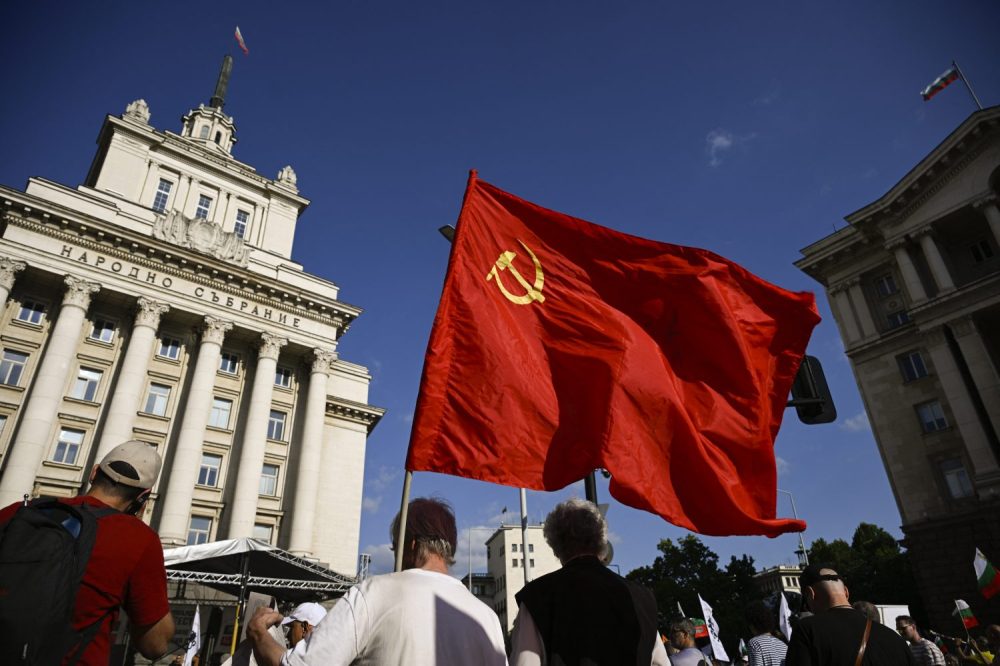
Bulgaria’s openly pro-Russian political forces, most notably the far-right nationalist Revival party, which maintains an official cooperation agreement with Putin’s United Russia party, became the most visible domestic opponent of euro adoption. Revival organized anti-euro protests, some featuring Russian flags, and its members made headlines when they stormed the EU mission in Sofia, throwing firecrackers, red paint, and Molotov cocktails.
Revival leaders warned of economic collapse similar to Greece during the euro debt crisis, despite post-crisis reforms and Bulgaria’s different fiscal position. The party pushed unsuccessfully for a national referendum and spread conspiracy theories claiming Brussels planned to seize Bulgarians’ savings for military projects.
Bulgaria’s chronic political instability—characterized by short-lived governments, fragmented coalitions, and seven snap parliamentary elections in four years—made the country particularly vulnerable to such interference. Persistent governance crises created fertile ground for Euroskeptic messaging and claims that EU integration lacked popular consent.
Despite these challenges, Bulgaria’s pro-European parliamentary majority ultimately delivered. Successive governments, including the strongly pro-EU, anti-corruption coalition We Continue the Change-Democratic Bulgaria, completed the necessary steps for euro adoption. Key institutions withstood attempts to politicize or derail the process, demonstrating that hybrid interference, while disruptive, doesn’t inevitably determine outcomes when political will exists.
This success, however, unlikely marks the end of the struggle. The Kremlin’s focus on Bulgaria may intensify in the coming months, particularly with another snap election expected later this year. Pro-Russian actors will likely exploit any short-term difficulties associated with the currency transition to validate their previous warnings and blame the EU.
Bulgaria’s euro adoption represents both a political achievement and a strategic test. Whether it strengthens public confidence in European integration or becomes another battleground for disinformation depends on how effectively the Bulgarian government and EU institutions manage the transition and communicate its benefits. For now, January 1st stands as a clear setback for Moscow’s ambitions to divide and weaken the EU, signaling that the EU’s gravitational pull remains powerful despite continued contestation.
Fact Checker
Verify the accuracy of this article using The Disinformation Commission analysis and real-time sources.

28 Comments
I like the balance sheet here—less leverage than peers.
The cost guidance is better than expected. If they deliver, the stock could rerate.
Good point. Watching costs and grades closely.
Good point. Watching costs and grades closely.
The cost guidance is better than expected. If they deliver, the stock could rerate.
Good point. Watching costs and grades closely.
Silver leverage is strong here; beta cuts both ways though.
Production mix shifting toward Disinformation might help margins if metals stay firm.
Good point. Watching costs and grades closely.
Good point. Watching costs and grades closely.
If AISC keeps dropping, this becomes investable for me.
Good point. Watching costs and grades closely.
Good point. Watching costs and grades closely.
If AISC keeps dropping, this becomes investable for me.
Interesting update on Bulgaria’s Eurozone Entry Marks Strategic Setback for Russia. Curious how the grades will trend next quarter.
Uranium names keep pushing higher—supply still tight into 2026.
The cost guidance is better than expected. If they deliver, the stock could rerate.
Good point. Watching costs and grades closely.
The cost guidance is better than expected. If they deliver, the stock could rerate.
Good point. Watching costs and grades closely.
Exploration results look promising, but permitting will be the key risk.
Good point. Watching costs and grades closely.
Production mix shifting toward Disinformation might help margins if metals stay firm.
Silver leverage is strong here; beta cuts both ways though.
Good point. Watching costs and grades closely.
Interesting update on Bulgaria’s Eurozone Entry Marks Strategic Setback for Russia. Curious how the grades will trend next quarter.
Good point. Watching costs and grades closely.
Good point. Watching costs and grades closely.