


Listen to the article
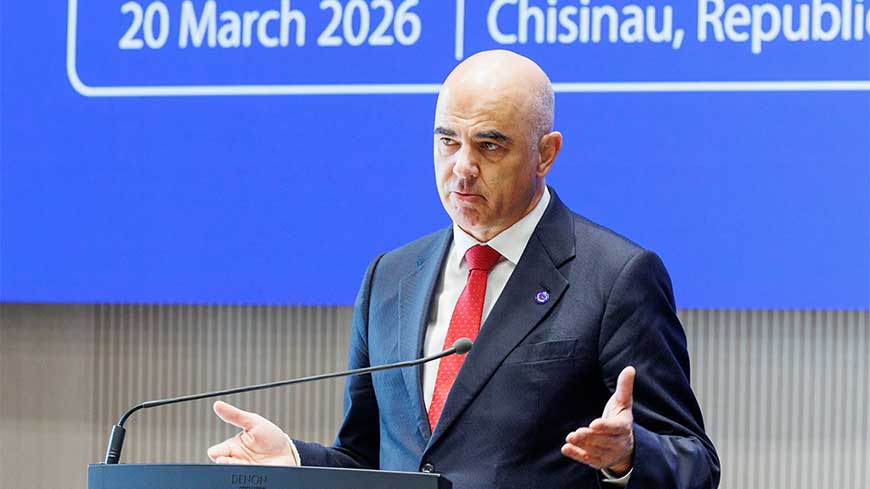
In a significant move to safeguard European democracies, the Council of Europe convened a high-level conference in Chişinău on March 20 to address the growing threats of disinformation, foreign information manipulation, and hate speech. The gathering marks a crucial step in developing coordinated responses to what officials described as an ongoing “cognitive war” threatening democratic institutions across the continent.
Moldova’s President Maia Sandu opened the conference with a stark warning about the persistence of information warfare. “Cognitive war is a condition, not an episode,” Sandu told attendees, emphasizing the widespread nature of the threat. “Across Europe, we are seeing the same patterns. Attempts to divide societies. To weaken trust in institutions. To influence political choices from the outside.”
Sandu drew direct connections between disinformation campaigns and Russia’s military aggression against Ukraine, describing them as parallel efforts within a broader strategy to shape perceptions, reduce support for Ukraine, and foster division among European nations.
Council of Europe Secretary General Alain Berset reinforced these concerns, framing the issue as fundamental to democratic security. “In a world in rupture, where everything is framed as security, control over information becomes a question of democratic security,” Berset said. “A democracy that cannot protect its information space will not be able to protect its institutions for long.”
The conference, organized under the Moldovan Presidency of the Committee of Ministers and as part of the New Democratic Pact for Europe initiative, brought together an array of stakeholders, including government representatives, international organizations, academics, civil society groups, and media professionals.
A key focus of the gathering was the Council’s work toward establishing a new legal instrument specifically designed to counter foreign information manipulation and interference. Member states are currently evaluating the feasibility of adopting such an instrument within the field of criminal law to address disinformation, election interference, and related hybrid threats.
This potential legal framework represents one of the most concrete international efforts to date to codify responses to information manipulation. Experts from member states have already prepared a feasibility study, which foreign ministers will discuss at the Committee of Ministers session scheduled for May 14-15, 2026, in Chişinău.
Commissioner for Human Rights Michael O’Flaherty emphasized that the challenges extend beyond traditional free speech concerns. “A human-rights approach to disinformation and information manipulation is about more than freedom of expression,” O’Flaherty noted. “It is about protecting the very aspects of human life and dignity that are undermined by manipulation – from our right to privacy and electoral integrity to the safety of our most marginalized communities.”
The conference also marked the launch of two policy guides recently adopted by the Council’s intergovernmental committee on media and information society. These resources aim to support the Council’s 46 member states in developing more resilient information ecosystems.
The first guide focuses on helping nations develop comprehensive media and information literacy strategies, addressing the demand side of the information integrity challenge by empowering citizens to better evaluate media content. The second resource, titled “Resisting disinformation: ten building blocks to strengthen information integrity,” outlines complementary measures to combat disinformation at a systemic level.
This multi-faceted approach reflects growing recognition among European policymakers that protecting democratic processes requires both regulatory frameworks and educational initiatives. The Council’s emphasis on information integrity comes at a critical moment, as European nations face persistent disinformation campaigns targeting upcoming elections and attempting to exploit social divisions.
The gathering in Moldova—itself a nation that has faced significant foreign interference in recent years—underscores the urgency with which European institutions are working to build resilience against information manipulation. As democratic societies increasingly recognize information spaces as contested terrain, the Council of Europe’s initiatives represent an important step toward establishing common standards and practices for safeguarding democratic integrity against evolving threats.
Fact Checker
Verify the accuracy of this article using The Disinformation Commission analysis and real-time sources.

15 Comments
Building resilience against disinformation and foreign interference is crucial for protecting European democracies. This conference in Moldova is an important step, but the challenges ahead remain significant.
I agree, the threats are complex and require a coordinated, sustained effort to address. Strengthening democratic institutions and countering foreign influence will be an ongoing battle.
It’s alarming to see the direct links between disinformation campaigns and Russia’s aggression against Ukraine. Shaping perceptions to reduce support for Ukraine and foster division is a dangerous strategy.
You’re right, this ‘cognitive war’ is part of a broader strategy that needs to be addressed. Robust responses from European nations will be crucial.
Moldova’s President Sandu made a strong statement about the persistent nature of this ‘cognitive war’. It’s concerning to hear that the same patterns of division and weakening trust in institutions are being seen across Europe.
Interesting to see the framing of this issue as a ‘cognitive war’ that is ongoing, not just an isolated episode. The scale and persistence of the threat is clearly a major concern for European leaders.
Disinformation and foreign interference are serious threats to European democracies. This conference in Moldova is a crucial step in developing coordinated responses to address these ongoing challenges.
Absolutely, the persistence of information warfare across Europe is very concerning. Strengthening trust in institutions and countering attempts to divide societies is vital.
This conference in Moldova is a timely and important step in addressing the growing threats of disinformation and foreign interference. Developing coordinated responses across Europe will be critical.
I agree. Safeguarding democratic institutions and countering attempts to divide societies and influence political choices from the outside must be a top priority.
Interesting that the Council of Europe Secretary General framed this issue as fundamental to safeguarding democratic institutions. What specific measures are being considered to combat disinformation and foreign interference?
That’s a good question. Coordinating responses across Europe will be key, as the threats seem to be widespread. I’m curious to learn more about the specific strategies and initiatives discussed at the conference.
It’s good to see the Council of Europe taking this issue seriously and convening a high-level conference to develop responses. Disinformation and foreign interference are serious threats that require a robust, unified approach.
Absolutely. Strengthening democratic resilience against these challenges is crucial for protecting the integrity of European institutions and political processes.
The direct connections between disinformation campaigns and Russia’s aggression against Ukraine are deeply troubling. Tackling this ‘cognitive war’ must be a top priority for European leaders.