


Listen to the article
Bangladesh’s BNP Denounces Misinformation Campaign Against Party Chairman
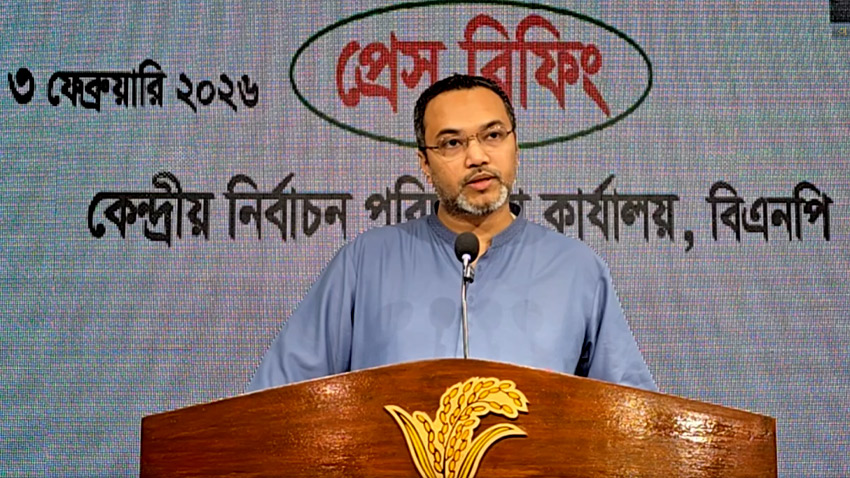
The Bangladesh Nationalist Party (BNP) has raised serious concerns about what it describes as a coordinated misinformation campaign targeting its chairman, Tarique Rahman. At a press conference held Tuesday at the party’s Election Steering Committee office in Gulshan, spokesperson Mahdi Amin revealed that at least 29 false claims about Rahman have circulated in the past week.
According to Amin, multiple independent fact-checking organizations have identified and debunked these claims, which appear strategically timed to influence voters ahead of Bangladesh’s upcoming national election. The BNP attributes these efforts to activists affiliated with rival political entities, suggesting the tactics mirror methods employed during previous authoritarian periods in the country’s history.
“With BNP’s popularity surging across the country, some groups have abandoned constructive political competition and resorted to personal attacks and disinformation,” Amin stated during the briefing. He pointed to recent campaign rallies in Khulna and Jashore that drew substantial crowds as evidence of growing grassroots support for the party and its electoral symbol, the sheaf of paddy.
The allegations come at a critical moment in Bangladesh’s electoral process, highlighting the increasingly contentious atmosphere surrounding the upcoming polls. Political analysts note that disinformation campaigns have become more sophisticated and prevalent in Bangladesh’s political landscape, particularly as digital media usage continues to expand throughout the country.
Beyond addressing the misinformation concerns, the BNP spokesperson expressed alarm about the Election Commission’s plan to deploy Bangladesh National Cadet Corps (BNCC) cadets for election-related duties. Amin argued that since many cadets are students who may hold political affiliations, their involvement could potentially compromise the neutrality essential to a fair election process.
The party has formally petitioned the Election Commission to reconsider this decision, warning that it risks undermining public confidence in the electoral system. Election integrity has been a persistent concern in Bangladesh, where past polls have faced criticism from both domestic and international observers.
The BNP also questioned the current approach to election observation. Citing data from the Election Commission website, Amin noted that as of January 26, authorities had approved 55,454 observers from 81 local organizations. More troublingly, he pointed out that over 34,000 of these observers come from just 16 groups.
“This concentration is alarming, particularly when some of these organisations are reportedly led by individuals linked to a specific political party,” he said, advocating for more rigorous vetting procedures to ensure observer impartiality.
To address these concerns, the BNP has proposed several measures, including a comprehensive review of all observer credentials, limiting participation from less experienced monitoring organizations, and restricting polling station access to no more than two local observers at any time.
Turning to policy matters, Amin highlighted the BNP’s history of advocating for state reforms, tracing this commitment from the party’s Vision-2030 document presented in 2016 through subsequent reform proposals in 2022 and 2023. He emphasized that the BNP pioneered concepts such as a bicameral parliament, prime ministerial term limits, and merit-based recruitment quotas, long before other political entities adopted similar positions.
Looking ahead, Amin confirmed the BNP’s support for a “Yes” vote in the upcoming referendum on state reforms and announced that the party’s election manifesto for the 13th parliamentary polls would be released on February 6.
The spokesperson concluded by outlining Rahman’s upcoming campaign schedule, which includes public rallies in Barishal and Faridpur on Wednesday before returning to Dhaka later the same day.
As Bangladesh approaches this crucial election, the controversy over misinformation underscores the challenges facing the country’s democratic processes, with implications that extend beyond any single political party to the integrity of the electoral system itself.
Fact Checker
Verify the accuracy of this article using The Disinformation Commission analysis and real-time sources.

7 Comments
Allegations of a targeted disinformation campaign are very troubling. I hope the authorities investigate this matter thoroughly and take appropriate action to protect the democratic process. Voters deserve accurate information, not misleading propaganda.
This is a concerning development. Coordinated disinformation campaigns targeting political figures are a serious threat to democracy. I hope the authorities can get to the bottom of this and hold the perpetrators accountable.
It’s good to see the BNP taking a stand against these false claims. Fact-checking and exposing disinformation is crucial, especially in the lead-up to an election. Voters need access to reliable, unbiased information to make informed decisions.
Absolutely. Maintaining the integrity of the electoral process should be a top priority for all political parties and government institutions. I hope this issue is addressed swiftly and transparently.
Disinformation tactics like these can undermine public trust and manipulate election outcomes. I’m glad the BNP is calling attention to this issue and that independent fact-checkers have stepped in to debunk the false claims. Transparent, ethical campaigning is essential for a healthy democracy.
Agreed. Voters deserve to make informed choices, free from misleading propaganda. I hope the authorities take strong measures to prevent the spread of disinformation and ensure a fair electoral process.
This is a concerning allegation of a targeted disinformation campaign. It’s crucial that voters have access to accurate, unbiased information ahead of an election. I hope the authorities investigate these claims thoroughly and take appropriate action to protect the integrity of the democratic process.