


Listen to the article
Bangladesh’s interim government has launched strong accusations against Indian media outlets and the ousted Awami League party, claiming they are orchestrating a deliberate disinformation campaign aimed at undermining the country’s political transition.
At a recent policy forum focused on misinformation and governance, representatives from the government’s press wing detailed how misleading reports, originating both within Bangladesh and abroad, have intensified following the collapse of the previous administration. These reports allegedly portray Bangladesh as unstable and unsafe, with particular emphasis on supposed dangers facing religious minorities.
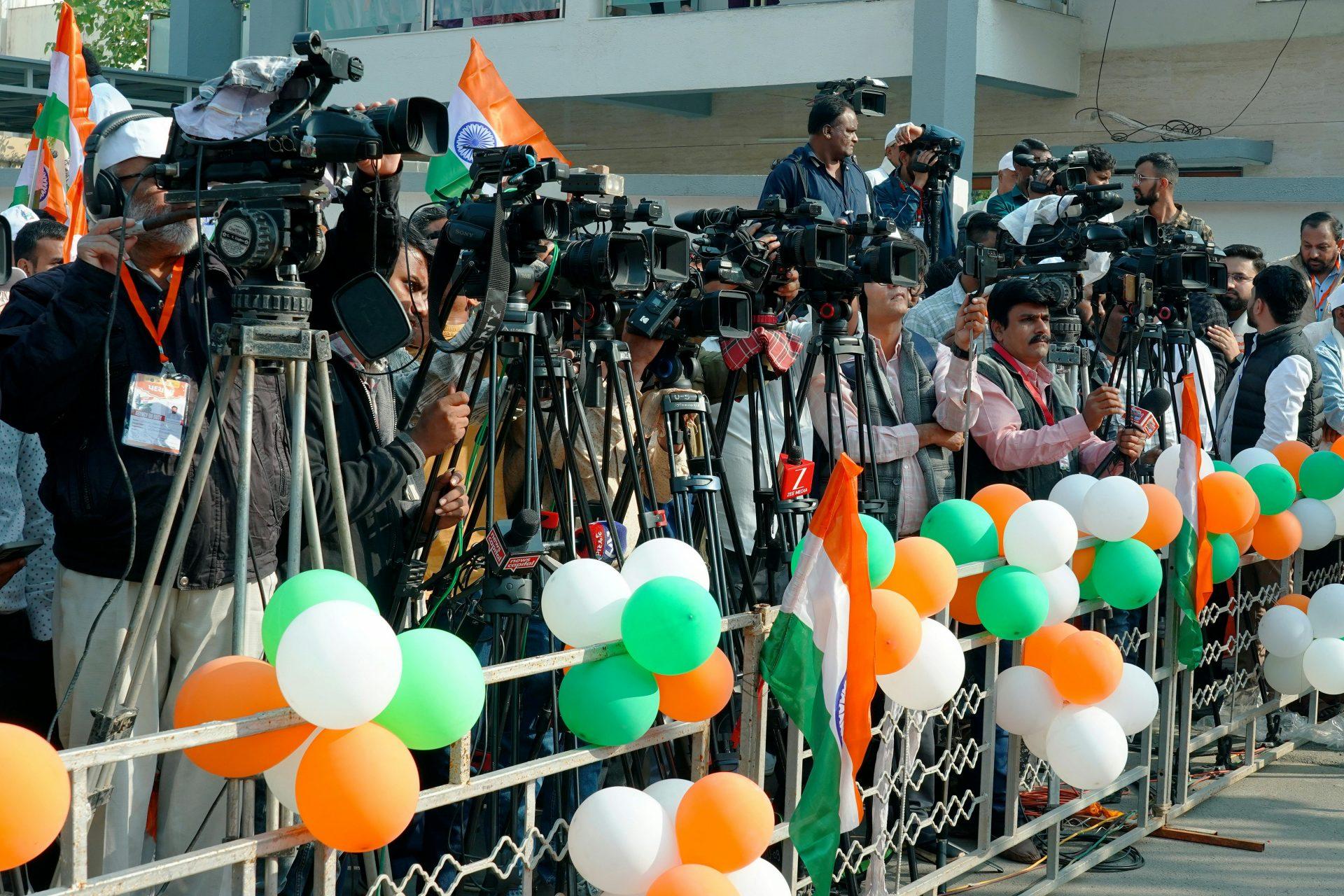
“These narratives are not accidental,” said Shafiqul Alam, press secretary to Bangladesh’s chief adviser. According to Alam, major Indian newspapers and television channels have been systematically circulating unverified or false claims about Bangladesh’s internal situation in what he described as persistent and politically motivated coverage.
The interim administration contends that this disinformation campaign aims to create international perception that minorities would face persecution under any new democratic government—a claim officials firmly reject. Authorities argue that such narratives threaten to damage Bangladesh’s diplomatic standing and undermine confidence in the country’s transition process toward restored democracy.
The accusations come at a delicate moment for Bangladesh, which is attempting to chart a new political course following the end of Sheikh Hasina’s government. The interim administration has positioned itself as preparing the groundwork for democratic restoration and credible elections after what many international observers characterized as years of increasingly authoritarian rule.
Information warfare has emerged as a significant battleground throughout South Asia, particularly during periods of abrupt political change. Regional experts note that Bangladesh’s interim authorities appear to view these media issues not merely as journalistic disputes but as matters of national security and sovereignty, potentially linked to foreign influence operations and domestic political rivalries.
The relationship between Bangladesh and India has historically been complex, with media narratives on both sides often reflecting broader geopolitical tensions and interests. India had maintained strong ties with the previous Awami League government led by Sheikh Hasina, and some analysts suggest the alleged disinformation campaign could reflect concerns about shifting regional alignments under new leadership in Dhaka.
Bangladesh’s interim government faces the challenging task of establishing its legitimacy while simultaneously addressing the legacy of the previous administration, which human rights organizations had repeatedly criticized for suppressing dissent and controlling media narratives. Ironically, officials now argue that disinformation campaigns are exploiting these previously fractured media conditions to shape international opinion against the transitional authorities.
Media freedom observers point out that distinguishing between legitimate criticism and actual disinformation remains complicated in Bangladesh’s polarized information environment. The country ranked 165th out of 180 countries in the 2023 World Press Freedom Index compiled by Reporters Without Borders, reflecting long-standing challenges to independent journalism.
The interim government’s focus on external disinformation comes as it attempts to navigate complex domestic challenges, including economic pressures, calls for accountability for past human rights abuses, and demands for genuine democratic reforms. International partners have urged the transitional authorities to demonstrate their commitment to press freedom by allowing diverse perspectives and avoiding repeating past patterns of media control.
As Bangladesh prepares for eventual elections, the battle over narrative control appears likely to intensify, with both domestic and international actors vying to shape perceptions of the country’s political trajectory and stability during this critical transition period.
Fact Checker
Verify the accuracy of this article using The Disinformation Commission analysis and real-time sources.

8 Comments
This seems like a complex geopolitical issue with both sides making accusations. I’d like to see more details and analysis from independent sources to better understand the dynamics at play. Maintaining press freedom while also combating disinformation is a delicate balance.
I agree, it’s important to get a clearer picture from multiple perspectives before drawing conclusions. Transparent and fact-based reporting is crucial during times of political change.
The allegations of a coordinated disinformation campaign are quite serious. I wonder if there are any specific examples or data the Bangladeshi government can point to in order to substantiate their claims. Unverified reports can be damaging, so it’s important to get to the bottom of this.
Allegations of politically-motivated disinformation campaigns are serious, but difficult to verify. I’m interested to see if independent media analysts can shed more light on the specific claims and counterclaims being made. Responsible reporting is essential during times of political transition.
The tensions between Bangladesh and India over media coverage are concerning. It’s crucial that all sides work to ensure accurate, unbiased reporting that avoids inflaming political tensions. Fact-checking and transparency will be key to resolving these disputes.
Interesting accusations by Bangladesh against Indian media. I’m curious to learn more about the specific claims of disinformation and whether there is evidence to back them up. It’s important to ensure accurate and unbiased reporting, especially on sensitive political transitions.
The tug-of-war over media narratives is a complex issue with valid concerns on both sides. I hope this dispute can be resolved through open dialogue, fact-finding, and a shared commitment to transparent and responsible journalism. Maintaining press freedom while combating disinformation is a delicate balance.
This dispute over media narratives highlights the challenges of maintaining press freedom while also addressing the very real problem of disinformation. I hope both governments can find a constructive path forward that upholds democratic principles and safeguards the integrity of information.